Peptide Publications Archive
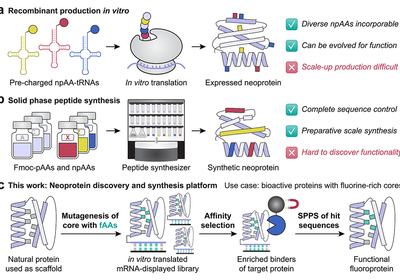
Fluorinated Core Evolution
Suga Lab
Protein hydrophobic cores packed almost entirely with fluorinated amino acids were thought to be incompatible with defined biological function. A new selection platform challenged that …
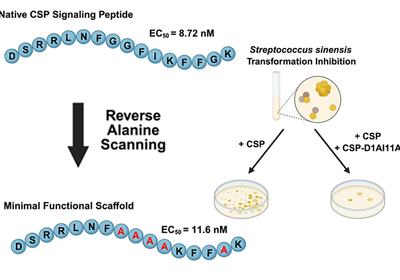
Minimal CSP Scaffolds
Tal-Gan Lab
Quorum sensing in Streptococcus sinensis depends on a competence-stimulating peptide whose minimum functional requirements were completely unknown. Reverse alanine scanning now reveals that nearly one-third …
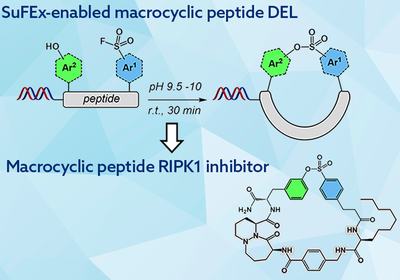
SuFEx Locks Rings
Fan and Mi Teams
Metal-free macrocyclization has long been a bottleneck for DNA-encoded peptide libraries. A new SuFEx-based strategy closes rings in aqueous buffer within minutes, scales to 343 …
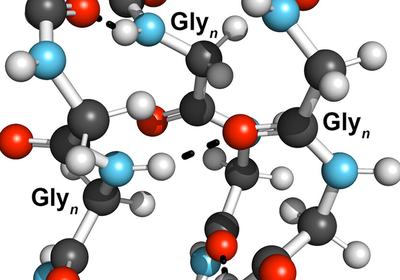
Glycine Builds Collagen
Raines Lab
The collagen triple helix is nature's most abundant protein fold, yet chemists have long assumed it requires proline and hydroxyproline to form. New work shows …
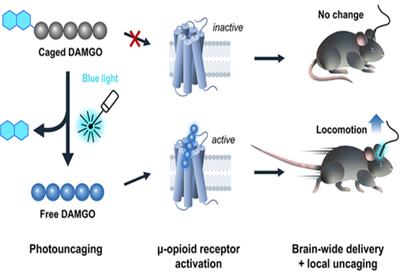
Blue-Light Uncaging
Banghart Lab
One-photon photopharmacology in the brain has long depended on UV or violet light, with its poor tissue penetration and phototoxicity concerns. A new caged opioid …
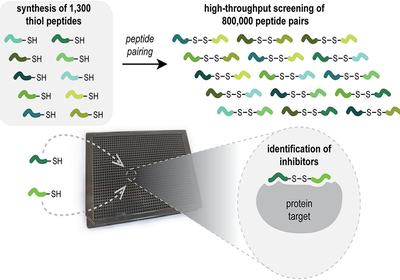
Pairing for Scale
Heinis Lab
Chemical peptide libraries in microwell plates have rarely exceeded a few thousand members, leaving a vast chemical space unreachable by functional screening. A disulfide-pairing strategy …
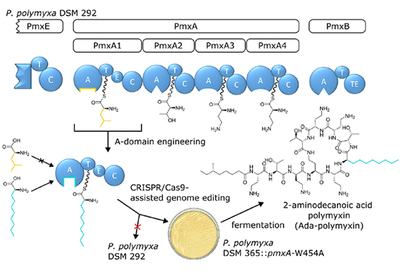
Pocket Engineering Polymyxin
Kries Lab
Polymyxin antibiotics save lives but cause kidney damage and face rising resistance. A single amino acid substitution in a biosynthetic enzyme now enables direct fermentative …
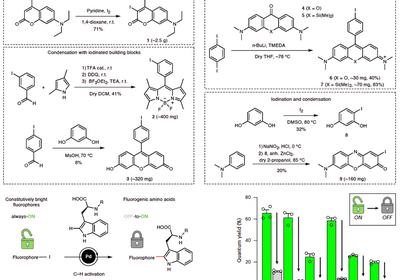
Tryptophan Quenches All
Vendrell Lab
Fluorogenic amino acids that span the full visible spectrum could transform wash-free cell imaging and drug screening, but no single intramolecular quenching motif had proven …
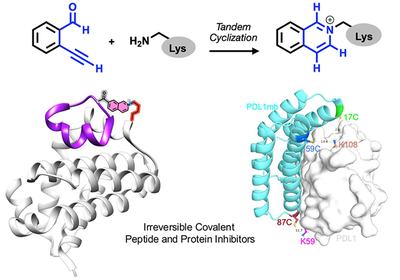
Lysine Covalent Capture
Baker Group
Cysteine-targeting covalent warheads dominate drug design, yet cysteine is the rarest amino acid in proteins and nearly absent from protein-protein interfaces. A new lysine-reactive chemistry …
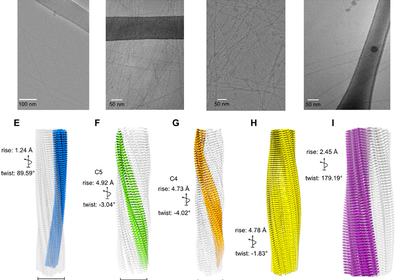
Atomic Edits, Altered Assemblies
Conticello Lab
Swapping a single atom in a self-assembling peptide sequence can reshape the entire supramolecular architecture, even when the resulting filaments look nearly identical under a …
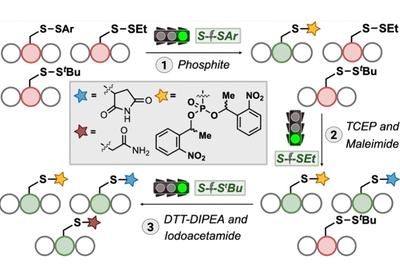
Disulfide Architecture Decoded
Raj Lab
Disulfide bonds in peptides are typically treated as chemically identical, forcing chemists to reduce them all before making any modification. A new architecture-guided approach reveals …
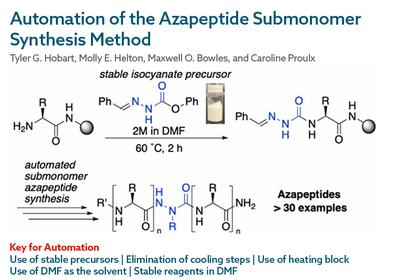
Azapeptides on Autopilot
Proulx Lab
Aza-amino acid substitutions can lock bioactive conformations and resist proteases, but the chemistry that builds them has stubbornly resisted automation. A new protocol adapts every …
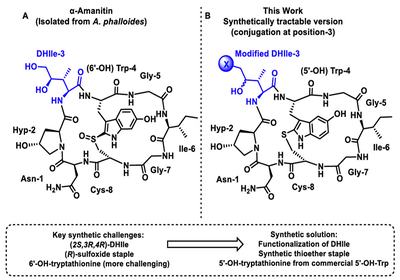
Unlocking Amanitin ADCs
Perrin Lab
α-Amanitin kills cancer cells regardless of proliferation status, making it an attractive antibody–drug conjugate payload. Yet its signature non-canonical amino acid, dihydroxyisoleucine, had never been …
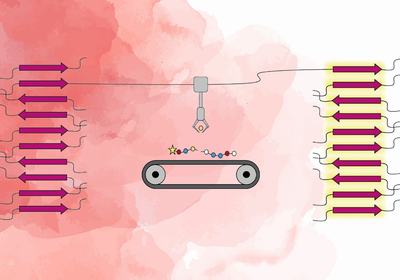
Painting Amyloid
Rüdiger and Friedler labs
Amyloid fibrils in Alzheimer's and Huntington's disease desperately need better molecular tools, yet most peptide scaffolds offer little chemical flexibility. A new modular peptide family …
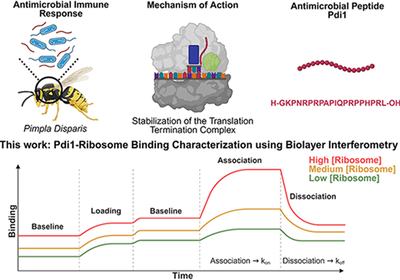
Timing the Tunnel
Terry Moore Lab
Type II proline-rich antimicrobial peptides kill bacteria by trapping release factors inside the ribosome, yet no biophysical method existed to measure how tightly they bind …
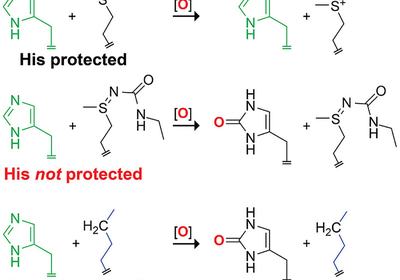
Sacrificial Shields
Raines Lab
Histidine drives catalysis in roughly one-fifth of all enzymes, yet oxidative damage to its imidazole ring is irreversible. A study of human ribonuclease 1 now …
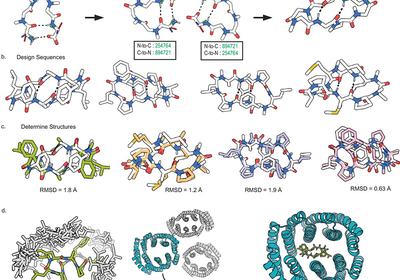
Designing Molecular Switches
Baker Lab
Chemically induced dimerization systems give researchers on/off control over cellular processes, but existing tools borrow from nature and carry off-target liabilities. A new approach builds …
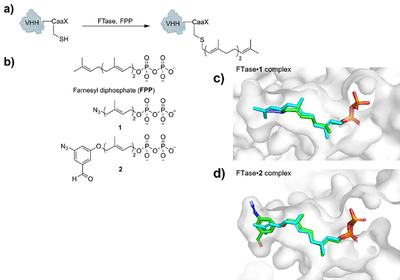
Tagging Nanobodies Precisely
Distefano Lab
Conventional nanobody conjugation generates heterogeneous products that erode imaging performance in vivo. A new chemoenzymatic strategy using farnesyltransferase installs two orthogonal bioorthogonal handles in a …
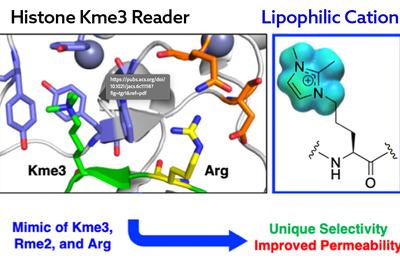
Lipophilic Cation Switch
Waters Lab
Peptidomimetic inhibitors of histone reader proteins carry a fundamental contradiction: the cationic residues required for tight binding actively sabotage cell entry. A new class of …
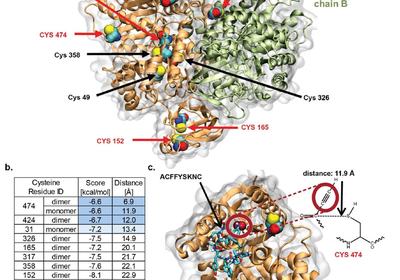
Silencing the Warhead
Derda Lab
Covalent genetically encoded peptide libraries hold enormous promise for discovering irreversible inhibitors, but installing reactive electrophilic warheads under basic conditions causes those warheads to quench …
Unmasking Thioaldehydes
Myers Lab
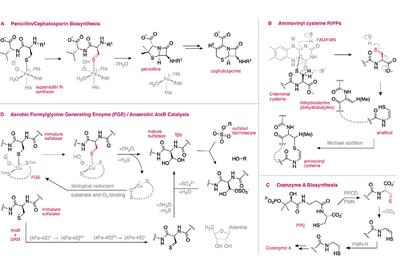
Cysteine thioaldehydes are fleeting, reactive intermediates implicated in penicillin biosynthesis, RiPP natural products, coenzyme A assembly, and sulfatase activation, yet their aqueous chemistry has resisted …
Unlocking the Power of Biosynthetic Tailoring Enzymes
Barry Lab
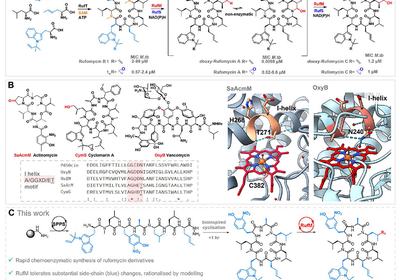
Biosynthetic cytochrome P450 enzymes can selectively oxidize inert C–H bonds on complex cyclic peptides, but studying them has been nearly impossible without reliable access to …
Unlocking Cyclic Dipeptides
Hecht Lab
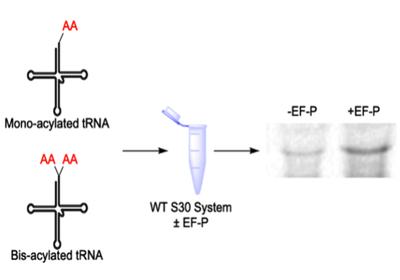
Incorporating cyclic dipeptides into proteins with native ribosomes has long been hampered by ribosomal stalling, and loading two amino acids onto a single tRNA can …
Expanding Cyclic Space
Duan Lab
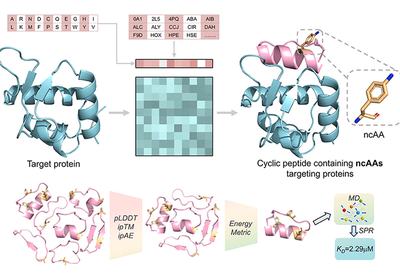
Designing cyclic peptides that incorporate non-canonical amino acids against dynamic protein interfaces is a compelling strategy, but the combinatorial explosion of sequence space makes structure-guided …