Peptide Publications Archive
Showing items in Peptide Design · Clear filter
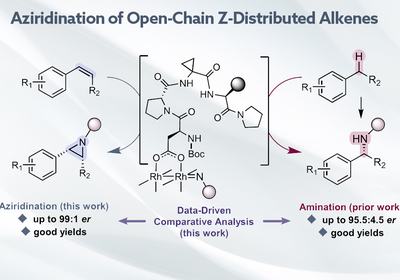
Aziridines by Metallopeptide
Miller Lab
Aziridines are prized synthetic building blocks, yet making them enantioselectively from open-chain Z-disubstituted alkenes has long resisted reliable catalyst design. A new dirhodium metallopeptide system …
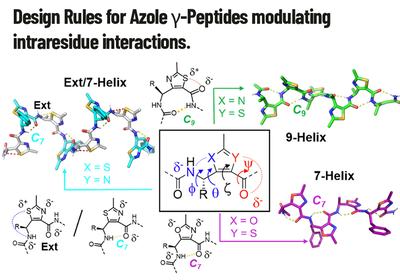
Switching Foldamer Helices
Legrand Lab
Foldamer chemists have long sought a simple switch to redirect backbone folding between distinct helical states. A French research team shows that permuting or substituting …
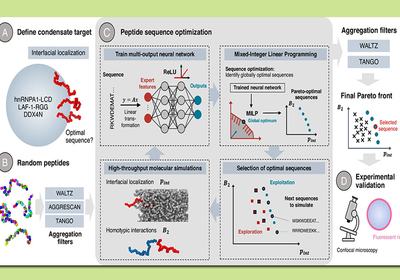
Condensate Surface Surfers
Arosio Lab
Biomolecular condensate interfaces drive protein aggregation and redox reactions, yet no general strategy existed for designing short peptides that park specifically at that boundary rather …
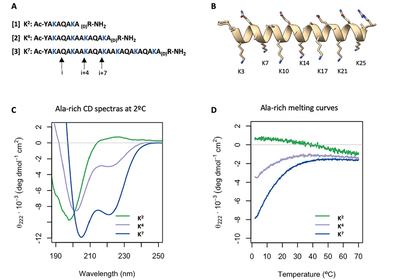
Locking the Helix
Wendeborn and Shahgaldian Groups
Short peptides rarely hold their α-helical shape at physiological temperatures, which limits their use in nanomaterial interfaces. A covalent surface-chemistry strategy on silica nanoparticles not …
Protein Space Illuminated
DeGrado Lab
How often does a random sequence fold into a stable protein? Surprisingly often, if that sequence repeats itself. A large-scale computational survey of tandem-repeat proteins …
Foldamers in Membranes
Clayden Lab
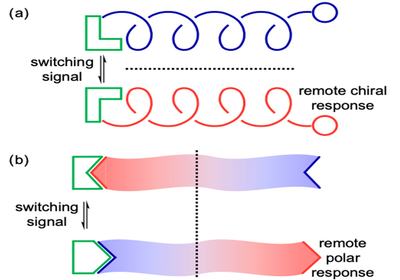
Synthetic foldamers that switch their internal hydrogen-bond direction could one day carry signals across cell membranes, but only if their conformational dynamics survive the lipid …
Groovy Foldamer Design
Huc Lab
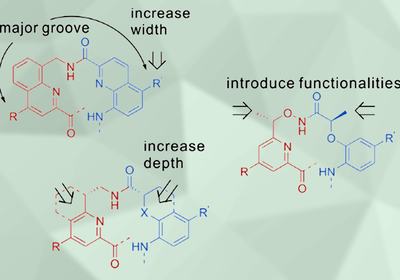
Aromatic foldamers that mimic DNA can already outcompete the double helix for binding certain proteins, but their repetitive structure limits sequence-specific recognition. Now, four new …
Phosphorylation Mimics Hydroxylation
Raines Lab
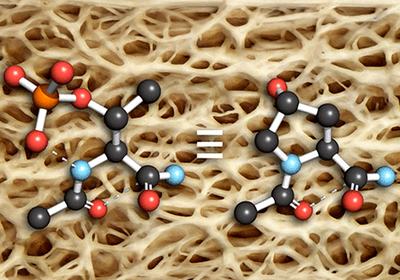
Collagen stability depends on 4-hydroxyproline, a permanent modification. Now, researchers show that phosphorylation of threonine at the Yaa position of a collagen triple helix mimics …
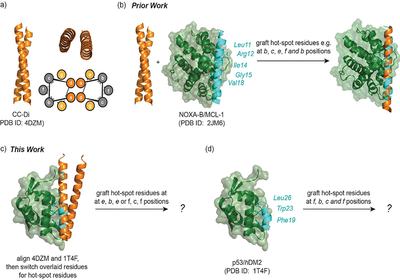
Coiled-Coil Grafting
Wilson, Woolfson, and Itzhaki Groups
Protein–protein interactions are notoriously difficult to drug, but coiled-coil peptides offer a structured scaffold for presenting binding hot spots. Researchers grafted p53 hot-spot residues onto …
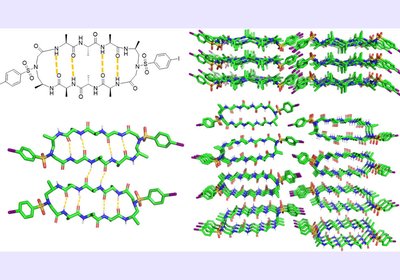
Folding the Sheet
Cai Lab
β-hairpins underpin protein recognition, amyloid assembly, and enzyme catalysis, yet engineering stable β-sheet mimics in small peptides remains stubbornly difficult. A new class of sulfonyl-modified …
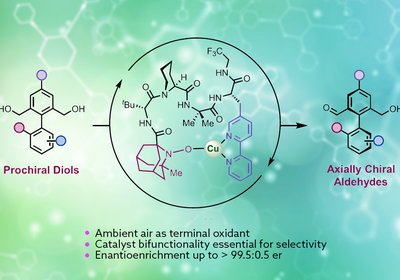
Bifunctional Peptide Oxidation
Miller Lab
Axially chiral biaryl aldehydes are prized scaffolds in medicinal chemistry and asymmetric catalysis, yet enantioselective aerobic oxidations to access them have remained elusive. A new …
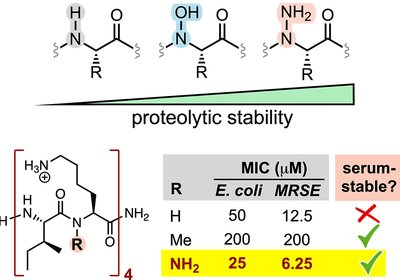
Backbone Heteroatom Shield
Del Valle Lab
Replacing backbone amide nitrogens with nitrogen or oxygen heteroatoms can slow protease degradation without sacrificing the folded structures peptides need to work. A tetra-N-aminated antimicrobial …
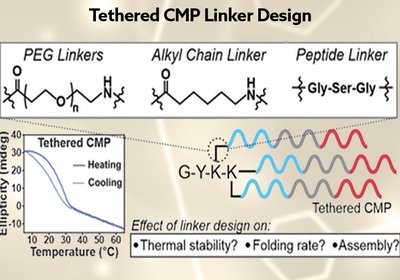
Linkers Shape Collagen
Merg Lab
Covalently tethered collagen-mimetic peptides fold into triple helices and assemble into nanosheets, but how does the linker connecting each strand to its scaffold influence stability? …
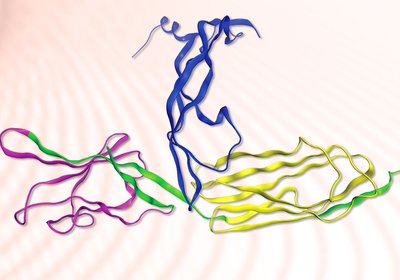
Coaxing New Vessels
Choi Lab
An AI-designed peptide mimics VEGF's receptor-activating power, accelerating wound closure in diabetic mice and raising hopes for a stable, tunable pro-angiogenic therapy
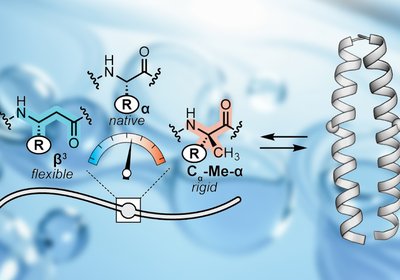
Engineering Disorder
Horne Group
Researchers in the Horne Group at the University of Pittsburgh, published in Biochemistry, set out to develop a systematic method for manipulating the unfolded …
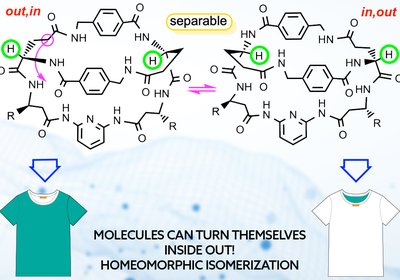
Inside-Out Peptides
Gladysz Group
Macrobicyclic peptides can flip inside-out via homeomorphic isomerization, creating distinct structures with different biological properties.

Frankenproteins Block Myc
Shin Lab
The proto-oncogene MYC is dysregulated in more than 70% of human cancers and drives some of the most aggressive subtypes of breast cancer. Triple-negative breast …
Frankenprotein Precision
Shin Lab
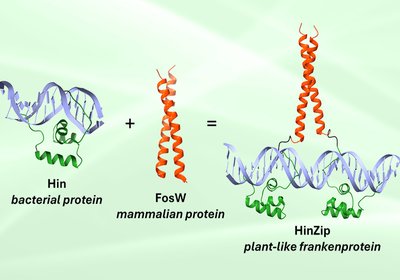
Researchers in the Shin Group at Chapman University, published in ACS Synthetic Biology, drew inspiration from an unusual source: the homeodomain-leucine zipper transcription factor …
Budding Immunity
Mayo Group
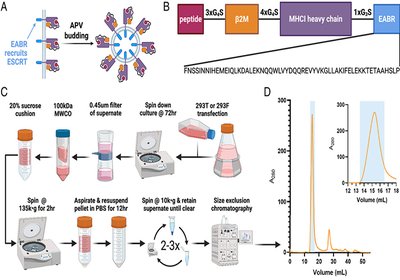
Immune cells naturally release extracellular vesicles studded with peptide-MHC complexes that can orchestrate immune responses, either directly stimulating T cells or transferring their cargo to …
Mapping Membrane Activity
Hennig & Nau Labs
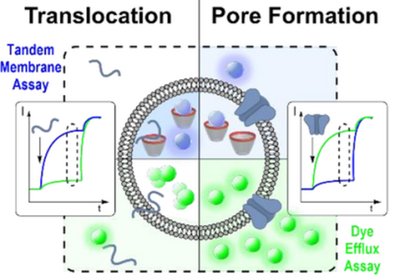
Cell-penetrating peptides and antimicrobial peptides both interact with lipid membranes, but with fundamentally different outcomes. Cell-penetrating peptides slip through membranes while leaving them largely intact, …
Targeted Evolution
Jumi Shin Lab
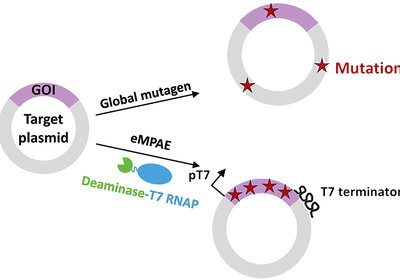
Rational protein design can create remarkable molecules, but it explores only a sliver of sequence space. The Shin group at the University of Toronto has …

Computational Peptide Design
Guo Group
Xanthine oxidase catalyzes the final steps of purine catabolism, converting hypoxanthine and xanthine to uric acid. Dysregulation of this enzyme leads to excessive uric acid …
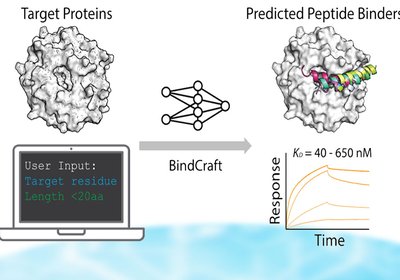
Binders by Design
Pomplun Lab
Discovering high-affinity ligands directly from protein structures has long tantalized drug discovery scientists. Virtual screening can explore billions of small molecules computationally, yet hit rates …
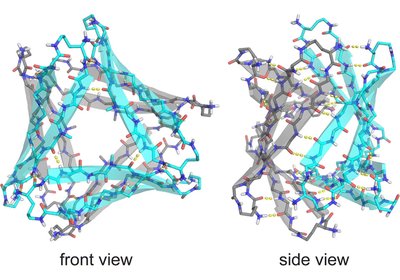
β-Hairpin Oligomers
Nowick Lab
Researchers in the Nowick Group at the University of California Irvine, reveal how a designed β-hairpin peptide derived from amyloid-β, Aβ, crosses the boundary from …