Peptide Publications Archive
Showing items in Chemical Biology · Clear filter
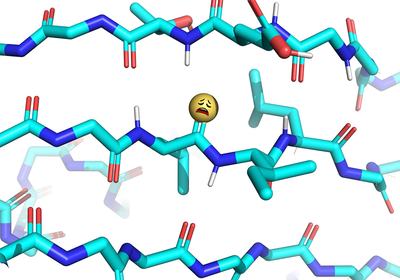
Thioamide Disrupts β-Sheets
Petersson Lab
Swapping a single oxygen for sulfur in a peptide backbone sounds conservative, but a new semi-synthesis strategy reveals that one thioamide can unravel a cooperative …
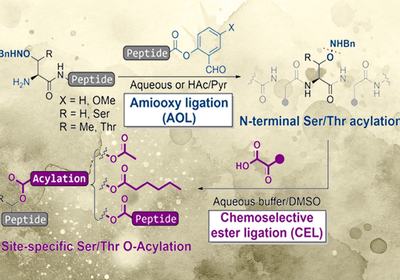
Editing Serine's Silence
Li Lab
Serine and threonine dominate regulatory post-translational modifications in biology, yet chemical tools to edit them site-selectively in unprotected peptides have remained out of reach. A …
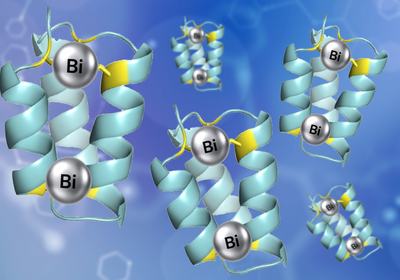
Bismuth Cyclisation Inside Living Cells
Jody Mason Lab
Cyclisation is one of the most dependable ways to make a peptide behave more like a drug, tightening its fold, sharpening target engagement, and slowing …
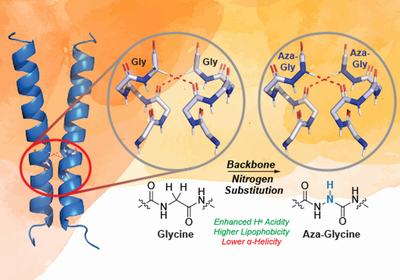
Probing GxxxG Interfaces
Newberry Lab
Glycine residues at GxxxG motifs stabilize transmembrane helix dimers through Cα–H hydrogen bonds, but their lack of side chains makes them difficult to engineer. Replacing …
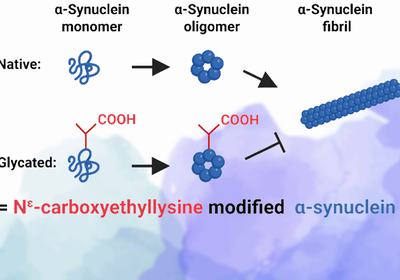
Glycation Codes αSyn
Becker Lab
A single glycation mark on α-synuclein reshapes its entire aggregation behavior, but the outcome depends sharply on which lysine carries it. A new semisynthetic platform …
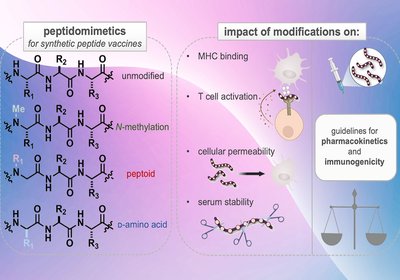
Tuning the Antigen
Pires Lab
Peptide-based cancer vaccines aim to train the immune system against tumor-specific neoantigens, and a growing share of those targets comes from post-translational modifications rather than …
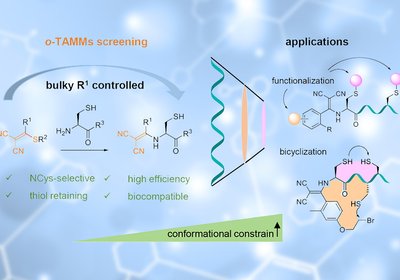
Steering Cysteine Chemistry
Tsai Lab
Most reagents that target N-terminal cysteine consume both the amine and thiol, locking the ligation site into an inert heterocycle. A new steric-control strategy forces …
Labeling Serine Selectively
Chen Lab
Serine and threonine hydroxyl groups are among the most difficult side chains to modify selectively in complex peptides, yet they govern phosphorylation, glycosylation, and enzyme …
Chaperone Orientation Rules
Gierasch Lab
Three closely related Hsp70 molecular chaperones grip the same model peptides in strikingly different orientations: bacterial DnaK shows no directional preference, human Hsc70 leans toward …
Amide Proteome Mapped
Raj Lab
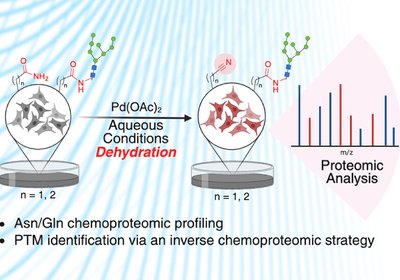
A palladium-mediated dehydration reaction converts asparagine and glutamine amides to nitriles, opening nearly 9% of the human proteome to chemoproteomic interrogation for the first time...
Silent Residues, Activated
Raj Lab
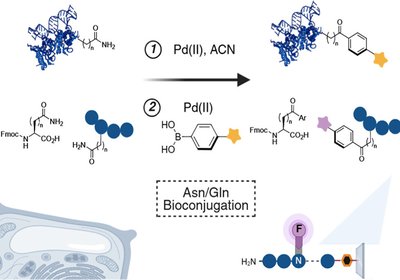
Asparagine and glutamine make up over 8% of the human proteome yet resist chemical modification — until now, when a palladium-mediated strategy converts their amide …
Light-Driven Ligation
Taylor Lab
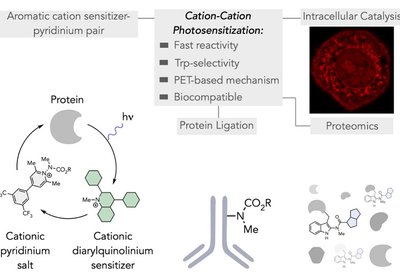
A fully organic photosensitizer pair labels proteins inside living cells with 93% selectivity for tryptophan, reaching nuclear compartments without any metal catalyst
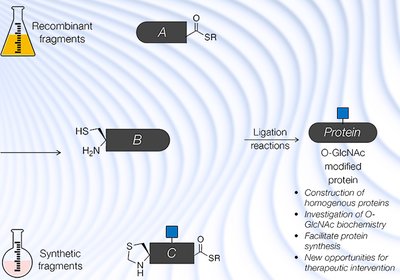
Sugar's Hidden Hand
Pratt Lab
A single O-GlcNAc on α-synuclein forces a distinct amyloid strain that spreads far less pathology in neurons and mouse models than the unmodified protein
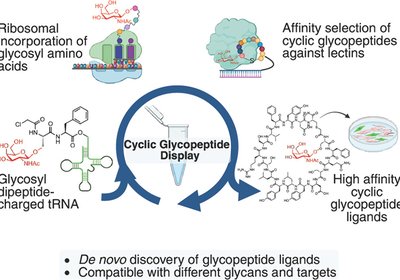
Sweet Reprogramming of the Ribosome
Payne Group
A dipeptide reprogramming trick lets ribosomes build glycopeptide libraries for the first time, yielding potent P-selectin inhibitors and a monomeric LYTAC alternative
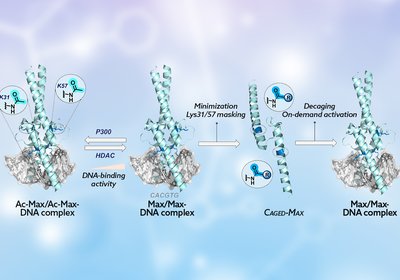
Switching Max On
Jbara Lab
A photocaged Max transcription factor sits dark and silent until a flash of UV light removes two chemical masks and restores full DNA-binding activity within …
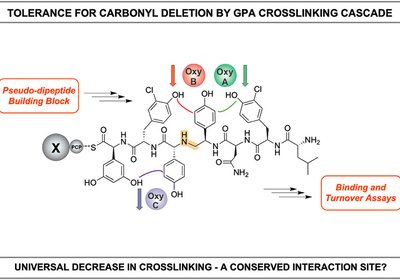
Backbone Sensitivity
Cryle Lab
Researchers supervised by Professors Julien Tailhades and Max J. Cryle from Monash University, Australia, published in ACS Chemical Biology, have developed a chemoenzymatic strategy …
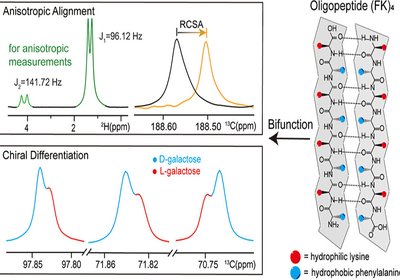
NMR Double Agent
Liu Lab
Researchers in the Liu Group at the Innovation Academy for Precision Measurement Science and Technology, Chinese Academy of Sciences, published in J. Am. Chem. Soc. …
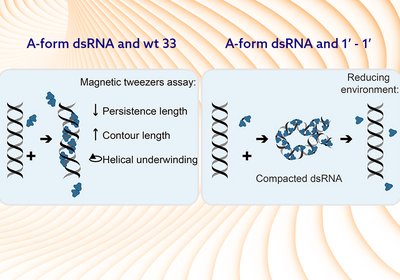
Unwinding RNA Delivery
Dulin Lab
Researchers in the Dulin Group at Vrije Universiteit Amsterdam investigated the biophysical effects of two peptides derived from the tomato aspermy virus 2b, TAV2b, protein …
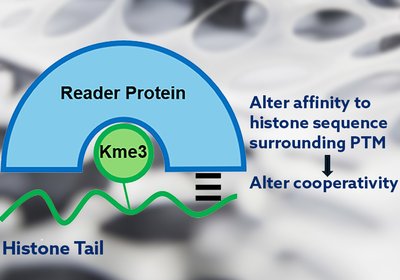
Cooperativity Unlocked
Waters Lab
Christopher Travis, and colleagues in Marcey Waters' laboratory at the University of North Carolina, published in Biochemistry, devised an elegant strategy to probe why …
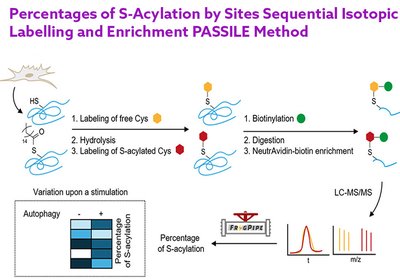
Quantifying S-Acylation
Thinon Group
Researchers in the Emmanuelle Thinon Group at the University of Bordeaux, published in ACS Chemical Biology as part of the special issue "Lipids and Lipidation," …
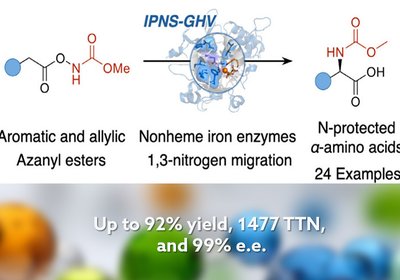
Nitrogen Walks
Huang/Xiao Labs
Noncanonical amino acids have become indispensable tools in chemical biology and drug discovery. By introducing side chains that nature never encoded, researchers can endow peptides …
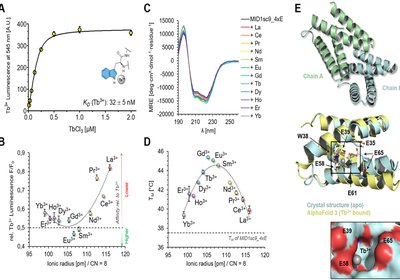
Catching Lanthanides
Zeymer Lab
Lanthanide ions offer an extraordinary toolkit for biomolecular engineering. Their long-lived luminescence enables sensitive detection, their paramagnetism provides NMR structural probes, their strong anomalous X-ray …
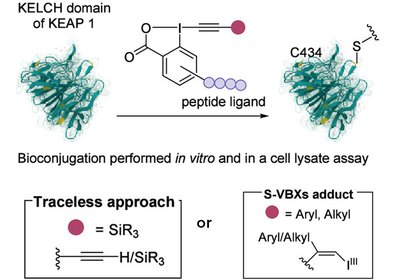
Guided Precision
Waser Lab
Cysteine residues attract chemical attention. Their nucleophilic thiol groups react readily with electrophiles, making them popular handles for attaching drugs, fluorophores, and other payloads to …
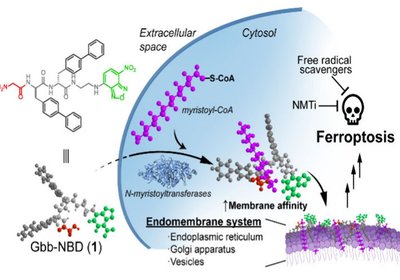
Borrowed Machinery
Xu Lab
N-myristoylation is a common posttranslational modification in which the enzyme N-myristoyltransferase, NMT, attaches a 14-carbon fatty acid to an N-terminal glycine residue. This lipid anchor …