Peptide Publications Archive
Showing items in Drug Discovery · Clear filter
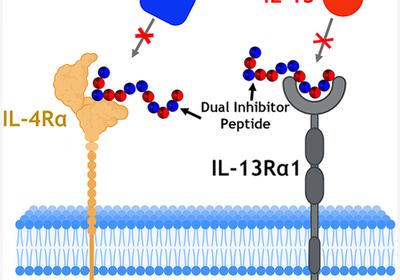
Dual Cytokine Lock
Fetse Lab
IL-4 and IL-13 drive allergic and inflammatory disease through overlapping but distinct receptor interfaces, and no small peptide had been shown to block both pathways …
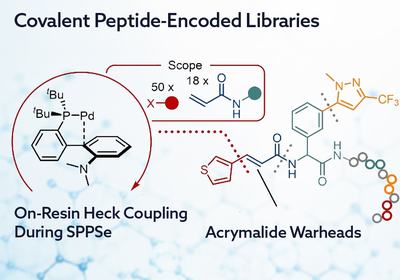
Wiring Covalent Libraries
Pentelute Lab & the Nile Lab at Calico Life Sciences
Peptide-encoded libraries can survey vast chemical space, but equipping them with covalent warheads has remained out of reach. A new on-resin Heck coupling platform threads …
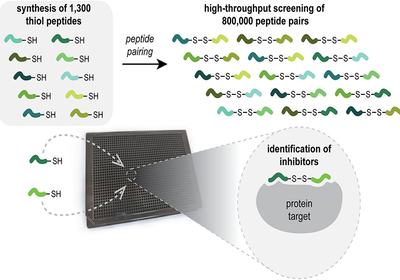
Pairing for Scale
Heinis Lab
Chemical peptide libraries in microwell plates have rarely exceeded a few thousand members, leaving a vast chemical space unreachable by functional screening. A disulfide-pairing strategy …
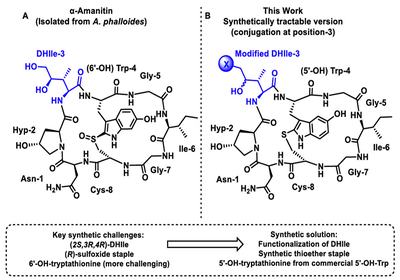
Unlocking Amanitin ADCs
Perrin Lab
α-Amanitin kills cancer cells regardless of proliferation status, making it an attractive antibody–drug conjugate payload. Yet its signature non-canonical amino acid, dihydroxyisoleucine, had never been …
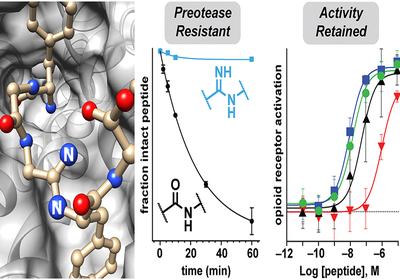
Amidine Backbone Switch
VanVeller Lab
Proteases rapidly destroy therapeutic peptides before they can act, and most stabilization strategies fix this by breaking the very structural features that drive biological activity. …
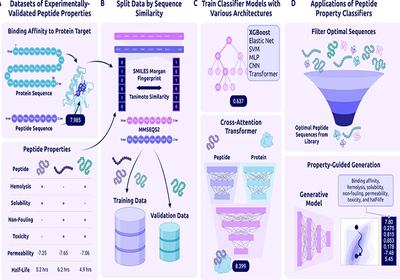
Predicting Peptide Futures
Chatterjee Lab
Peptide therapeutics fail not for lack of binding but for poor membrane permeability, short half-life, hemolytic activity, and other developability liabilities, and no single computational …
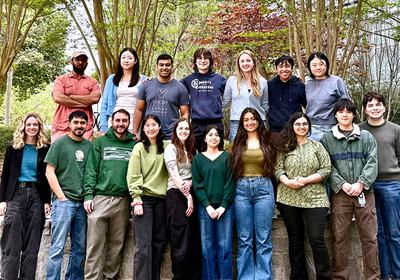
Rethinking GPA Recognition
Davis Lab
Glycopeptide antibiotics are thought to work by gripping a single peptidoglycan motif through five hydrogen bonds. But when researchers simulated a recently discovered antibiotic that …
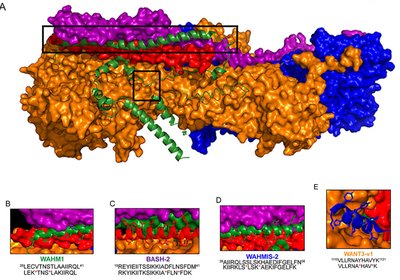
Stapling Pancreatic Invasion
Kennedy Lab
Pancreatic cancer carries a five-year survival rate of just 13%, partly because metastasis outpaces available treatments. A stapled peptide derived from the WASF3 protein sequence …
Engineering Better Peptides
Bhunia Lab
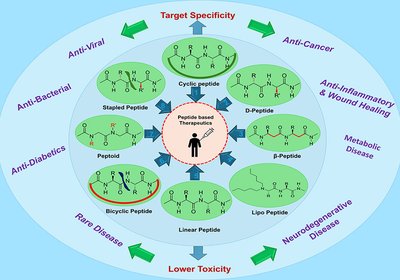
More than 80 peptide drugs are approved worldwide, yet rapid proteolysis, poor oral bioavailability, and short plasma half-life still limit the class. A sweeping new …
Ribosome Peptide Mining
Kurkcuoglu Lab
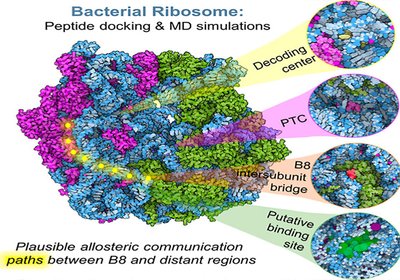
The bacterial ribosome is a proven antibiotic target, yet peptide-based modulation of its allosteric machinery remains largely uncharted. A new multiscale computational pipeline screens thousands …
GLP-1s Block Amyloid
Limbocker Lab
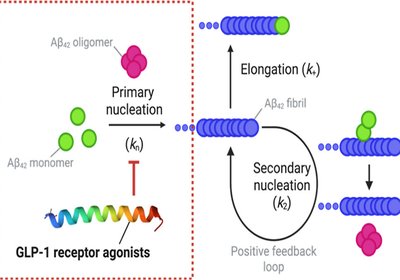
Millions of people already take GLP-1 receptor agonists for diabetes and weight loss, but whether these drugs directly interfere with the molecular machinery of Alzheimer's …
Profiling Transpeptidase Targets
Pires Lab
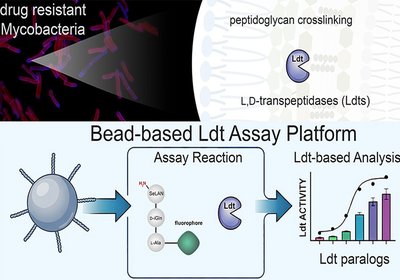
Tuberculosis kills more than a million people each year, yet the enzymes that stitch together its cell wall remain poorly understood and difficult to target. …
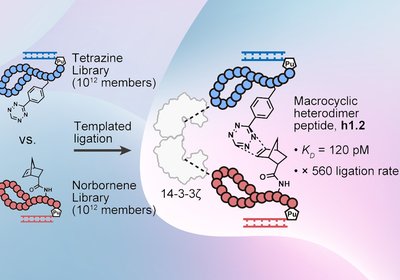
Paired Library Pursuit
Suga Lab
Most peptide discovery platforms find one binder at a time. A new library-vs-library extension of the RaPID system pairs two 10¹²-member macrocyclic peptide libraries and …
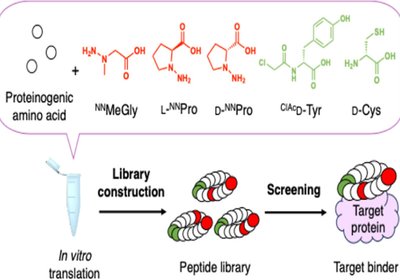
Hydrazino Turn Hunters
Suga Lab
α-Hydrazino acids have long tantalized peptide chemists with their turn-inducing and protease-resisting properties, yet no one had managed to screen them de novo against protein …
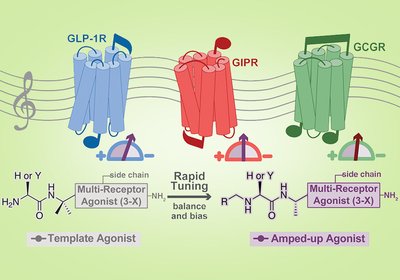
Tuning Incretin Balance
Kumar Lab
A single chemical edit at the N-terminus of a GLP-1/GIP/glucagon multiagonist can shift receptor potency balance by orders of magnitude, selectively suppress β-arrestin recruitment, or …
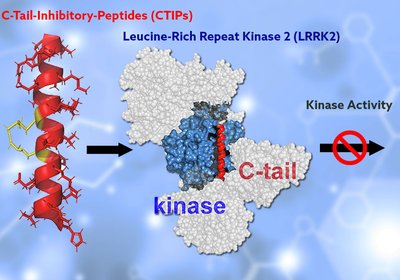
Stapling LRRK2
Kennedy Lab
Hydrocarbon-stapled peptides that mimic the C-terminal helix of LRRK2 can penetrate cells, bind the kinase directly, and suppress its hyperactivation without triggering the mislocalization side …
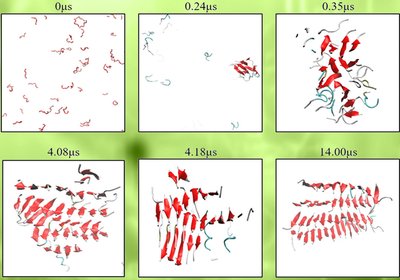
Hairpins Hold the Key
Hall, Radford, and Brockwell Labs
A single methionine swap in α-synuclein's N-terminal P1 motif dismantles the β-hairpin architecture that normally launches amyloid fibril formation
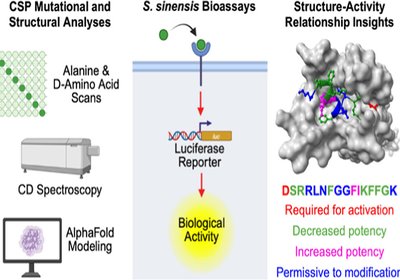
Silencing Strep Signals
Tal-Gan Lab
Streptococcus sinensis is an oral commensal that turns deadly when it reaches the bloodstream, causing infective endocarditis with roughly 25% mortality. A new mutational map …
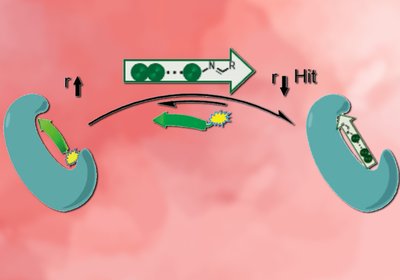
Fragment Capping PDZ
Wilson Lab
β-strand-mediated protein–protein interactions are among the hardest targets in chemical biology, and PDZ domains are notoriously resistant to small-molecule ligands. A dynamic ligation screen against …
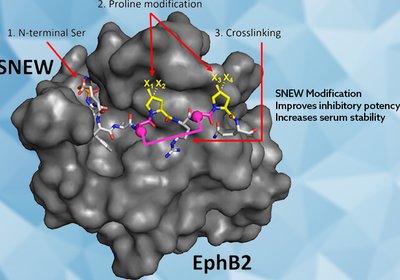
Stabilizing SNEW
Sawyer Lab
The EphB2 receptor drives several cancers, yet its best peptide inhibitor, SNEW, has languished with modest potency and poor serum stability. Swapping its N-terminal serine …
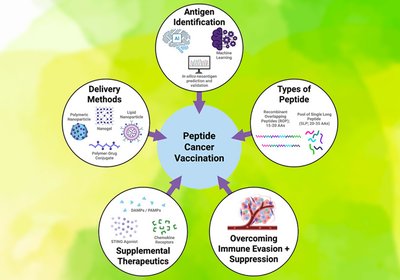
Priming the Attack
Kimmel Lab
No peptide cancer vaccine has yet earned FDA approval, yet the field is converging on strategies that may finally close that gap. A new review …
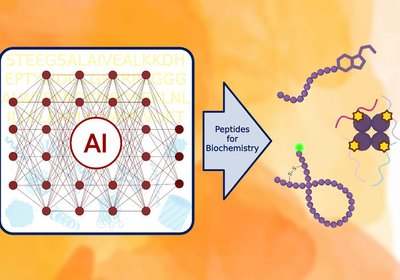
Peptides on Demand
Chatterjee Lab
Antibodies dominate biochemical research, but their context-dependent performance, reproducibility problems, and opaque binding determinants leave scientists wanting better tools. A new review from the Chatterjee …
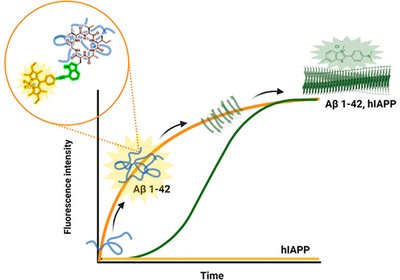
Lighting Up Oligomers
Tonali Lab
A cyclopeptide-BODIPY conjugate built from Alzheimer's own amyloid sequence outperforms antibodies at spotting toxic prefibrillar aggregates inside neurons
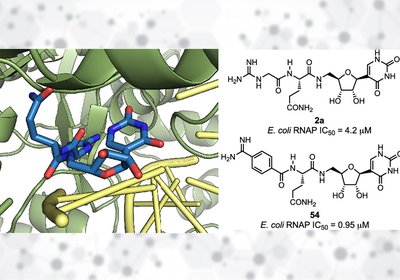
Stabilizing Pseudouridimycin
Del Valle Group
Cryo-EM guided solid-phase synthesis yields 50 stabilized pseudouridimycin analogs, including a para-phenyl amidine that inhibits bacterial RNA polymerase fourfold better than the parent compound