Peptide Publications Archive
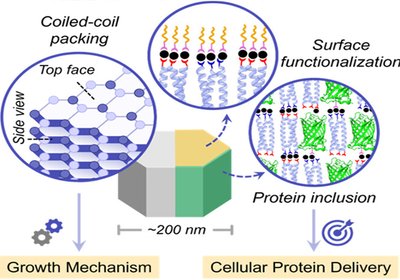
Crystals Deliver Cargo
Chmielewski Lab
Ni(II)-assembled coiled-coil peptide nanocrystals pack hundreds of folded proteins and, when decorated with a TAT peptide, triple their intracellular delivery efficiency
Rippled Sheets
Nilsson Group
Enantiomeric peptide mixtures preferentially form rippled β-sheets over pleated structures, expanding design principles for next-generation biomaterials
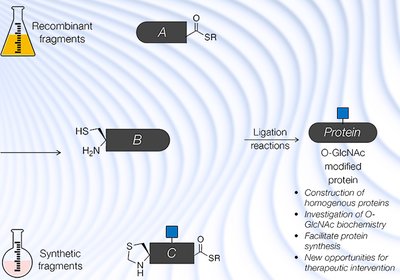
Sugar's Hidden Hand
Pratt Lab
A single O-GlcNAc on α-synuclein forces a distinct amyloid strain that spreads far less pathology in neurons and mouse models than the unmodified protein
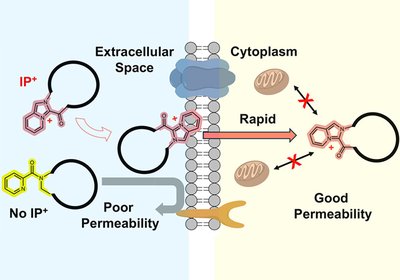
Charged Ring Entry
Kodadek Group
Grafting a permanent positive charge onto macrocyclic peptides drives passive membrane crossing in minutes, transforming a membrane-impermeable p53–MDM2 antagonist into a bioactive inhibitor without mitochondrial …
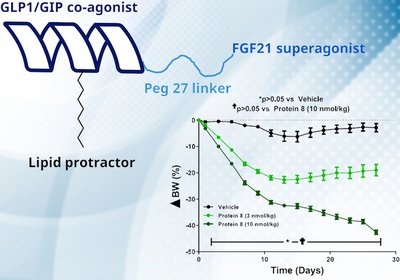
Triple Receptor Agonism
DiMarchi Group
An engineered triple agonist targeting FGF21, GLP-1, and GIP receptors achieves near normalization of body weight in obese mice.
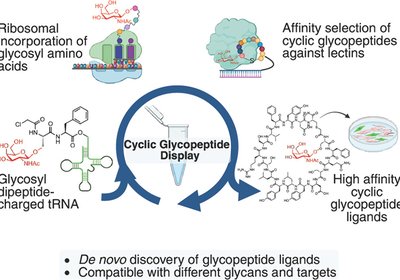
Sweet Reprogramming of the Ribosome
Payne Group
A dipeptide reprogramming trick lets ribosomes build glycopeptide libraries for the first time, yielding potent P-selectin inhibitors and a monomeric LYTAC alternative
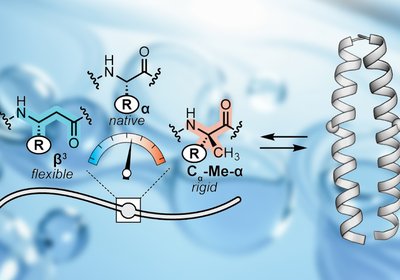
Engineering Disorder
Horne Group
Researchers in the Horne Group at the University of Pittsburgh, published in Biochemistry, set out to develop a systematic method for manipulating the unfolded …
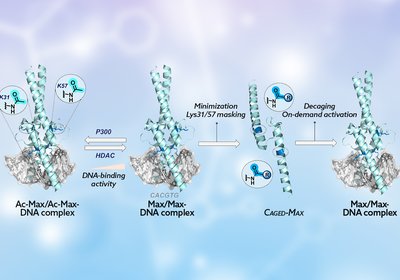
Switching Max On
Jbara Lab
A photocaged Max transcription factor sits dark and silent until a flash of UV light removes two chemical masks and restores full DNA-binding activity within …
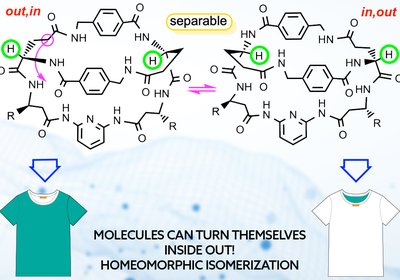
Inside-Out Peptides
Gladysz Group
Macrobicyclic peptides can flip inside-out via homeomorphic isomerization, creating distinct structures with different biological properties.
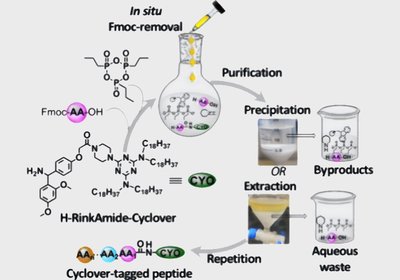
Greener Peptide Couplings
Albericio & de la Torre Group
Researchers in the Albericio & de la Torre Group at the University of KwaZulu-Natal, published in Organic Letters, introduced Cyclover as a commercially accessible …
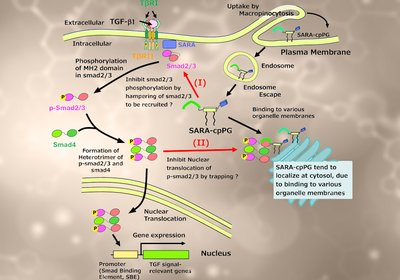
Blocking Nuclear Entry
Mizuno Group
Peptide-based therapeutics hold enormous promise for modulating intracellular signaling, but their impact has been limited by poor membrane permeability. Most peptide drugs remain confined to …
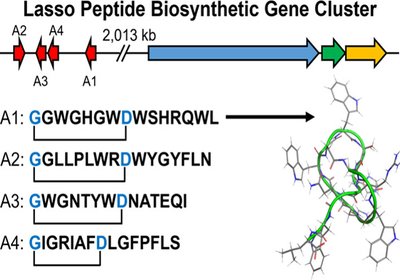
Split Lasso Discovery
Seyedsayamdost & Moon Groups
Marine actinomycete produces anticancer lasso peptides from a split biosynthetic gene cluster separated by over 2 million base pairs.
Myeloma in Focus
Shokeen Group
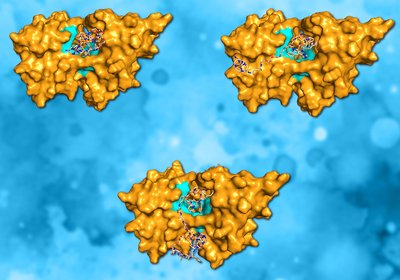
Researchers in the Shokeen Group at Washington University in St. Louis, published in Bioconjugate Chemistry, identified a novel CD38-binding peptide sequence, HAPWFRGGGGS, through phage …
Backbone Sensitivity
Cryle Lab
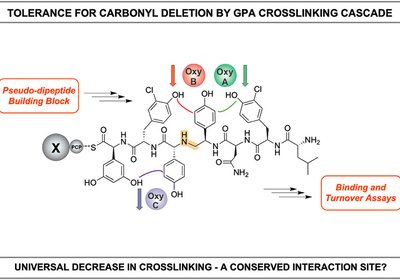
Researchers supervised by Professors Julien Tailhades and Max J. Cryle from Monash University, Australia, published in ACS Chemical Biology, have developed a chemoenzymatic strategy …
NMR Double Agent
Liu Lab
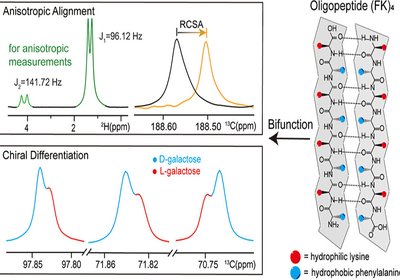
Researchers in the Liu Group at the Innovation Academy for Precision Measurement Science and Technology, Chinese Academy of Sciences, published in J. Am. Chem. Soc. …
Peptides Deliver Fluoride
Gouverneur Lab
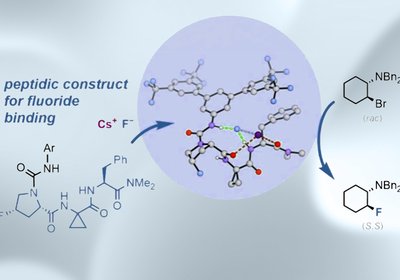
Fluorine is among the most consequential substituents in medicinal chemistry, improving metabolic stability, membrane permeability, and target binding across a broad range of drug candidates
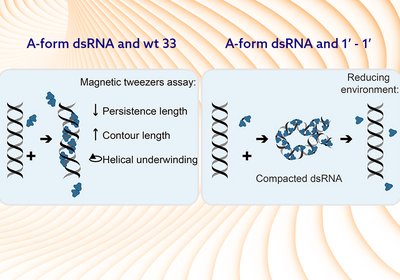
Unwinding RNA Delivery
Dulin Lab
Researchers in the Dulin Group at Vrije Universiteit Amsterdam investigated the biophysical effects of two peptides derived from the tomato aspermy virus 2b, TAV2b, protein …
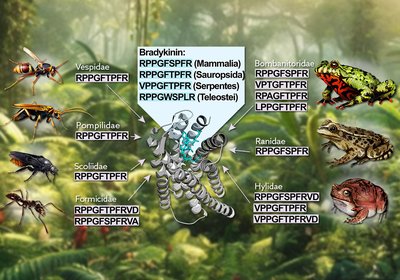
Convergent Bradykinin Mimicry
Robinson Lab
Researchers in the Robinson Group at the University of Queensland, published in Science, demonstrated that bradykinin-like peptides found in hymenopteran venoms and anuran skin …
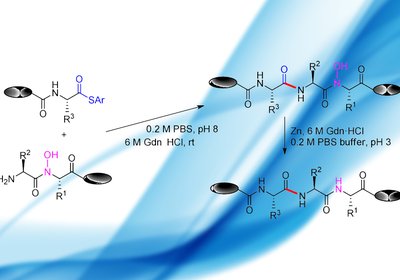
Site-Free Ligation
Hua Fu Lab
Researchers in the Fu Group at Tsinghua University in Beijing, published in Org. Lett., have developed a new chemoselective peptide ligation strategy, hydroxylamine-involved ligation, …
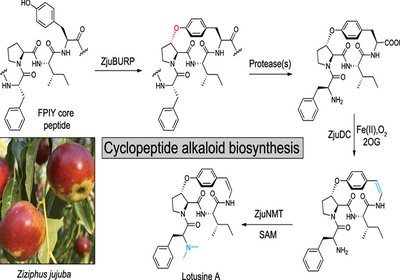
Jujube Unlocked
Kersten Lab
Researchers in the Kersten Group at the University of Michigan, published in J. Am. Chem. Soc., identified candidate biosynthetic genes in the genome of …
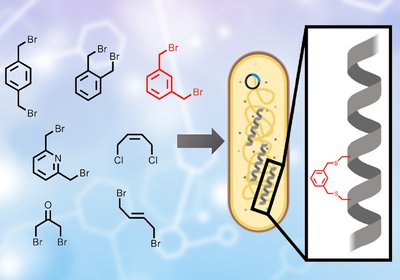
Intracellular Peptide Stapling
Mason Lab
Researchers in the Mason Group at the University of Bath, published in Cell Chemical Biology, developed a platform called intracellular-cyclization TBS that merges chemical …
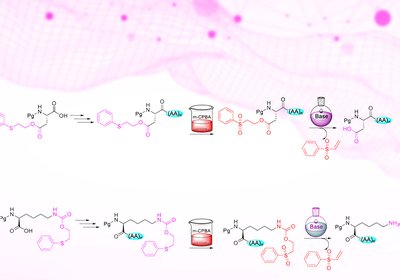
Safety Catch Strategy
Albericio Lab
Researchers supervised by Professor Fernando Albericio at the University of KwaZulu-Natal developed a new family of safety-catch protecting groups based on the phenylthioethyl, Pte, and …

Ginkgo Degrader
Tam Lab
Researchers in the Tam Group at Nanyang Technological University identified a hyperdisulfide-constrained peptide from Ginkgo biloba nuts, termed β-ginkgotide β-gB1, as a first-in-class

Frankenproteins Block Myc
Shin Lab
The proto-oncogene MYC is dysregulated in more than 70% of human cancers and drives some of the most aggressive subtypes of breast cancer. Triple-negative breast …