Global Peptide Groups - The Ashraf Brik Lab
At the Technion’s Schulich Faculty of Chemistry, the Brik Laboratory sits where organic chemistry meets cell biology and builds the proteins that biology will not supply. The group works on total chemical synthesis and semisynthesis of proteins, with a sustained emphasis on deciphering the ubiquitin code: the linkage types, chain lengths, and attachment sites that determine what a ubiquitin signal actually means. Expression systems return heterogeneous mixtures. Chemistry returns a single, defined molecule – this substrate, this lysine, this linkage, this length – along with activity-based probes for interrogating the enzymes that read and remove those marks. The lab then delivers those molecules into living cells, so the questions can be asked where the biology happens rather than in a cuvette.

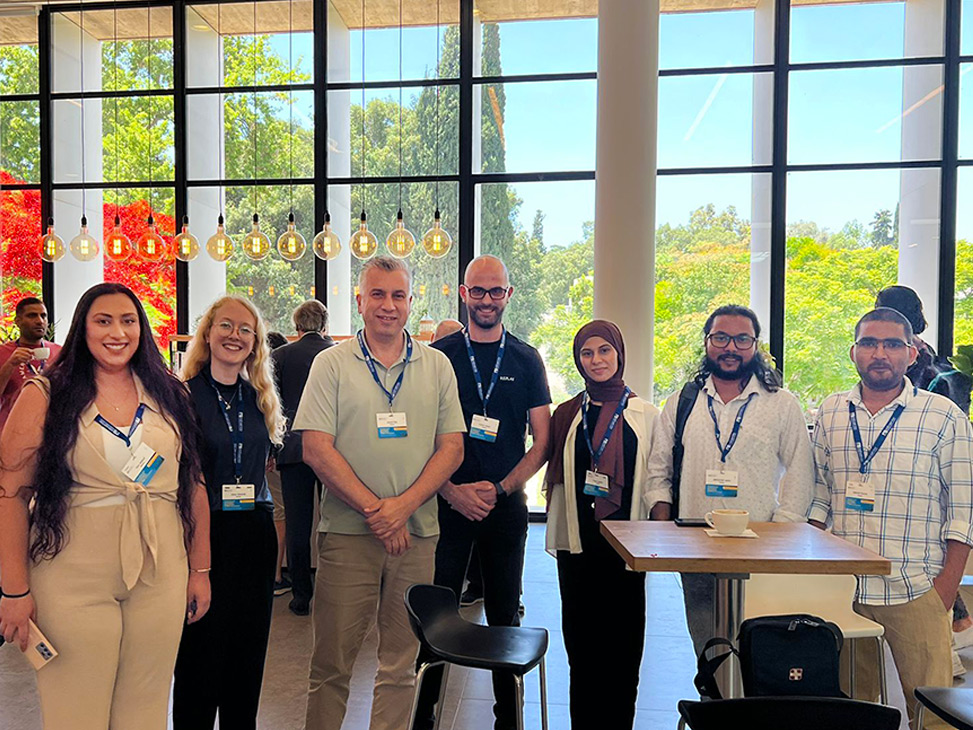
Eleven researchers currently make up the group: Professor Brik, one postdoctoral fellow, eight Ph.D. students, and Dr. Guy Kamnesky, who serves as laboratory manager and senior scientist. The atmosphere is collaborative and deliberately interdisciplinary, with synthetic organic chemistry running directly into cellular and cancer biology. Senior researchers, postdocs, and graduate students work side by side at the benches, troubleshooting difficult synthetic routes one hour and comparing biological readouts the next. What members describe taking away is a conviction about method: that synthetic chemistry, applied rigorously to an unresolved biological question, opens paths that no other approach reaches. Professor Brik’s own motto puts it more briskly – aim for the moon, and if you miss, you hit the stars.
Professor Brik holds the Jordan and Irene Tark Academic Chair, and the group belongs to both the Schulich Faculty of Chemistry and the Rappaport-Technion Integrated Cancer Center, a combination that pairs world-class chemical infrastructure with direct access to translational cancer research. Its reach depends on collaboration. Longstanding work with Aaron Ciechanover at the Technion uses the lab’s unique ubiquitin conjugates to address fundamental questions about the ubiquitin system, and work with Michael Glickman addresses the proteasome and the wider proteome. Hiroaki Suga at the University of Tokyo brought the RaPID platform to the group’s synthetic chains for macrocyclic peptide discovery; David Fushman at the University of Maryland resolved the structural basis of how those macrocycles discriminate; Nabieh Ayoub at the Technion carried them into DNA repair; Cynthia Wolberger at Johns Hopkins works with the group on the structural biology of modified histones; and Amir Orian at the Technion collaborates on targeted protein degradation.
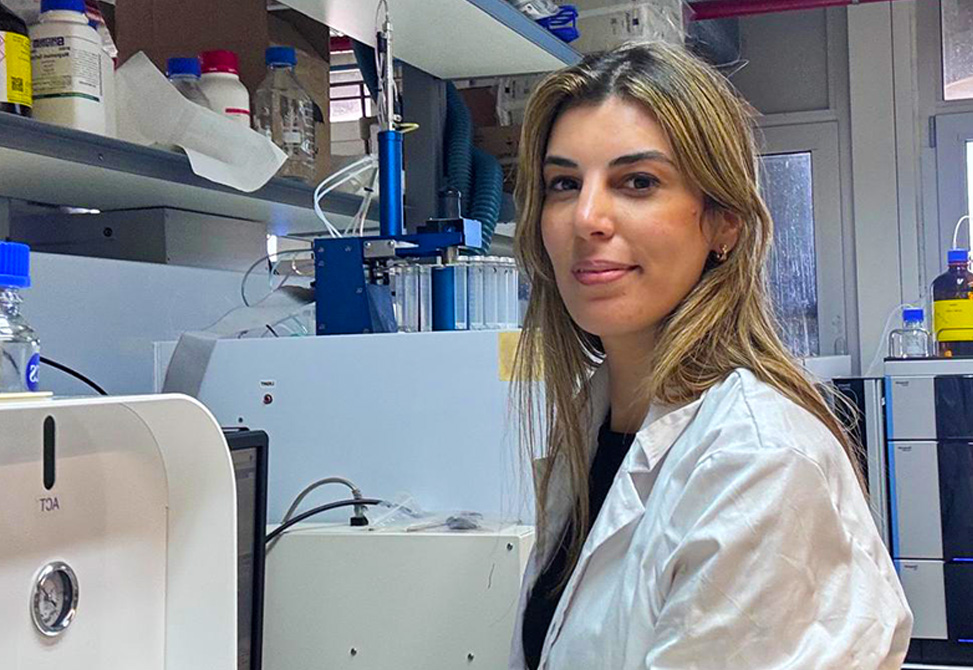
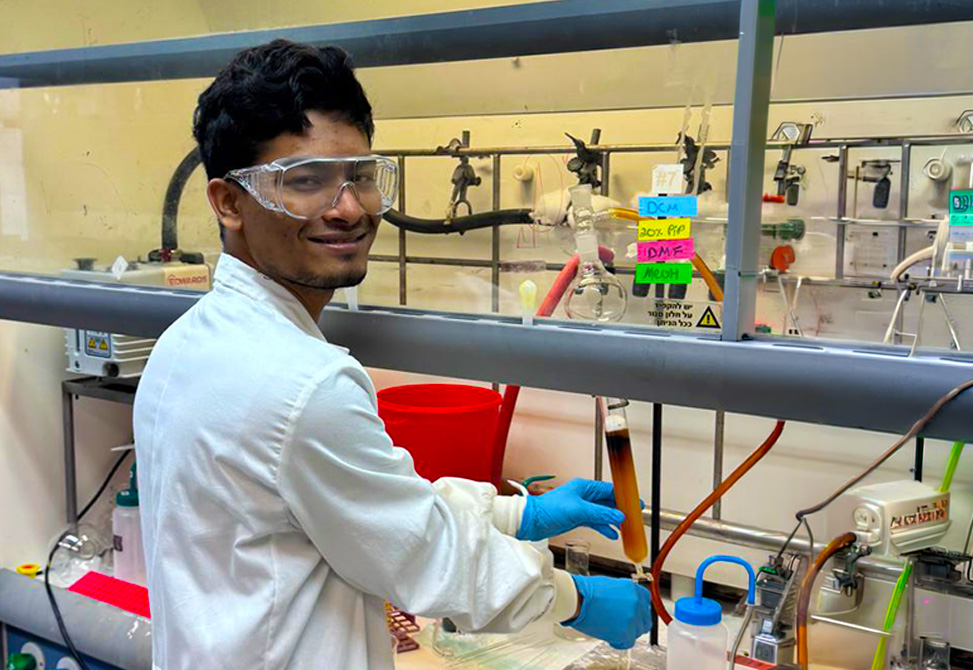
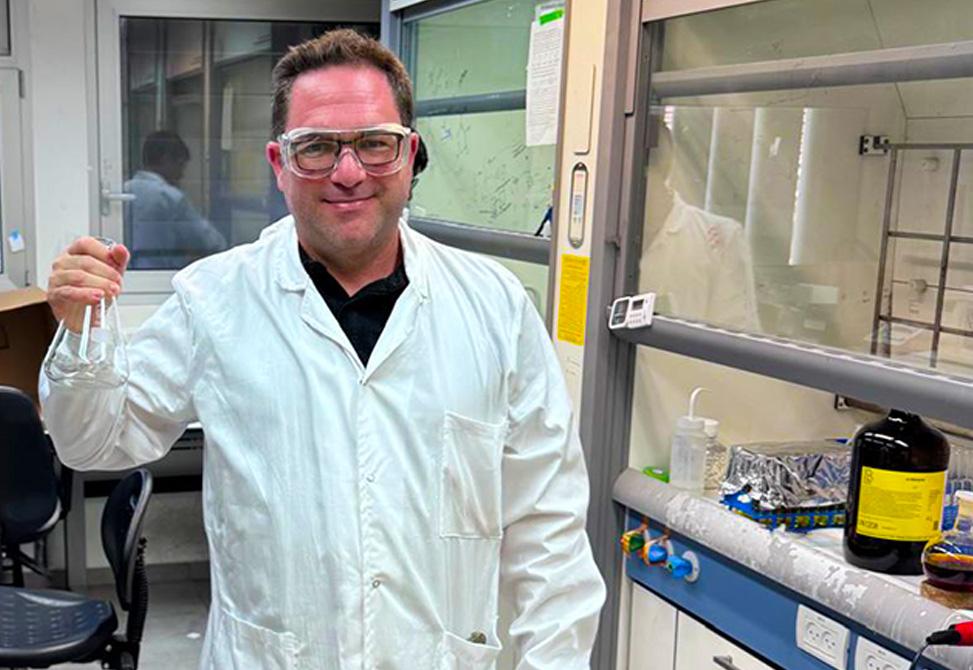
The through-line in the group’s work is homogeneity. Biological expression delivers mixtures; chemistry delivers one defined molecule, and with it the ability to install what biology cannot – isotope labels at chosen positions, fluorophores, non-natural linkages, latent electrophiles. That capability has driven a body of work spanning synthetic methodology, ubiquitin biochemistry, macrocyclic peptide discovery, and intracellular delivery, with each program feeding the next.
Building the Ubiquitin Code by Hand:
An efficient method for non-enzymatic ubiquitination using δ-mercaptolysine, reported in 2009, opened the synthetic route into ubiquitin biology. The lab went on to prepare all eight di-ubiquitin chains, a 304-residue Lys48-linked tetraubiquitin, and substrates ubiquitinated with chains of defined length – syntheses made difficult by iterative ligation under orthogonal cysteine protection and by the aggregation and purification problems that compound as an assembly grows. Having those chains in a bottle changed what could be asked, including the fate of ubiquitin chains during proteasomal degradation, and it later became the raw material for the group’s cyclic peptide program.
Transition Metals as Enabling Chemistry:
Removing protecting groups from a folded or nearly folded protein demands exceptionally mild conditions. Acetamidomethyl protection of cysteine is invaluable for controlling ligation order, but classical removal relied on mercury or silver. The group found that simple palladium salts strip Acm from unprotected peptides and proteins in aqueous buffer, rapidly and cleanly, including from N-terminal cysteine under native chemical ligation conditions – allowing ligation, desulfurization, and deprotection to run in one pot. Palladium was then extended to direct disulfide bond formation from S-acetamidomethyl cysteines in water, and gold(I) was shown to decage propargylated peptide bonds under aqueous conditions, which also yielded two routes to peptide cyclization.
Macrocyclic Peptides Against Ubiquitin Chains:
Ubiquitin is small and smooth, offering little for a conventional small molecule to grip, and the chain types differ from one another only subtly. Combining the group’s pure, defined chains with the RaPID system in the Suga laboratory produced de novo macrocycles that specifically modulate Lys48-linked chains, followed by selective binders of Lys63-linked chains that disrupt DNA damage repair. Crystallography and NMR with David Fushman then established why these macrocycles discriminate both linkage and chain length, converting an observed selectivity into an understood one. Libraries built with N-methylation and non-proteinogenic residues carried the chemotype into cells, and a spin-off company, Ub Therapeutics, is now working to bring these cyclic peptides toward the clinic in multiple myeloma.
Getting Synthetic Proteins Into Cells:
A synthetic protein of remarkable precision is of limited use if it cannot be put where the biology is. The group showed that cell-penetrating peptides fused to DABCYL substantially enhance live-cell delivery of synthetic proteins, and more recently developed suspension bead loading as an inexpensive delivery platform, used to follow URM1 behavior in live cells. Pairing synthesis with delivery allowed the lab, with Michael Matunis, to revisit how SUMO2 matures, a question that resists conventional methods.
Toward Degradation and Phase Separation:
Targeted protein degradation grew out of the ubiquitin–proteasome biology this lab has spent two decades taking apart synthetically, yet much of degrader discovery still treats the ubiquitin machinery as a black box. The group is a lead advanced partner in Twin2Degrade, a Horizon Europe WIDERA Twinning project coordinated by the National Hellenic Research Foundation in Athens, alongside Aaron Ciechanover and Ivan Dikic of Goethe University Frankfurt; the partners contribute workshops, summer schools, and staff and student exchanges linking laboratories in Haifa, Frankfurt, and Athens. Closer to home, the lab works with Amir Orian on PROTAC-like ferroptosis inducers against aggressive cancers. The newest direction is more exploratory still: using chemical protein synthesis and delivery to study and modulate liquid–liquid phase separation, with NEMO as the first target.
The lab’s working principle is easy to state and hard to execute: a modification is proposed, nobody can make it cleanly, and the chemistry decides whether the biology is real.
Selected Publications
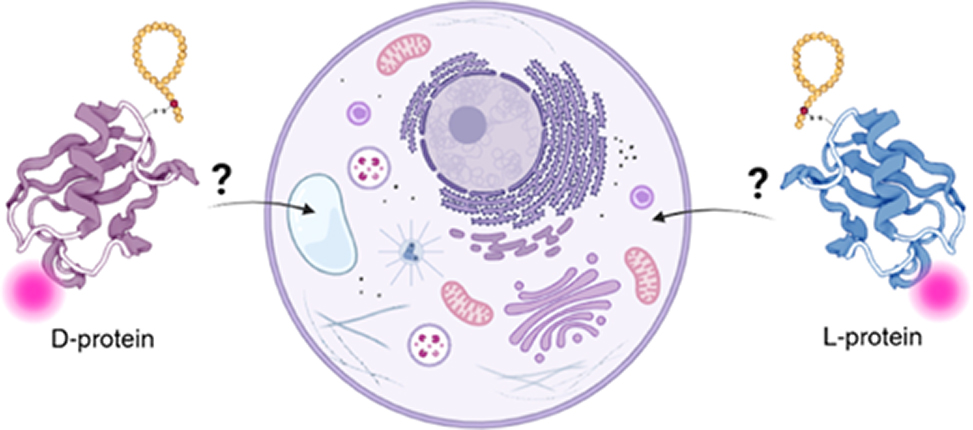
Nassar, E.; Donthoju, A.; Hasan, M.; Brik, A. Chemical Synthesis of Mirror-Image Proteins Reveals Chirality-Dependent Cellular Uptake Mediated by a Cell-Penetrating Peptide. J. Am. Chem. Soc. 2026, i148 (31): 33039–33048. DOI: https://doi.org/10.1021/jacs.6c03792
Oknin-Vaisman, A.; Panda, D.; Novak, R.; Khashibun, G.; Bitman-Lotan, E.; Gandhesiri, S.; Kazi, R.; Pahor, N.; von Heyl zu Herrnsheim, V.; Abu Ahmad, Y.; Kamnesky, G.; Mosler, T.; Diefenbacher, M. E.; Brik, A.; Orian, A. Discovery of Ferroptosis Inducers R4VP Compounds for Targeting Aggressive Cancers. Oncogene 2026, 45, 2727–2742. DOI: 10.1038/s41388-026-03829-2.
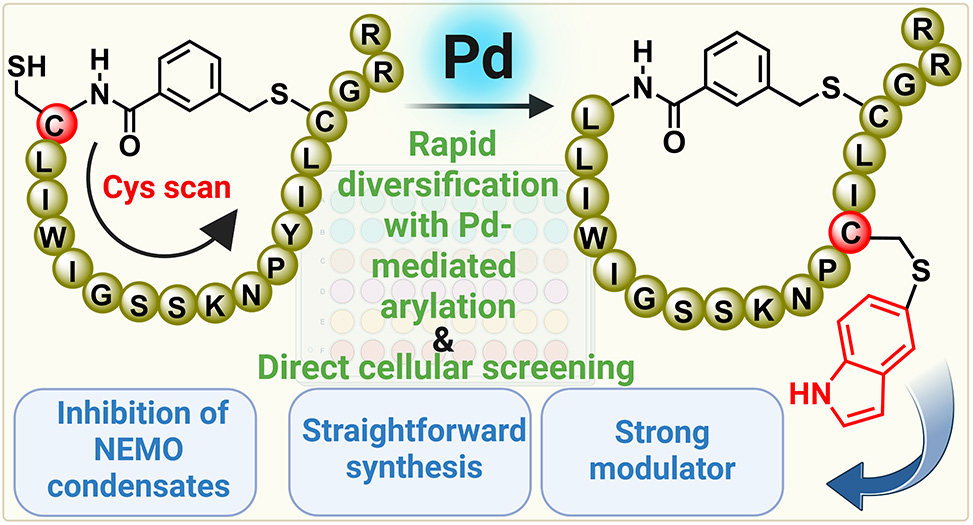
Hasan, M.; Vodnala, N.; Glagovsky, Y.; Saed, Y.; Kriegesmann, J.; Suga, H.; Brik, A. Direct Cellular Screening of Pd-Mediated Arylation of Cyclic Peptide Binders Targeting Ubiquitin Chains: Toward Modulating NEMO Liquid–Liquid Phase Separation. J. Am. Chem. Soc. 2025, 147 (31), 28303–28312. DOI: 10.1021/jacs.5c09059.
Saha, A.; Mousa, R.; Alalouf, Y.; Sadhu, P.; Hasan, M.; Mandal, S.; Mann, G.; Brik, A. Suspension Bead Loading (SBL): An Economical Protein Delivery Platform to Study URM1’s Behavior in Live Cells. Angew. Chem. Int. Ed. 2024, 63 (43), e202410135. DOI: 10.1002/anie.202410135.
Lemma, B.; Zhang, D.; Vamisetti, G. B.; Wentz, B. G.; Suga, H.; Brik, A.; Lubkowski, J.; Fushman, D. Mechanism of Selective Recognition of Lys48-Linked Polyubiquitin by Macrocyclic Peptide Inhibitors of Proteasomal Degradation. Nat. Commun. 2023, 14, 7212. DOI: 10.1038/s41467-023-43025-4.
Vamisetti, G. B.; Saha, A.; Huang, Y. J.; Vanjari, R.; Mann, G.; Gutbrod, J.; Ayoub, N.; Suga, H.; Brik, A. Selective Macrocyclic Peptide Modulators of Lys63-Linked Ubiquitin Chains Disrupt DNA Damage Repair. Nat. Commun. 2022, 13, 6174. DOI: 10.1038/s41467-022-33808-6.
Nawatha, M.; Rogers, J. M.; Bonn, S. M.; Livneh, I.; Lemma, B.; Mali, S. M.; Vamisetti, G. B.; Sun, H.; Bercovich, B.; Huang, Y.; Ciechanover, A.; Fushman, D.; Suga, H.; Brik, A. De Novo Macrocyclic Peptides That Specifically Modulate Lys48-Linked Ubiquitin Chains. Nat. Chem. 2019, 11 (7), 644–652. DOI: 10.1038/s41557-019-0278-x.
Sun, H.; Meledin, R.; Mali, S. M.; Brik, A. Total Chemical Synthesis of Ester-Linked Ubiquitinated Proteins Unravels Their Behavior with Deubiquitinases. Chem. Sci. 2018, 9 (6), 1661–1665. DOI: 10.1039/C7SC04518B.
Maity, S. K.; Jbara, M.; Laps, S.; Brik, A. Efficient Palladium-Assisted One-Pot and Rapid Deprotection of Cysteine(Acetamidomethyl) Following Native Chemical Ligation and/or Desulfurization to Expedite Chemical Protein Synthesis. Angew. Chem. Int. Ed. 2016, 55 (28), 8108–8112. DOI: 10.1002/anie.201603169.
Kumar, K. S. A.; Bavikar, S. N.; Spasser, L.; Ohayon, S.; Moyal, T.; Brik, A. Total Synthesis of a 304 Residue, K48-Linked Tetraubiquitin. Angew. Chem. Int. Ed. 2011, 50 (27), 6137–6141. DOI: 10.1002/anie.201101920.
Kumar, K. S. A.; Spasser, L.; Erlich, L. A.; Bavikar, S. N.; Brik, A. Total Chemical Synthesis of All di-Ubiquitin Chains. Angew. Chem. Int. Ed. 2010, 49 (48), 9126–9131. DOI: 10.1002/anie.201003763.
A Conversation with Professor Ashraf Brik
APS: Your program spans total chemical protein synthesis, ubiquitin signaling, macrocyclic peptide discovery, and intracellular delivery. That is a wide footprint for one laboratory. How did it come together?
Brik: Not by design, at least not at the start. My master’s work with Nizar Haddad at the Technion was the total synthesis of borrelidin, a macrolide antibiotic – classical target-oriented synthesis. Then in 1998 I moved to Scripps on a joint Technion–TSRI program under Ehud Keinan and Philip Dawson, which put me in the middle of native chemical ligation just as it was maturing. My thesis work used synthetic proteins to interrogate 4-oxalocrotonate tautomerase, and we were able to convert its activity from a tautomerase to a decarboxylase through chemical point mutations. That was the turning point for me. Chemistry let me edit a protein that no expression system could deliver, and the biology answered back. My postdoc with Chi-Huey Wong added glycoprotein synthesis and medicinal chemistry, including work on HIV protease inhibitors. When I started working independently at Ben-Gurion in 2007, I wanted a problem in which homogeneous material was genuinely difficult to obtain by other means, and in which the biology was important enough that people would care if we solved it. The ubiquitin system was exactly that. Everything else in the lab grew outward from that decision.
APS: Why does ubiquitin in particular require chemistry? Enzymatic assembly has been available for a long time.
Brik: Because enzymatic assembly gives you what the enzymes want to give you, not what the experiment requires. You get mixtures of chain lengths, and controlling linkage and the exact attachment site on a substrate is very difficult. If you want a defined conjugate – this substrate, this lysine, this linkage, this chain length, in milligram quantity and in a single form – you need synthesis. And once you commit to synthesis, you also gain the ability to install things biology cannot: isotope labels at chosen positions, fluorophores, non-natural linkages, latent electrophiles. In 2009, after we developed an effective method for non-enzymatic ubiquitination using δ-mercaptolysine, the sky was the limit for what one could do in ubiquitin biology. Our lab was the first to chemically construct all di-ubiquitin chains, Lys48-linked tetraubiquitin chains, and proteins ubiquitinated with chains of various lengths. That was a hard synthesis, mainly because of iterative ligation with orthogonal cysteine protection and the aggregation and purification problems that appear as the assembly gets longer. It pushed us to develop new protein chemistry to streamline the synthesis. It also helped us shed light on fundamental questions in ubiquitin biology, such as the fate of ubiquitin chains during proteasomal protein degradation. And having those chains in a bottle changed what we could ask, and it later turned out to be the very thing that made the entire cyclic peptide program possible.
APS: Transition metals have become a signature of your methodology – palladium, gold. What problem were they solving?
Brik: Removing protecting groups from folded or nearly folded proteins requires exceptionally mild conditions. Acetamidomethyl protection of cysteine, for example, is enormously useful for controlling ligation order, but the classical removal chemistry relied on mercury or silver, which is harsh and can be incompatible with the rest of the molecule. We found that simple palladium salts remove Acm from unprotected peptides and proteins in aqueous buffer, quickly and cleanly, including from N-terminal cysteine under native chemical ligation conditions. That let us run ligation, desulfurization, and deprotection in one pot, which is really the point – every isolation step you remove is material you keep. We then extended the idea: palladium can also form disulfide bonds directly from S-acetamidomethyl cysteines in water, which matters for targets with defined disulfide patterns. Separately, gold(I) turned out to decage propargylated peptide bonds under aqueous conditions, which gives a way to carry a backbone modification through a difficult synthesis and remove it at the end. That also led to the discovery of two methods for peptide cyclization using propargylated peptides.
APS: Your group made ester-linked ubiquitin conjugates chemically. Why go after that particular linkage?
Brik: Ubiquitin is not attached only to lysine residues in the particular protein substrate. Oxyester linkages to serine and threonine had been reported and implicated in signaling, but the field had essentially no way to produce them homogeneously, so their biochemistry stayed speculative. We developed a total-synthesis route to ester-linked ubiquitinated proteins and could then ask directly how deubiquitinases handle them. That is the general shape of what we do: a modification is proposed, nobody can make it cleanly, and the chemistry decides whether the biology is real.
APS: The collaboration with Hiroaki Suga has produced a remarkable run of papers. How did it begin?
Brik: With a target nobody wanted. Ubiquitin is small and smooth, with very little in the way of grooves for a small molecule, and the different chain types differ only subtly from one another – so selective binding looked close to hopeless with conventional chemotypes. What we did have was pure, defined chains of known linkage and length, made chemically. What Suga had was the RaPID system, which screens trillion-member libraries of macrocyclic peptides. Putting the two together was the obvious move once we recognized it. The first result, in Nature Chemistry in 2019, was de novo macrocycles that specifically modulate Lys48-linked chains. Later we obtained selective binders of Lys63-linked chains that disrupt DNA damage repair, working with Nabieh Ayoub, and with David Fushman we resolved by crystallography and NMR why these macrocycles discriminate both linkage and chain length. That structural understanding was important because, until then, selectivity was something we observed rather than understood.
APS: In vivo activity is the usual objection to macrocycles. How did you address it?
Brik: Head-on, with chemistry. The early binders were overwhelmingly proteinogenic, so skepticism about cellular activity was fair. Together with Joseph Rogers and the Suga lab we built libraries incorporating N-methylation and non-proteinogenic residues, which improved the drug-like character and demonstrated modulation of Lys48 ubiquitin chains in vivo. That led to the establishment of a new spin-off company, Ub Therapeutics, which is working to bring these cyclic peptides to the clinic, particularly for multiple myeloma.
APS: Your 2025 JACS paper screened palladium-mediated arylation products directly in cells. Why move screening out of the tube?
Brik: Because the properties that decide whether one of these molecules works are cellular properties. You can optimize affinity in vitro for a long time and learn nothing about uptake or intracellular fate. The arylation chemistry enabled us to rapidly diversify cyclic peptide binders, and rather than triaging by binding first, we screened the products in cells for changes in known markers of DNA repair inhibition. That gave us an analogue with better binding and clear cellular activity, and pointed toward modulating NEMO liquid–liquid phase separation, which is a direction I find genuinely exciting.
APS: Delivery has become its own research line for you. Is it now the rate-limiting step for chemical protein synthesis as a biological tool?
Brik: In many cases, yes. We can build a synthetic protein of remarkable precision and then be unable to put it where the biology happens. We showed that cell-penetrating peptides fused to DABCYL substantially enhance live-cell delivery of synthetic proteins, and more recently we developed suspension bead loading as an inexpensive delivery platform, which we used to study URM1 behavior in live cells. Combining synthesis with delivery allowed us, with Michael Matunis, to revisit how SUMO2 matures – a question that is extremely challenging to address with conventional methods.
APS: You are a lead advanced partner in Twin2Degrade, and your group has moved into PROTAC-like ferroptosis inducers with Amir Orian. How does targeted protein degradation look from where you sit?
Brik: Targeted protein degradation grew directly out of the ubiquitin–proteasome biology that our lab has spent two decades taking apart synthetically, yet much of degrader discovery still treats the ubiquitin machinery as a black box that either works or does not. I think defined, homogeneous conjugates have a great deal to contribute to understanding why particular degraders succeed. Twin2Degrade, which is coordinated by the National Hellenic Research Foundation in Athens under Horizon Europe, is a chance to build that capacity more broadly across the community rather than in one laboratory.
APS: The past three years have brought the Rappaport Award, the European Peptide Society’s Leonidas Zervas Award, election to the Israel Academy of Sciences and Humanities, the Vincent du Vigneaud Award in 2025, and the Max Bergmann Medal in 2026. Bergmann and Zervas gave the field the Cbz group; du Vigneaud gave it the first synthetic peptide hormone, developing disulfide-bond chemistry along the way. Does carrying those names change how you think about the work?
Brik: It does, though perhaps not in the way one expects. Those names belong to people who built the tools that everything since has rested on. What strikes me is how much of what my lab does is still, at bottom, protecting groups and forming bonds in water – the same problem du Vigneaud, Bergmann, and Zervas faced, on larger molecules. Recognition of that kind is also a recognition of the students and postdocs who did the experiments, and of collaborators without whom none of the biology would have been accessible. I am aware that saying so is conventional. It also happens to be true.
APS: What would you tell an APS member trained in classical peptide chemistry who wants to move into chemical biology?
Brik: Choose a research area that you really like, even if it is extremely challenging. Chemistry is transformative, but you also need to build one biological capability in-house and do it properly – an assay, a cell line, a readout you trust – rather than a shallow version of five. The value is not that you can do the biology better than a biologist; it is that owning one readout changes the pace at which you can iterate your chemistry, and it changes what questions occur to you. Beyond that, choose collaborators whose problems you find interesting rather than whose techniques you need. Our best work has come from partners who asked their own questions, not from running our samples.
APS: A final thought for the peptide community?
Brik: The boundary between peptide chemistry and protein science has essentially dissolved, and this is entirely to our advantage. Synthesis now routinely reaches molecules once considered biology’s exclusive territory, and macrocyclic peptides have become a credible modality for targets that small molecules could not reach. The field is in an unusually strong position. The interesting question is what we choose to point it at.
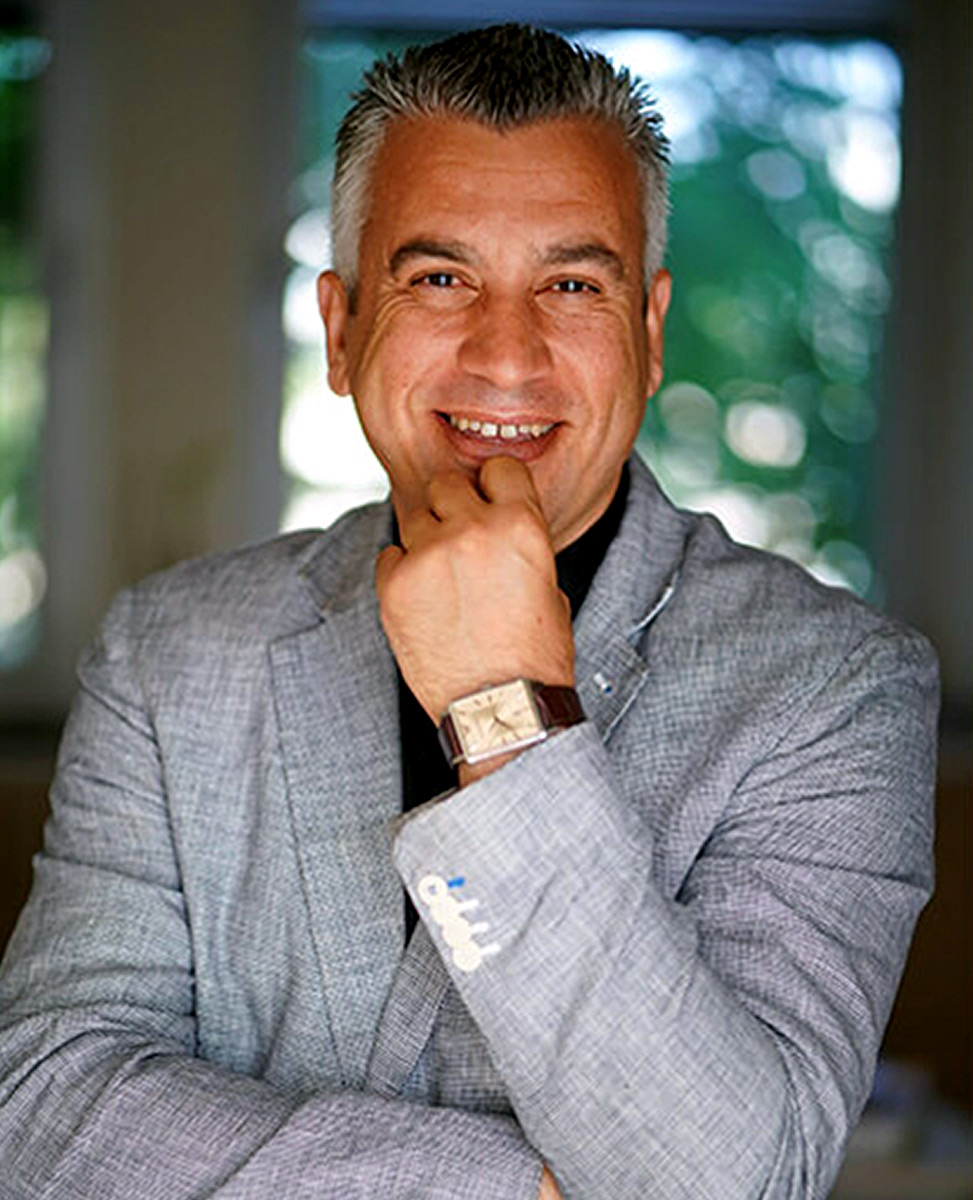
Professor Ashraf Brik, Technion – Israel Institute of Technology.