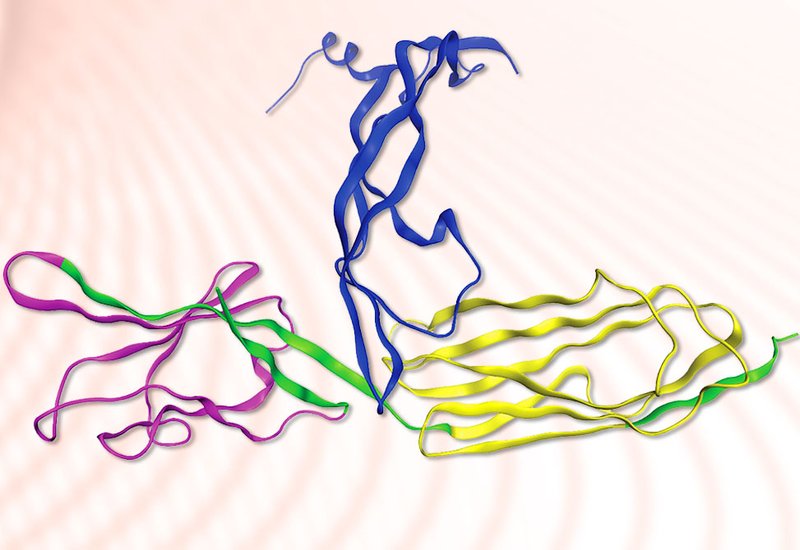
Vascular endothelial growth factor, VEGF, is the master regulator of new blood vessel formation, yet translating its potent biology into reliable therapeutics has proven stubbornly difficult. Native VEGF degrades quickly, distributes poorly, and can drive unwanted vascular growth if delivered without precision. Synthetic peptides that replicate VEGF's receptor-engaging chemistry offer an attractive alternative, but designing short sequences that faithfully activate the key effector receptor, VEGFR2, requires navigating enormous sequence space with limited experimental throughput. Computational approaches that learn from known bioactive sequences have begun to change that calculus, and the intersection of machine learning, molecular simulation, and multistage biological validation is emerging as a productive path toward next-generation pro-angiogenic agents.
Researchers in the Choi Lab at Ajou University, published in Protein Science, combined a long short-term memory, LSTM, neural network with structure-guided refinement to design a panel of VEGF-mimetic peptide candidates. The LSTM model was trained on known VEGF agonist sequences and converged above 90% accuracy within approximately 50 epochs, learning sequence-level motifs rather than directly predicting biological activity. Six candidates, VMP1 through VMP6, were filtered by physicochemical criteria and screened experimentally. One peptide, VMP3, reproducibly outperformed its siblings and was advanced to exhaustive structural, biophysical, and biological characterization alongside the benchmark VEGF-mimetic peptide QK and recombinant human VEGF as controls.
Molecular dynamics simulations run in triplicate to 300 ns each revealed that VMP3 binds near the immunoglobulin-like D2 domain of VEGFR2 with an average MM/PBSA binding energy of −27.12 ± 4.14 kcal/mol, driven primarily by van der Waals and electrostatic forces. Per-residue decomposition identified PHE3 and VAL6 as the principal anchoring residues, mediating hydrophobic and π–cation contacts with the receptor. Alanine-scan mutagenesis of VEGFR2 residues ILE154 and TYR209 abolished or sharply reduced favorable binding energy, confirming a well-defined allosteric site at D2 distinct from the canonical VEGF-A footprint. Surface plasmon resonance, SPR, provided direct biophysical confirmation, yielding a KD of 1.60 nM for VMP3, a nanomolar affinity that surpassed the benchmark peptide QK under identical conditions.
Functional validation progressed through three biological tiers. In vitro, VMP3 promoted human umbilical vein endothelial cell proliferation, scratch-wound closure, and transwell chemotaxis at concentrations from 100 nM to 1 μM, with efficacy at 1 μM matching both VEGF and QK. Western blotting confirmed dose-dependent phosphorylation of VEGFR2 and downstream effectors including AKT, ERK1/2, PLCγ1, eNOS, p38, and JNK; co-treatment with VEGF produced an additive signaling boost, while the VEGFR2 kinase inhibitor sorafenib abolished responses, confirming receptor specificity. Ex vivo mouse aortic ring assays showed that VMP3 at 3 μM induced elongated, morphologically mature microvessels comparable to VEGF-treated controls, with quantified increases in sprout front distance, thickness, and total area. In vivo, Matrigel plug implants in C57BL/6J mice treated with VMP3 displayed markedly elevated CD31-positive vessel density and hemoglobin content relative to untreated controls, confirming functional neovascularization.
The most therapeutically pointed findings came from a streptozotocin-induced type 1 diabetic mouse wound model. Topical VMP3 application accelerated wound closure at all tested doses across a 15-day course, achieving near-complete re-epithelialization where vehicle-treated animals retained residual open areas. Histological and immunohistochemical analyses encompassing H&E, CD31, Masson's trichrome, and Picrosirius Red staining revealed dense capillary networks, increased keratinocyte and fibroblast proliferation, and dose-dependent collagen accumulation with well-organized fiber architecture in VMP3-treated wounds, outperforming QK on several tissue-level metrics.
VMP3 establishes a proof of concept that LSTM-guided sequence generation, when paired with physics-based structural refinement and rigorous multi-model validation, can yield short synthetic peptides capable of meaningfully activating a clinically important receptor tyrosine kinase. The authors acknowledge that peptide stability, proteolytic susceptibility, and pharmacokinetic half-life will require further attention before clinical translation, and they propose future mutational studies targeting PHE3 and VAL6 to experimentally confirm the computational binding model. Tested against chronic ischemia or other vascular insufficiency models, and potentially reformulated with stabilizing modifications, VMP3 or optimized analogs could offer a tunable, manufacturable alternative to protein-based pro-angiogenic therapies for wound care and vascular regeneration.