Varying Rotational Speeds in Different Solvents
On a warm summer night in Turin, Voss found himself in a cobblestone lane filled with cafés. Conversations unfolded around him in cascades of gestures and laughter that were as captivating as the melody of the words themselves. Shoulders moved, hands traced arcs through the air, a soft touch landed on a forearm to punctuate a point. He watched the scene with a chemist's eye and compared his impressions to what he had observed elsewhere to arrive at a conclusion that would earn him, by his own cheerful admission, a total of three likes on LinkedIn: "Having the same conversation in different languages is like running the same reaction in different solvents." This is a fitting entry point into the mind of a researcher whose career has been defined by crossing borders, adapting to new environments, and finding creative connections between disciplines.
Voss traces his scientific calling to a childhood episode so ordinary it borders on universal. He was sick with a cold. His mother took him to the doctor, who prescribed some pills. Two days later, the misery was gone. "Incredible," he thought. "How does this work?" That flash of curiosity crystallized into his professional calling he describes with characteristic precision: to shift complex dynamic equilibria on a molecular level.
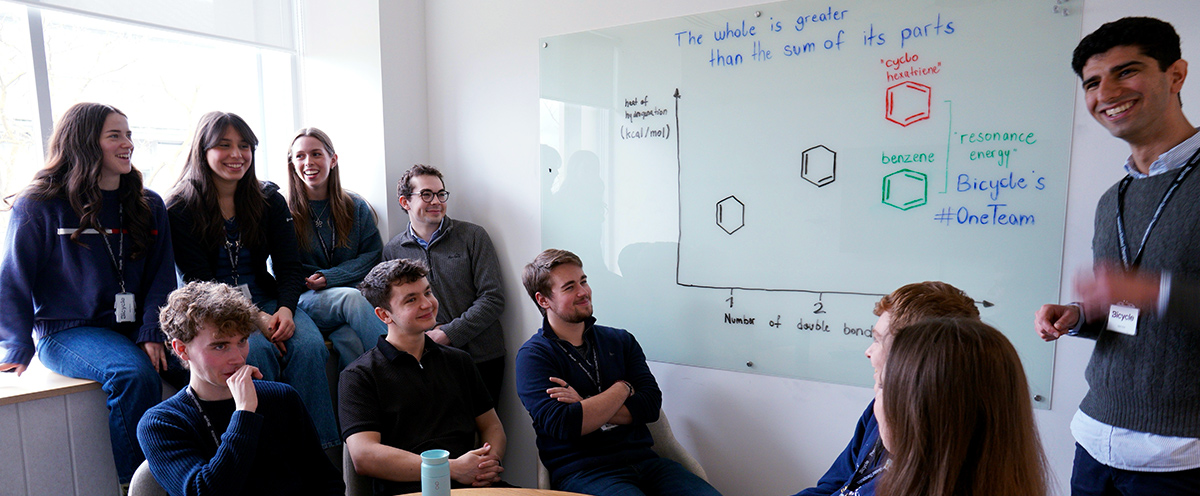
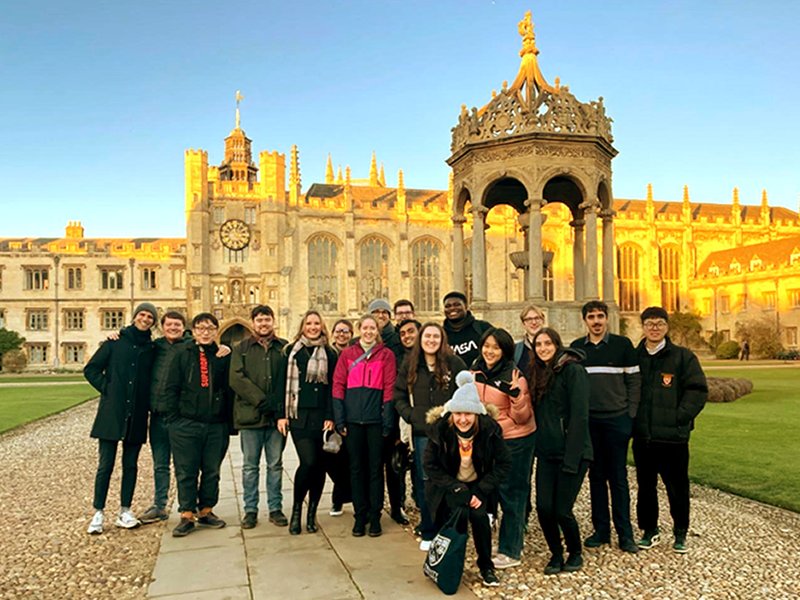
Philosophical lessons in Chemistry with Saan. The whole is greater than the sum of its parts. Saan sharing his thoughts on resonance energy with Bicycle Therapeutic’s 2025/2026 student cohort. “The difference between a hypothetical ‘cyclohexatriene,’ red, and benzene, green, is that in the latter example each carbon atom allocates some of its energetic potential to the system it is part of. By doing this collectively as #OneTeam these carbon atoms create a system that is greater than the sum of its parts. From left to right Isabel Morris, Eleanor de Havas, Georgia Harrison, Tom Foster, Findlay MacGillivray-Edwards, Leo Sagal, Oscar Skynner, James O'Connor, Freya Meakin and Saan. Photo: Max Harman.
The path from that moment led through pharmaceutical sciences at the Freie Universität Berlin and then to a fully funded Ph.D. candidacy at the Australian National University, where he earned his Ph.D. in Chemistry for the development of a novel class of constrained peptides. What sounds like a straightforward trajectory was anything but. Australia closed its borders in response to the unfolding COVID-19 pandemic just weeks before his intended arrival. After months of uncertainty, Voss started his program from a collaborator's lab in Germany, conducting his first major piece of work on the opposite side of the globe from his supervisor. Supervisions took place before sunrise to bridge a ten-to-twelve-hour time difference. The result was a first-year Ph.D. spent largely in isolation.
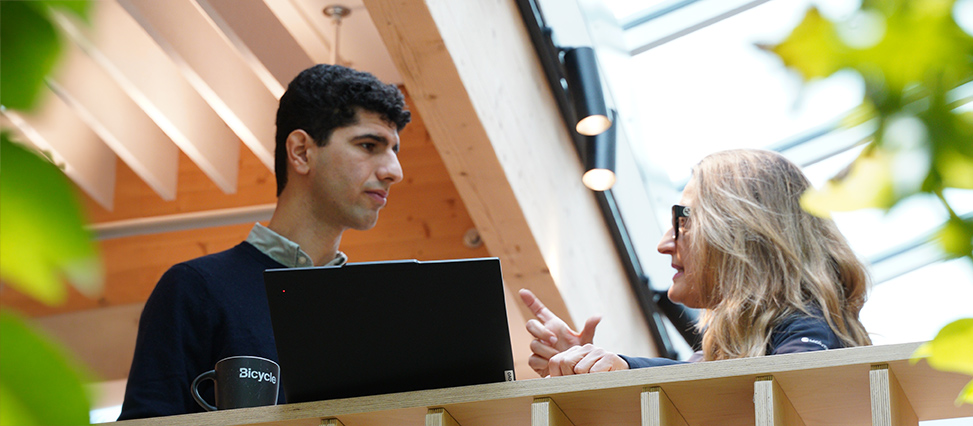
Mentorship in action. Senior Vice President and Head of Therapeutics Dr. Inma Rioja in a conversation with Dr. Saan Voss to provide guidance and share her long-standing expertise in drug discovery. Dr. Rioja leads an interdisciplinary team at Bicycle Therapeutics that is trusted with the task to deliver first-in-class Bicycle-Drug-Conjugates and Bicycle-Radio-Conjugates. Photo: Max Harman
The work that emerged from those difficult months, on peptide-bismuth bicycles enabling in situ access to stable constrained peptides with superior bioactivity, was published in Angewandte Chemie International Edition in 2022 and highlighted by C&EN magazine. A second Angewandte Chemie publication followed in 2024, extending the approach to cell-penetrating variants. Only in hindsight, Voss says, did he come to appreciate what the pandemic years had taught him: to develop solutions whenever you encounter a problem, to keep your composure when conditions turn turbulent, and to break complex systems into individual building blocks.
Bicycle Molecules
Voss now works as a UKRI Knowledge Transfer Partner at the University of Cambridge and Bicycle Therapeutics, positioned at the intersection of the David Spring Group in the Department of Chemistry and one of the field's leading constrained peptide companies. His research centers on developing diagnostics and therapeutics in oncology and beyond using genetically encoded peptides known as Bicycle molecules. The work is deeply interdisciplinary, drawing on medicinal chemistry, chemical biology, molecular biology, cellular biology, structural biology, and in vivo pharmacology. As such, he says, we naturally adopt strategies from adjacent fields to unlock opportunities.
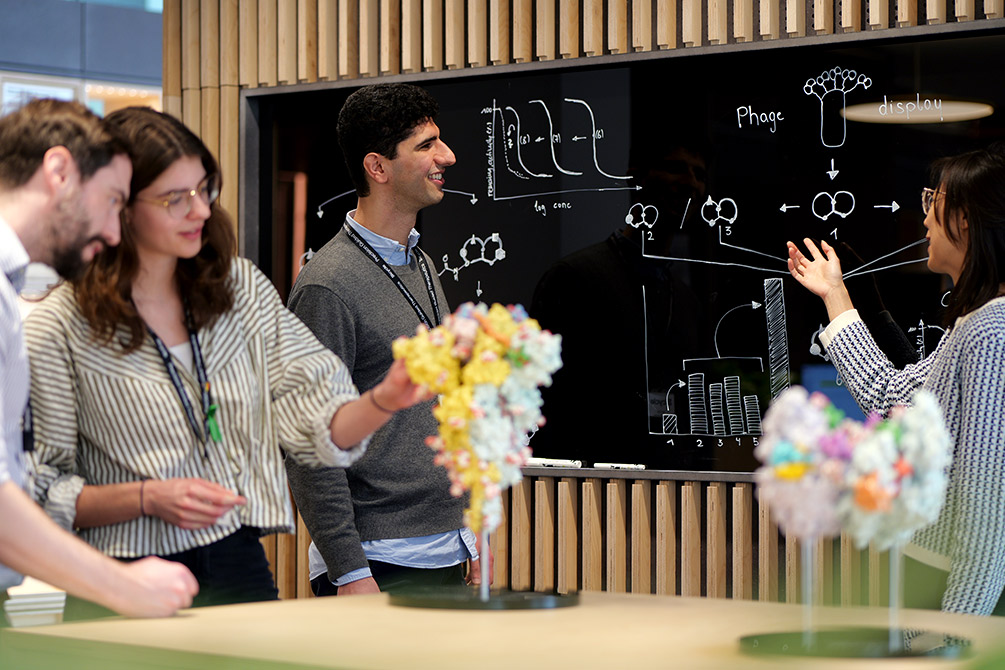
Science everywhere you look. Dr. Liuhong Chen, Vice President and Head of Phage Innovation Platform discussing optimisation strategies of Bicycle molecules with Dr. Saan Voss. Dr. Chen who promotes innovation across the organisation has been contributing for 15 years to the evolution of the phage platform and Bicycle as a whole. Front, Celia Kessler and Nick Lewis discussing epitope mapping strategies on a 3D model. Photo: Max Harman.
When asked to name one method central to his success, Voss resists the premise. Every technique, he argues, regardless of its apparent footprint, proves critical in answering the question you originally proposed. Pressed further, he concedes that learning how what he calls "arguably the most advanced phage-display platform in the world" works has been a privilege that makes you think beyond the edge of today's horizon.
His personal ambition reaches further still. Voss is drawn to what he calls "concept designs" that may redefine how we interpret therapeutics in the future. He is passionate about dismantling complex systems into simple building blocks and reconstructing them into novel compositions, compositions that may seem obvious once you see them and yet do not exist today.
A Continuously Evolving Enzyme
Having moved from Germany to Australia and then to England, Voss has developed an extended metaphor for the experience of working across countries and cultures. Think of yourself, he suggests, as an enzyme that catalyzes a chemical reaction. You have a certain substrate scope and catalytic efficiency that depend on your environment: pH, ionic strength, cofactors. Moving to a new lab, especially one in a different country, changes all of these parameters. You find yourself, for instance, at a pH where your catalytic efficacy is compromised. The key, he says, is to understand which characteristics make you less efficient in the new environment, identify substitutions within your sequence that could promote a conformational change, implement those mutations, and then refine the result. Do this enough times, and you can jump into almost any situation with increasing confidence, process a greater diversity of substrates, and always retain, if not exceed, your productivity. This is the kind of analogy that reveals how deeply Voss has internalized both his science and his life experience as expressions of the same underlying logic.
Mentors
Voss speaks with striking warmth about the people who shaped his trajectory. Dr. Mark Frigerio, Vice President and Head of Platform Technology and Science at Bicycle Therapeutics, and Professor David Spring at the University of Cambridge were instrumental in his transition from Ph.D. to postdoctoral funding, securing an Innovate UK KTP research grant valued at approximately £330,000 before he had even finished his doctoral program. He also secured beamtime grants from the Diamond Light Source in the United Kingdom and the Australian Synchrotron, and received the inaugural Luis Moroder Award from the Italian Peptide Society in 2024.
He reserves particular praise for Dr. Mike Skynner, Chief Scientific Officer at Bicycle Therapeutics, who promotes a culture that supports early career researchers by creating an environment where you dare to challenge yourself beyond the edge of your abilities. Working alongside colleagues with decades worth of experience across scientific and non-scientific fields, Voss says, sharpens your thinking, your analysis, your problem solving, and your creativity. "If it wasn't for these individuals," he reflects, "I wouldn't be enjoying today's privileges."
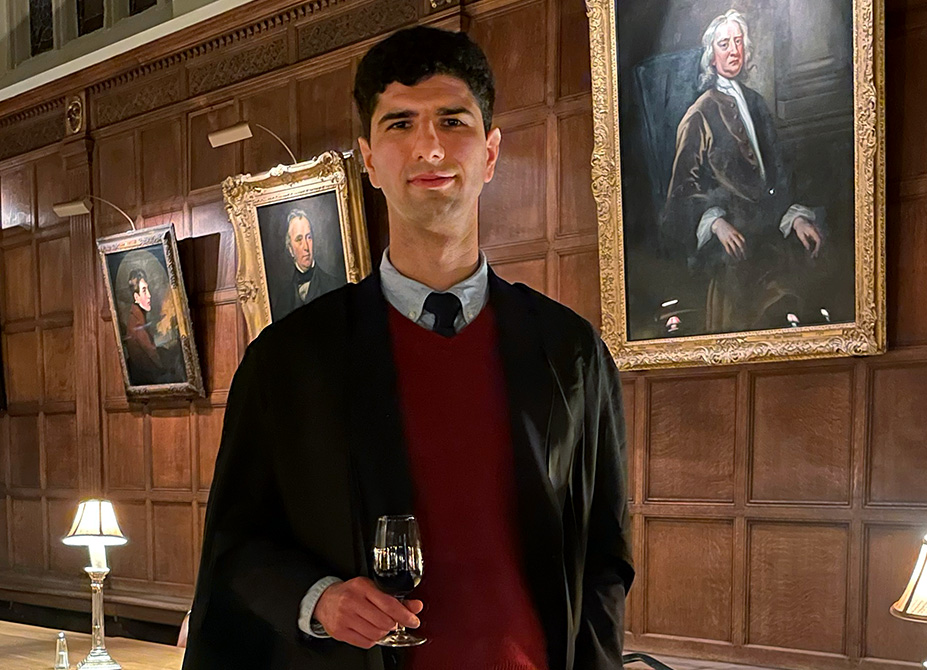
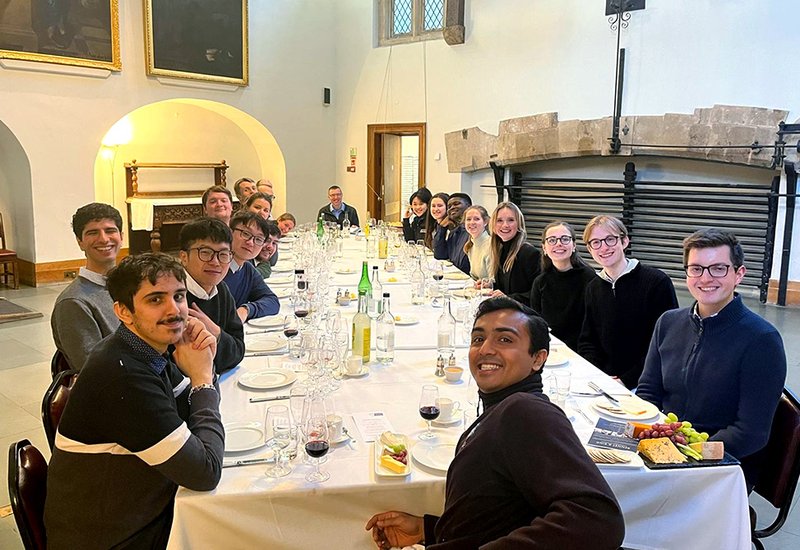
Dr. Voss wrapping up a formal dinner with a glass of Trinity’s own Port.
Outside the Lab
Outside the lab, Voss explores the English countryside on cycle tours to estates like Wimpole Hall and Audley End House. He attends performances by the Cambridge symphony orchestra and makes regular trips to "The Big City" to see plays at the National Theatre or exhibitions at London's Tate Modern. He has not yet presented at an American Peptide Symposium but is looking forward to Boston in 2027 as an opportunity to share his work with colleagues and friends in the peptide community.
For now, his solvents keep changing, and the reactions keep yielding new products.
University Website: Dr Saan Voss | Yusuf Hamied Department of Chemistry