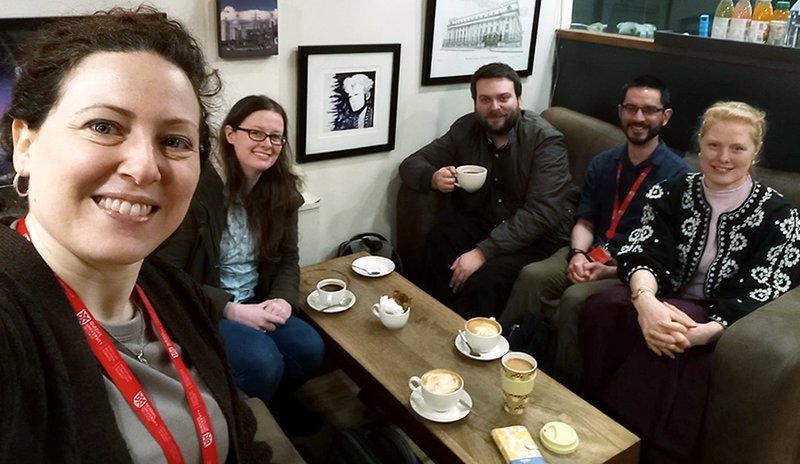
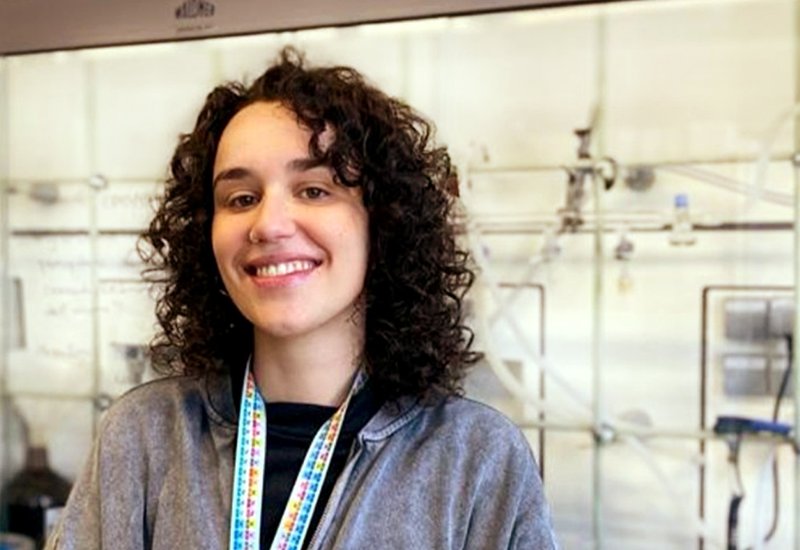
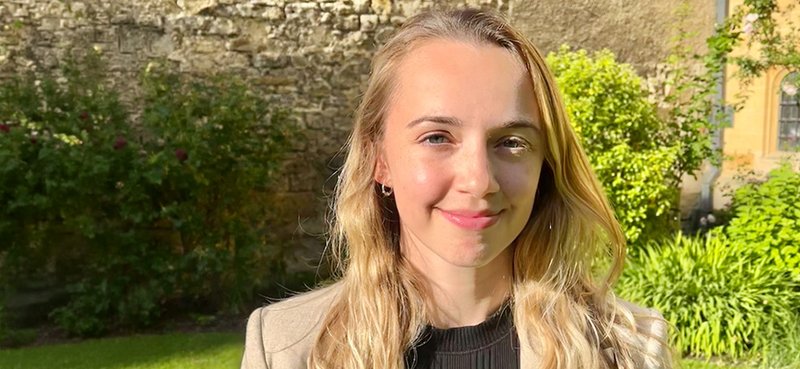
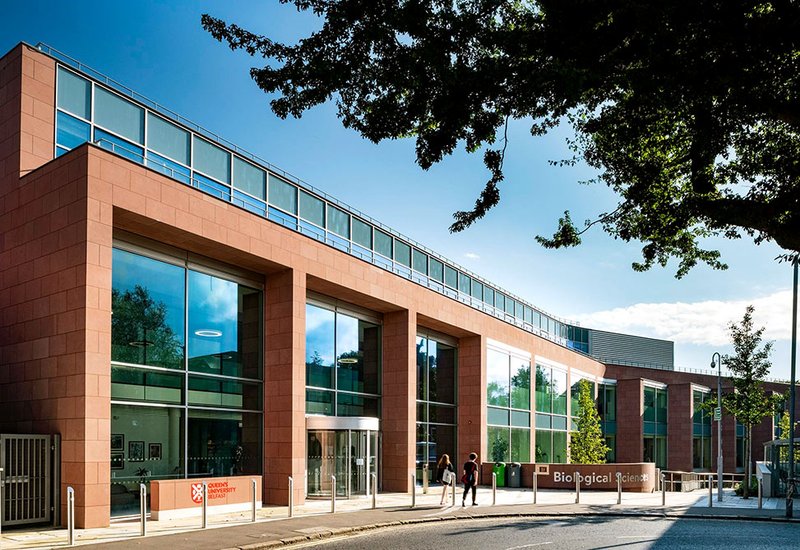
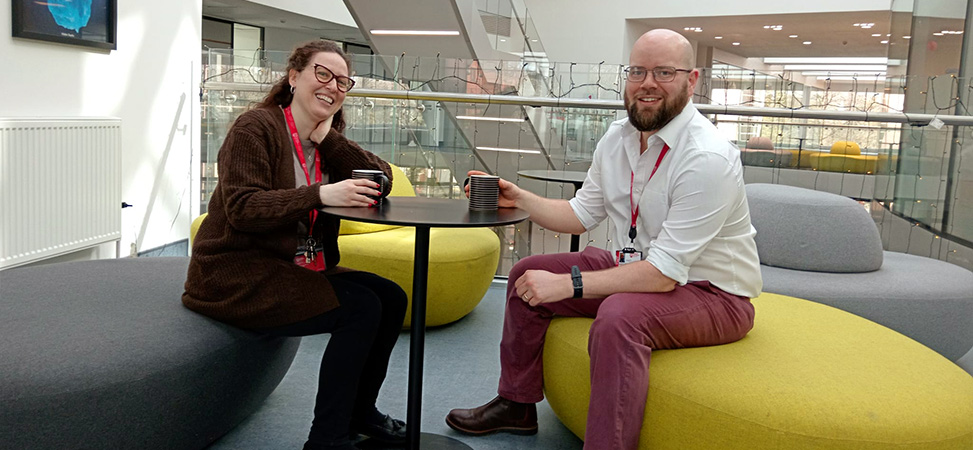
There is a Thursday morning coffee gathering in the School of Biological Sciences at Queen's University Belfast that Lucia Lombardi would not miss for the world. It began when Connor Bamford, a virologist and her office neighbor, invited Lucia to join during her very first weeks at Queen's. This is a small and close group, consisting of Rachel Wheatley, Julianne Megaw, Edel Hyland, Simon Cameron, and Jason Chin, all young lecturers navigating the same stage of their careers. Linda Oyama, although rarely able to attend, "always impossibly busy," Lombardi laughs, completes the group, adding an extra level of warmth when she can make it. The group shares an hour of coffee and conversation that reliably drifts well beyond science. "It may sound like a small thing," Lucia says, "but for me it has become a really important part of the week." Since all her family is in Italy and she has built her life in Belfast on her own, that weekly gathering is more than a collegial ritual. It is, she says simply, a connection that matters.
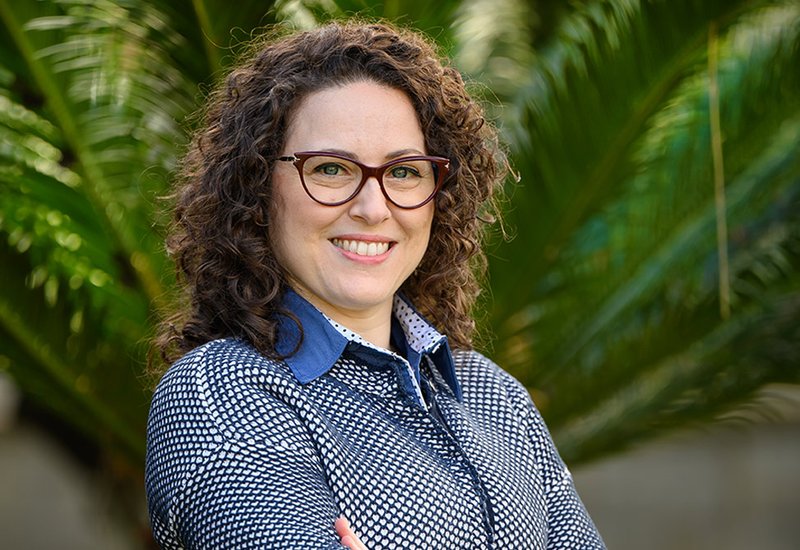
That attention to the human texture of science runs through every conversation with Lucia Lombardi. She joined Queen's University Belfast in February 2025 as a Lecturer, the UK equivalent of an Assistant Professor, in the School of Biological Sciences, and immediately set about building a research group focused on peptide-based systems for therapeutic delivery and antimicrobial design. However, when she tells the story about her first year, it is as much about people as it is about science. About the students who came to her because they wanted to work with her, about the lab manager without whom she says she would have felt completely lost, and about what it means to set the tone for a group when you are now responsible for its culture.
"The way you speak to students, how available you are, how you react when something goes wrong, how much confidence you give them," she reflects. "All of that shapes the lab more than I had fully appreciated before."
Before Belfast, Lombardi's career traced a remarkable arc across five countries and some of the most stimulating environments in contemporary peptide science. She completed her Ph.D. in Biochemical and Biotechnological Sciences in Italy, working in the laboratories of Professor Massimiliano Galdiero at the University of Campania Luigi Vanvitelli, and Professor Stefania Galdiero at the University of Naples, where her thesis focused on membrane-active peptides against bacterial and viral infections. It was an early immersion in the intersection of peptide chemistry and anti-infective biology that would remain central to Lucia's thinking.
Lucia's postdoctoral journey took her first to Columbia University, where she worked with Professors Anne Moscana and Matteo Porotto, then back to the University of Naples Federico II and Professor Stefania Galdiero's lab. She continued to the University of Tours, working with Professor Igor Chourpa, and then to the University of Bristol and Professor Dek Woolfson's group. Her final postdoctoral stop was at Imperial College London in Professor Daryl Williams's lab. Each move, she says, deposited something into how she now thinks and works. "Some places taught me rigor, some taught me independence, some taught me interdisciplinarity. All taught me the importance of community and mentorship."
It was at Imperial that Lucia crystallized her sense of what independence really means. "When I arrived at Imperial I realized that I still had a lot to learn," she says, with characteristic candor. "It is a place where research is done at a high level, but also where people are genuinely encouraged to grow into independent scientists." Her PI there treated her not simply as a postdoc but as a young scientist developing her own voice. That experience, she says, shaped the environment she now wants to create for her own students: high standards, active support, and genuine trust.
Coming to Belfast added something else entirely for Lucia. "I was even able to buy my first home," she says, with a smile. "That was a very important and happy milestone for me."
Lombardi's research program at Queen's runs along two closely connected lines. The first focuses on peptide-based systems for transport across biological barriers, with particular interest in the intestinal barrier and the blood-brain barrier. The second centers on antimicrobial peptides and peptide-based biomaterials designed to combat resistant pathogens and disrupt biofilms. Together, they reflect a conviction that peptides occupy a uniquely powerful position in biomedical science.
What excites Lucia most, she says, is that peptides can be both the object of study and the solution, acting simultaneously as therapeutics, delivery tools, and structural components of functional biomaterials. "That is why this work matters," she says, "because it combines fundamental understanding with clear translational potential in areas where new solutions are urgently needed."
On one side of Lucia's lab, students build biomimetic models of biological barriers to study transport mechanisms and identify design principles for more effective peptide delivery. At the other side of the lab, students design self-assembling antimicrobial systems intended to reach where conventional antibiotics cannot. These two directions are not as disparate as they might appear. In both cases, the underlying question is how molecular architecture can be tuned to achieve a desired biological outcome across a complex, resistant interface.
Underpinning both directions, peptide synthesis and careful analytical characterization form the methodological core of Lucia's research program. But she is quick to emphasize that standard synthetic routes are only the starting point. "I also adapt and tailor peptide design and modification strategies depending on the function I want to achieve, whether that relates to stability, delivery, self-assembly, or biological activity." Alongside the chemistry, she has built a deliberately collaborative interdisciplinary network, working with colleagues in microbiology, engineering biology, robotics, and biomaterials. The combination, she believes, is what allows detailed molecular design to connect with functional testing and translational application.
What originally drew Lucia towards peptide science was the same thing that still holds her attention today: the sensitivity of these molecules to small changes. "Early on, I became interested in how relatively small changes in sequence can have a major effect on membrane interactions and biological activity. That combination of molecular precision and functional impact was very exciting to me." Two decades on, that excitement has not faded. "Peptide science continues to open new possibilities across therapeutics, biomaterials, delivery, and diagnostics. Peptides can be studied as molecules, but they can also be engineered into systems and technologies." She pauses on that thought for a moment. "I think we are only beginning to explore what peptides can do."
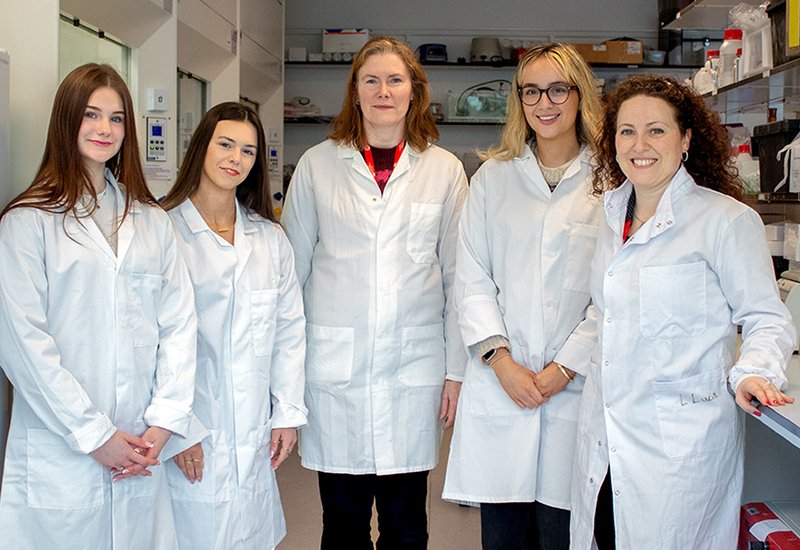
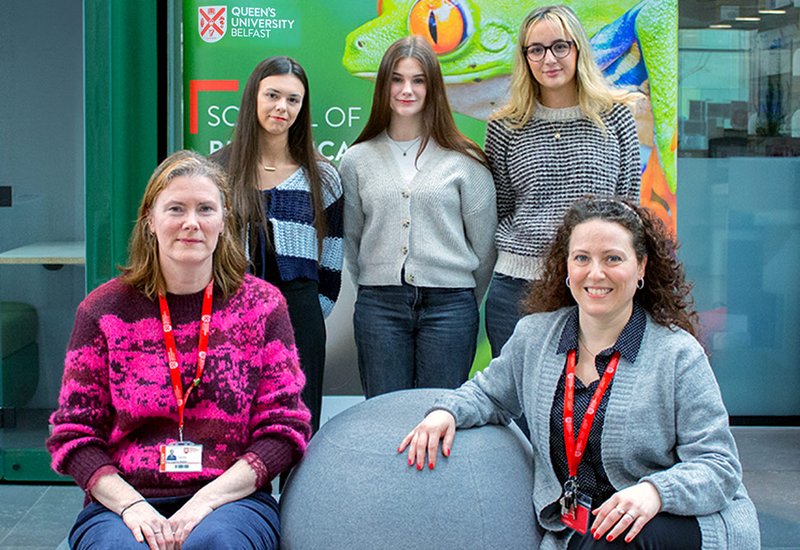
When Lombardi arrived at Queen's, she did not yet know what her first students would be like. What she found was encouraging. Charlotte Hamilton and Ellie Anderson were among the first to join, and she recalls that they came to her because they wanted to work with her specifically. "I took that as a very encouraging sign at the beginning of this new phase." Megan Carey joined soon after, bringing, Lombardi says, the same motivation and commitment. Celia Jiménez López, a postdoctoral researcher based in Spain, serves as an assistant supervisor in the group, supporting students' day-to-day progress while Lombardi leads overall supervision and training.
But the person Lucia mentions first when asked what surprised her most about running a lab is Angelina Madden, her lab manager and technician. "Without her, I would have felt completely lost at the beginning. Angelina continues to play a crucial role in helping me manage and organize the lab." It is a recognition she clearly means sincerely, and one she connects to a broader point. "I do not think we give enough recognition to lab technicians, lab managers, and University Staff Members in general, but we should: without them, research simply would not move forward."
For Lombardi, mentoring is not a secondary task that runs alongside the science. It is inseparable from it. "I want my students to feel comfortable coming to me, while also feeling challenged. I believe in giving people responsibility and encouraging them to aim a little higher than they might initially expect of themselves." She draws on her own experience in doing so, including what she wishes someone had told her at that stage, but she is careful not to present mentoring as a problem she has solved. "Mentoring is never something you fully master, because all of us keep learning."
Lombardi has been an active presence in the peptide community well before her appointment. She served as an oral presentation and poster judge and as a mentor at the Schram Young Scientists' Lunch at the 2025 American Peptide Symposium in San Diego, where she also reconnected with colleagues from earlier stages of her career and struck up new collaborations. "For me, that is one of the most valuable things APS offers: it connects different stages of your scientific life while also opening new directions for the future."
Lucia is a member of the RSC Protein and Peptide Science Group Committee and organizes and hosts the Protein and Peptide Science Webinar Series, work she describes as an expression of something she cares about deeply: creating spaces where people can exchange ideas openly and build connections across the field.
Her postdoctoral years brought recognition that she values not only for the science they acknowledged. The RSC Soft Matter Prize at the 3rd PepMat Conference in 2018 and the Prize for Best Multidisciplinary Talk at Imperial College London in 2023 reflected the range of her scientific contributions. But it is the Julia Higgins Award at Imperial in 2024, given in recognition of her advocacy and support for women in STEM and academia, including postdoctoral researchers and Ph.D. students, that she mentions with particular warmth. She was also a finalist for the PFDC Creating a Positive Research Environment Award, and part of a team that received a Gold Team Award for promoting science, equality, diversity, inclusion, and mental health. "Together, these recognitions have meant a great deal to me because they reflect not only research, but also communication, mentorship, and the academic environment I try to help create."
Outside the lab, Lucia Lombardi is a belly dancer. She is deeply drawn to Arabic culture, the music, the atmosphere, and the energy that surrounds it, and she has a teacher she describes as fantastic. "For me, dance is both a joy and a way to reconnect with myself outside science. Wherever I am, I think I am always looking for those moments of culture, beauty, rhythm, and connection that make life feel fuller."
There is also a small detail she offers as a portrait of herself that feels entirely right. Meetings with her students or colleagues, she says, always last longer than expected. "We always start with work, but then somehow the conversation moves to travel, relationships, restaurants, or life more broadly." She does not apologize for this. "I think that reflects me quite well: I am serious about science, but I also care a great deal about people and about creating an environment where conversation feels natural, open, and human."
For postdoctoral researchers thinking about making the transition to independence, Lucia's advice is direct and generous in equal measure. Prepare early and broadly: research vision matters, but so does communicating it, understanding your own strengths, and being able to show that you can build a group, not only do excellent science yourself. Do not wait until you feel completely ready. And do not confuse independence with isolation. "Building a career in academia also means learning how to seek support, build collaborations, ask questions, and make use of the people and structures around you."
In five years, she hopes her research program will have a clear and recognized identity at the interface of peptide chemistry, biomolecular design, and biomedical application. A successful lab, to her, would be one producing rigorous and creative science inside a strong and supportive team culture. "More broadly, success for me would mean not only publications and funding, but also having created an environment in which people grow in confidence, develop independence, and feel that they are doing meaningful science together."
On Thursday mornings in Belfast, over coffee and unhurried conversation, it already looks rather like that.