Global Peptide Groups - ChemSynBio
When Benjamí Oller-Salvia returned to Barcelona in 2019 to start the ChemSynBio group, he had a faculty position, a clear vision, and no funding. Teaching loads in the Spanish university system are demanding, and building a research program at the same time requires a particular kind of stubbornness. A Marie Curie fellowship arrived at a critical moment, allowing him to reduce teaching and hire his first Ph.D. student. Then the pandemic struck just as the group was gaining momentum. Paradoxically, the lockdown proved productive for grant writing, and in the year that followed, every application the group submitted was funded. Today ChemSynBio is a team of 20 researchers from nine countries, working across chemical biology, synthetic biology, and bioengineering to tackle one of medicine's most persistent problems: getting therapeutics into the brain.
The Problem at the Center
The blood-brain barrier is extraordinarily good at its job. It protects the central nervous system from toxins, pathogens, and fluctuations in blood chemistry, but it also blocks the vast majority of therapeutic molecules from reaching brain tissue. For patients with glioblastoma, the most prevalent and aggressive primary brain tumor, this biological firewall is devastating. Current treatments can slow initial tumor growth, but recurrence is nearly universal because the drugs that might eliminate resistant cancer stem cells cannot reach them in sufficient concentrations. Worse, many of the molecular markers on these stem cells also appear on healthy tissue, so even therapies that do arrive tend to cause collateral damage.
ChemSynBio approaches this challenge from multiple angles simultaneously, layering chemical precision onto biological programmability in ways that reflect Oller-Salvia's own trajectory through both disciplines.
Shuttles, Bicycles, and Masks
The group's earliest thread traces back to Oller-Salvia's doctoral work with Ernest Giralt at IRB Barcelona, where he studied how venom-derived peptides cross tight biological barriers. The observation was elegant: apamin, a neurotoxin from bee venom, reaches the central nervous system without disrupting the barrier, but its toxicity and immunogenicity preclude therapeutic use. By systematically stripping the molecule down and replacing its disulfide bond with a lactam bridge, the team created MiniAp-4, a monocyclic peptidomimetic that is protease-resistant, non-toxic, and capable of transporting proteins, quantum dots, and nanoparticles across human cell-based barrier models and into mouse brain tissue in vivo. "Nature provides excellent starting points," Oller-Salvia says, "but medicinal chemistry optimization is essential for translation."
That principle carried forward into BrainBikes, the group's next-generation shuttle platform. These bicyclic peptidomimetics target the transferrin receptor on brain endothelium, using a trifunctional chemical linker to generate constrained structures from linear peptide precursors. The bicyclic architecture delivers protease resistance while maintaining the receptor engagement needed for transcytosis, and critically, BrainBikes can transport large cargoes including antibody fragments, a major limitation of earlier shuttle designs. Now, supported by a European Research Council grant, we are advancing an ambitious effort to generate next generation shuttles and reprogram the blood–brain barrier to enable more efficient and highly selective transport into the brain.
But delivery is only half the equation. Even a therapeutic that reaches its target must distinguish diseased tissue from healthy tissue, and this is where the group's work on conditionally active biologics comes in. ChemSynBio engineers proteins, peptides, antibodies, and miniproteins that remain inert during systemic circulation and switch on only at the disease site, triggered by tumor-associated proteases, changes in pH, light, or small molecules. A recent publication in Journal of the American Chemical Society demonstrated that computational tools, specifically RoseTTAFold diffusion and ProteinMPNN, can design peptide masks from scratch, eliminating the need for laborious display-based library screening. Nearly half of the 20 designs tested achieved greater than 100-fold reduction in target binding, with the best mask decreasing EGFR engagement by over three orders of magnitude. Upon cleavage, binding was restored in 19 of 20 cases.
What surprised Oller-Salvia most was that the masks did not need to bind tightly. A dissociation constant of roughly 5 µM proved sufficient for robust inactivation when the mask was covalently tethered, because the proximity effect compensates for what would otherwise be weak affinity. "This is important," he notes, "because designing high-affinity peptides computationally remains challenging. Our approach works precisely because it doesn't require nanomolar mask affinity."
Building on these results, we are testing the masked proteins with academic groups and industry partners, while extending the concept across modalities, including drug conjugates and bispecifics. Rounding out the program, we are advancing protein and peptide‑functionalized, stimuli‑responsive nanoparticles for gene delivery to brain tumors, engineered to deliver genetic payloads efficiently and to modulate the tumor microenvironment, with the aim of enhancing immune responses and expanding the therapeutic potential of genetic approaches in a tissue long considered refractory. Taken together, our brain shuttles, conditionally active biologics, and gene‑delivery nanocarriers form a unified strategy: enable brain access, keep agents inert in circulation, and activate them only at the disease site to maximize efficacy while minimizing collateral damage.
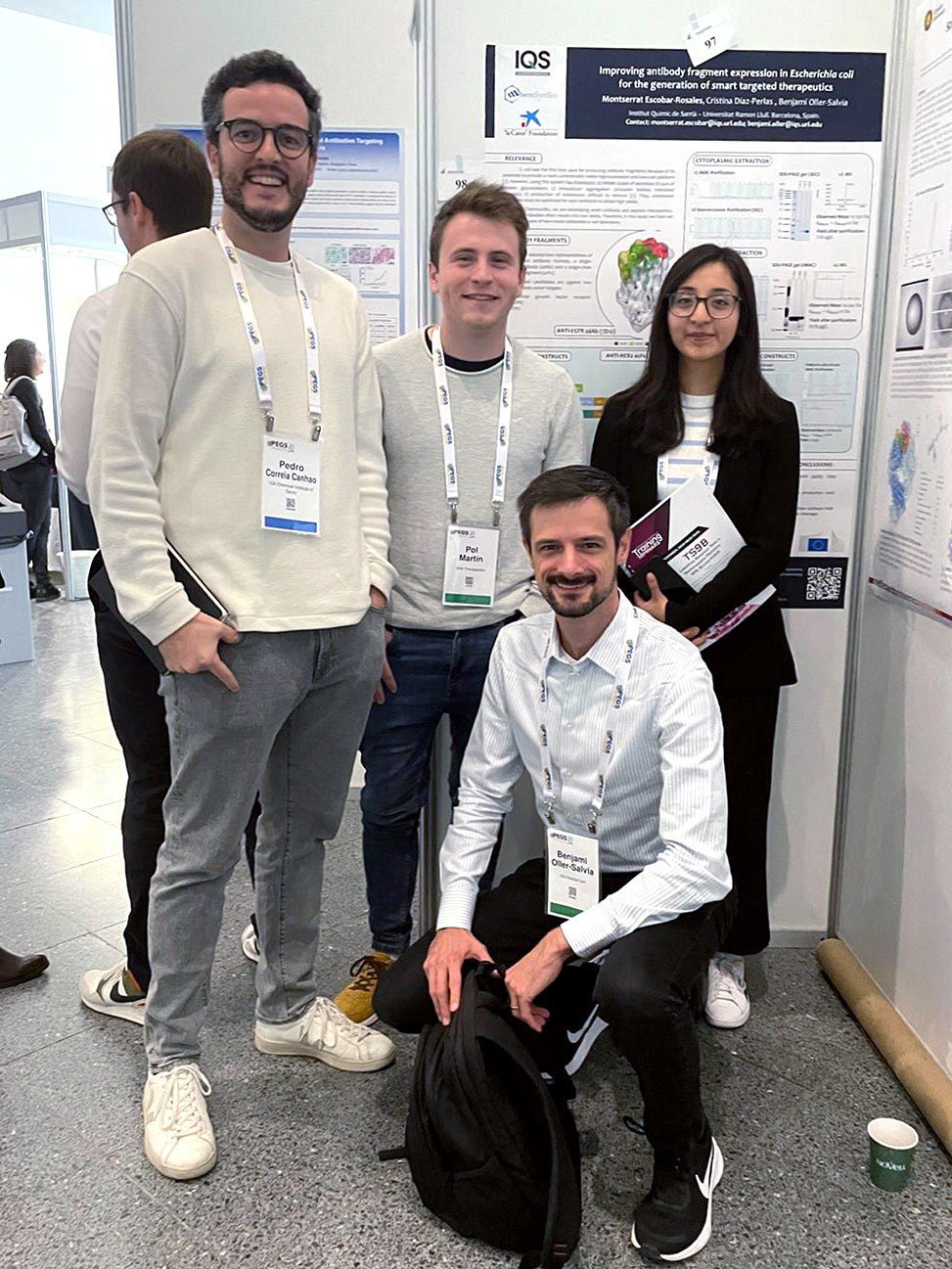
Team representing ChemSynBio at the Protein Engineering Summit, PEGS, Europe.
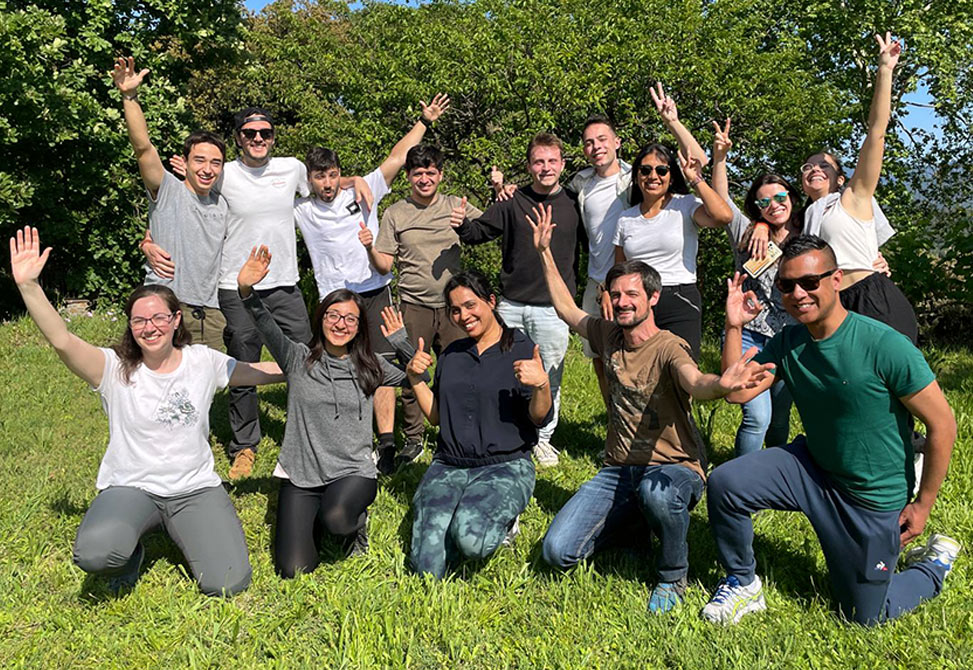
ChemSynBio hike and BBQ at Montseny Natural Park.
Life in the Lab and Beyond the Bench
ChemSynBio thrives on collaboration. Oller‑Salvia works closely with senior researchers Cristina Díaz‑Perlas and Shambhavi Pandey, drawing on input from the entire team, to shape the group’s scientific direction, secure funding, and set research priorities. This shared leadership model creates a framework in which everyone can excel, advancing their own projects while tackling challenges collectively. A culture of shared responsibility and mutual support is central to the lab’s identity. "Conveying enthusiasm is key," Benjamí says. "I want to recreate the environment I experienced as a Ph.D. student with Ernest Giralt: rigorous science within a supportive group where people genuinely enjoy what they do."
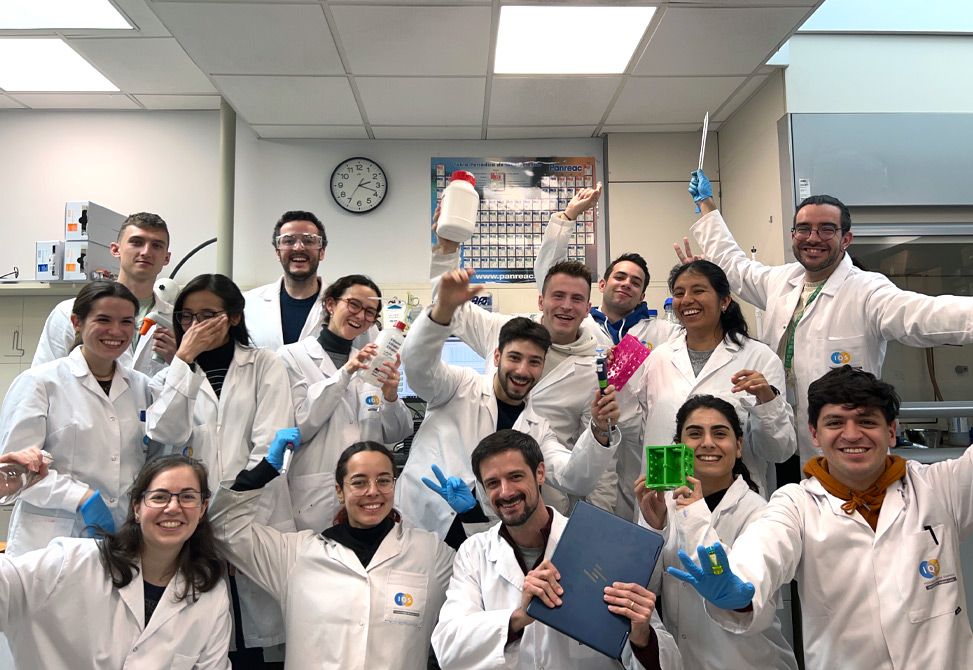
ChemSynBio having fun in the lab.
That philosophy extends well beyond the laboratory. The group marks milestones collectively, from thesis defenses and publication celebrations to prizes and new project awards. Members regularly attend national and international conferences in small teams to share their work with the broader scientific community. And outside the lab, ChemSynBio makes time for group retreats, hikes, barbecues, calçotades, a beloved Catalan tradition involving fire-roasted sweet onions, Christmas dinners, and the occasional beach volleyball match. It is, by all accounts, a place where serious science and genuine community reinforce each other.
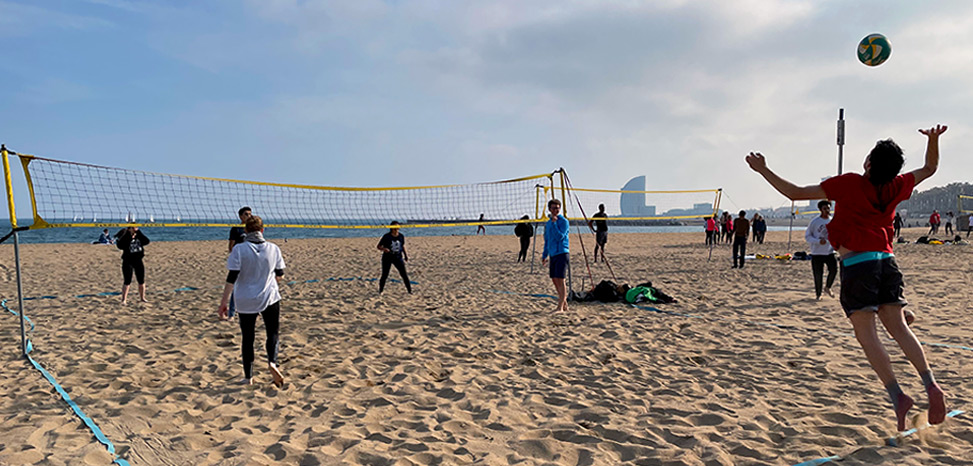
Team spirit on and off the bench: ChemSynBio hits the Barcelona sands.
Looking Forward
With support from the European Research Council, the Spanish Ministry of Science, Innovation and Universities, "la Caixa" Foundation, Marie Skłodowska-Curie Actions, the Spanish Cancer Society, and AGAUR, ChemSynBio is now pursuing an integrated vision: shuttle peptides that cross the barrier, activatable therapeutics that discriminate between tumor and healthy tissue, and gene delivery systems that reprogram the immune landscape of brain tumors. Each layer addresses a different failure mode in current treatment, and the group's interdisciplinary composition, chemists working alongside molecular biologists, bioengineers, and pharmacists, reflects a conviction that the boundaries between fields are less useful than the connections across them.
"Peptides are uniquely positioned to address problems that small molecules and large biologics cannot solve alone," Oller-Salvia says. "If we continue merging these disciplines, we'll develop therapeutics that are smarter, safer, and more precisely targeted than anything currently available."
The ChemSynBio group is based in the Department of Bioengineering at IQS School of Engineering, Ramon Llull University, Barcelona, Spain. You can reach them via their website.
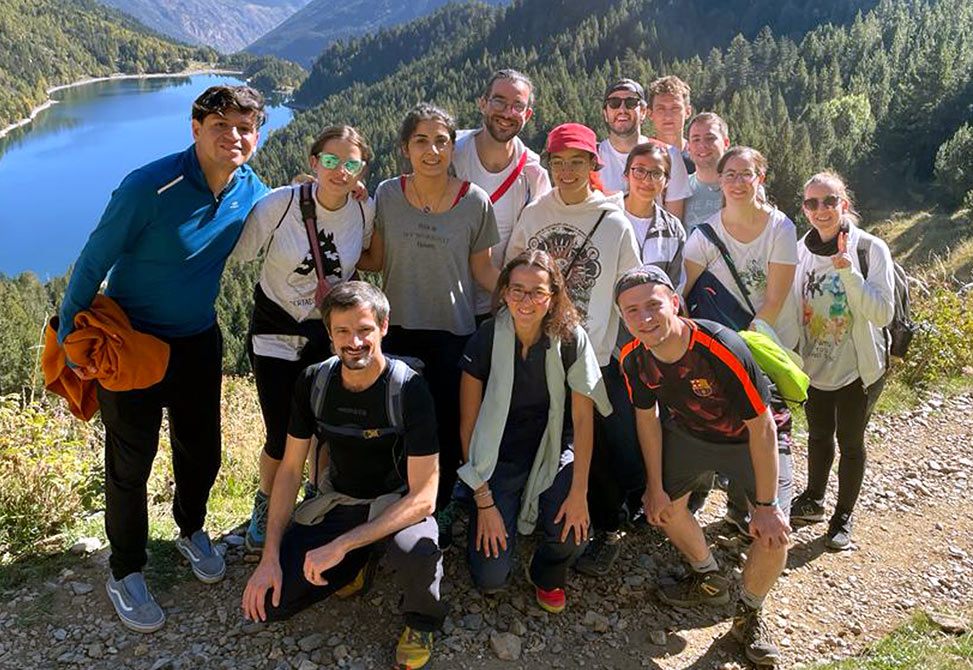
Celebrating our expansion with a well‑earned team retreat.
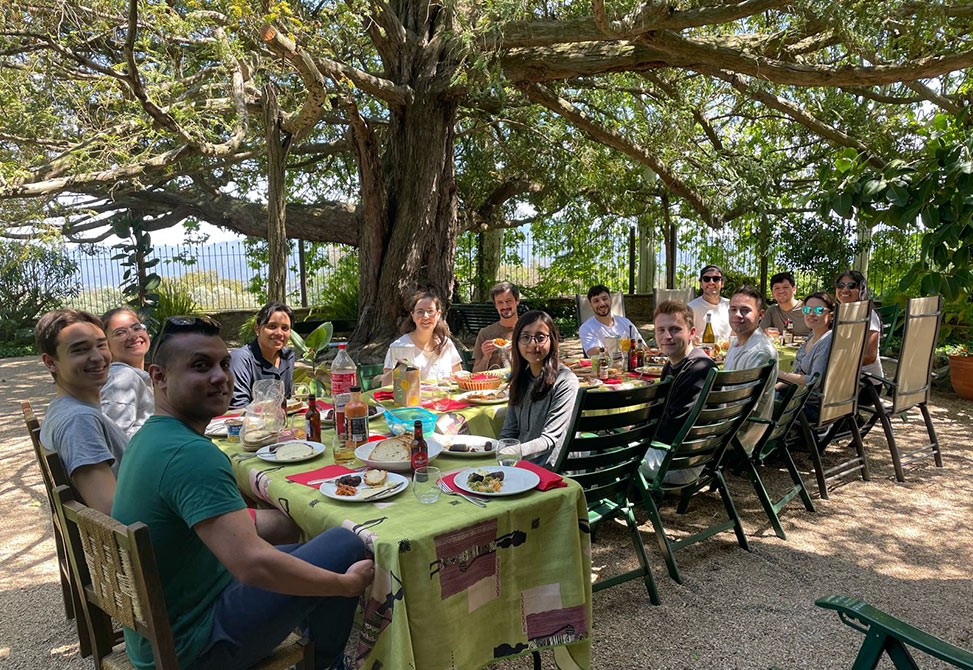
Sunshine and spring BBQ vibes at Montseny.
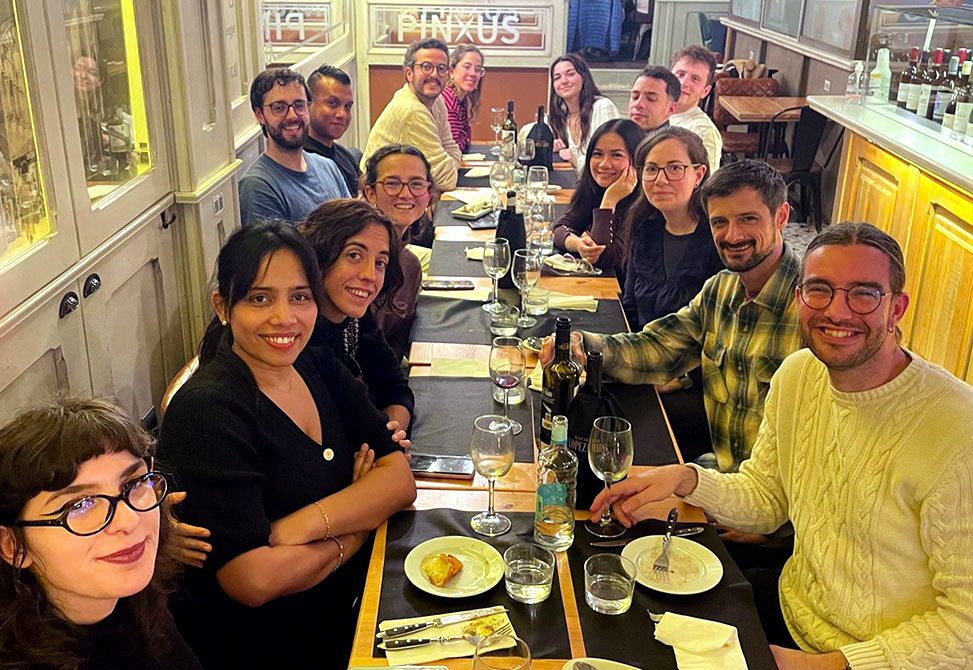
Closing the year together at our Christmas dinner.
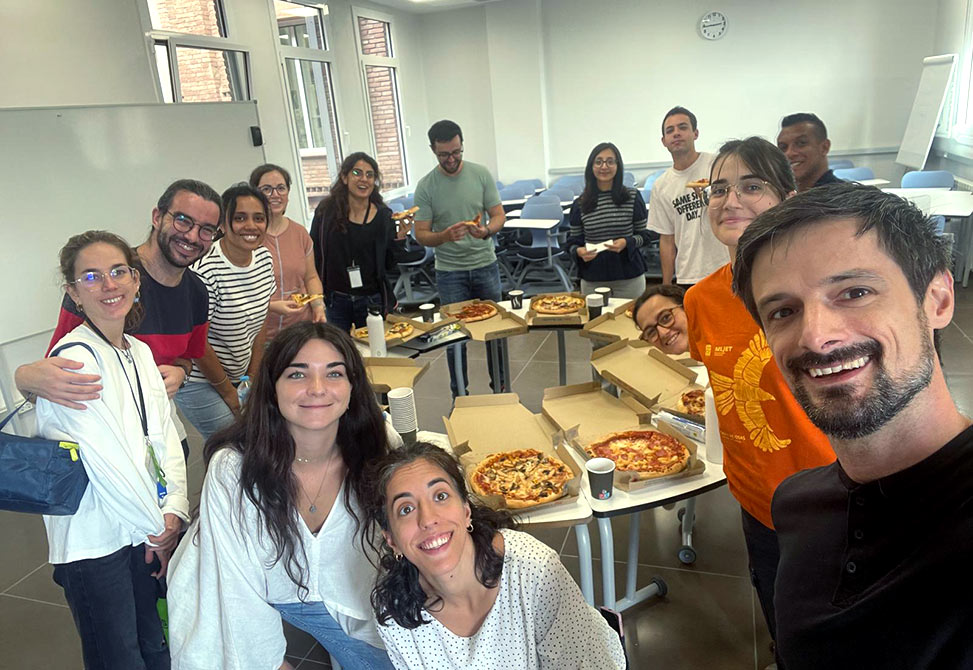
Celebrating our JACS paper over pizza.
Selected Publications
Escobar-Rosales, M.; Montaner, C.; Expòsit, M.; Lucchi, R.; Díaz-Perlas, C.; Baker, D.; Oller-Salvia, B. "De Novo Design of Peptide Masks Enables Rapid Generation of Conditionally-Active Miniprotein Binders" J. Am. Chem. Soc., 2025, 147, 45495–45505. DOI: 10.1021/jacs.5c16108
Lucana, M.; Pandey, S.; Borrós, S.; Oller-Salvia, B. "Development of Simplified Poly(β-Aminoester)-Zwitterion Nanovehicles for Controlled Cancer Cell Transfection and Enhanced Gene Delivery Across a Cell-Based Model of the Blood-Brain Barrier" Drug Delivery and Translational Research, 2025. DOI: 10.1007/s13346-025-01902-z
Lucana, M. C.; Lucchi, R.; Gosselet, F.; Díaz-Perlas, C.; Oller-Salvia, B. "BrainBike Peptidomimetic Enables Efficient Transport of Proteins Across Brain Endothelium" RSC Chemical Biology, 2024, 5, 303–313. DOI: 10.1039/d3cb00194f
Lucchi, R.; Lucana, M.; Escobar-Rosales, M.; Díaz-Perlas, C.; Oller-Salvia, B. "Site-Specific Antibody Masking Enables Conditional Activation with Different Stimuli" New Biotechnology, 2023, 78, 76–83. DOI: 10.1016/j.nbt.2023.10.004
Díaz-Perlas, C.; Ricken, B.; Farrera-Soler, L. et al. "High-Affinity Peptides Developed Against Calprotectin and Their Application as Synthetic Ligands in Diagnostic Assays" Nat. Commun., 2023, 14, 2774. DOI: 10.1038/s41467-023-38075-7
Lucchi, R.; Bentanachs, J.; Oller-Salvia, B. "The Masking Game: Design of Activatable Antibodies and Mimetics for Selective Therapeutics and Cell Control" ACS Cent. Sci., 2021, 7, 724–738. DOI: 10.1021/acscentsci.0c01448
Oller-Salvia, B.; Chin, J. W. "Efficient Phage Display with Multiple Distinct Noncanonical Amino Acids Using Orthogonal Ribosome-Mediated Genetic Code Expansion" Angew. Chem. Int. Ed., 2019, 58, 10844–10848. DOI: 10.1002/anie.201902658
Oller-Salvia, B.; Kym, G.; Chin, J. W. "Rapid and Efficient Generation of Stable Antibody-Drug Conjugates via an Encoded Cyclopropene and an Inverse Electron-Demand Diels-Alder Reaction" Angew. Chem. Int. Ed., 2018, 57, 2831–2834. DOI: 10.1002/anie.201712370
Oller-Salvia, B.; Sánchez-Navarro, S.; Ciudad, S.; Guiu, M.; Arranz-Gibert, P.; Garcia, C.; Gomis, R. R.; Cecchelli, R.; Garcia, J.; Giralt, E.; Teixidó, M. "MiniAp-4: A Venom-Inspired Peptidomimetic for Brain Delivery" Angew. Chem. Int. Ed., 2016, 55, 572–575. DOI: 10.1002/anie.201508445
Oller-Salvia, B.; Sánchez-Navarro, M.; Giralt, E.; Teixidó, M. "Blood-Brain Barrier Shuttle Peptides: An Emerging Paradigm for Brain Delivery" Chem. Soc. Rev., 2016, 45, 4690–4707. DOI: 10.1039/C6CS00076B
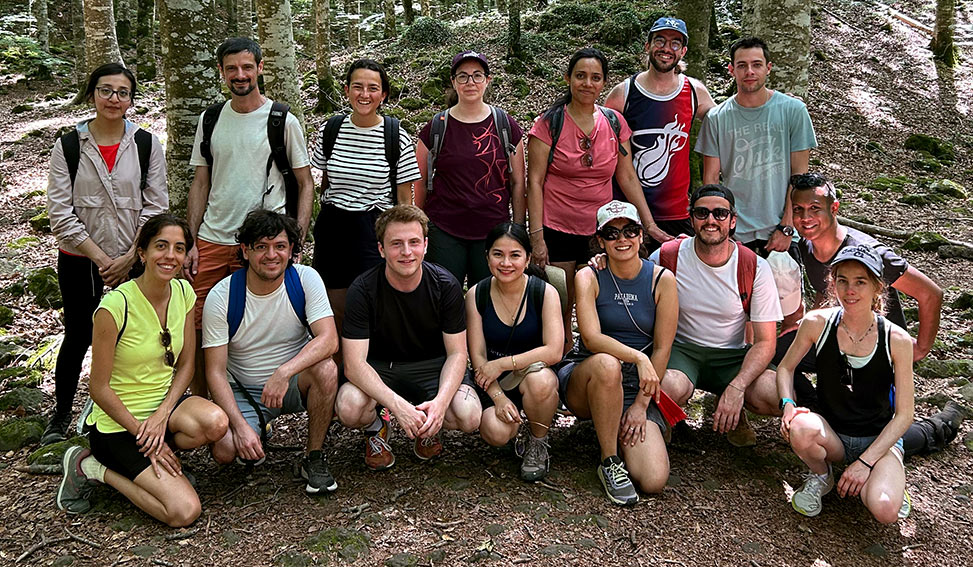
Hiking in the volcano region of la Garrotxa.
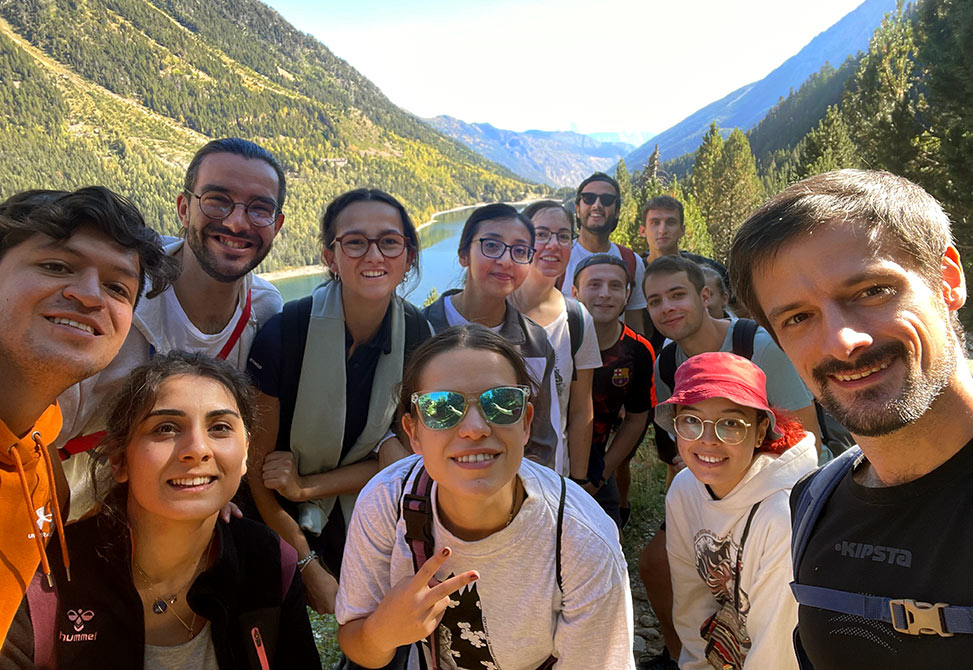
Group retreat hike in the Aigüestortes i Estany de Sant Maurici National Park.
A Conversation with Professor Benjamí Oller-Salvia
Q: Your research sits at a fascinating intersection of chemistry, synthetic biology, and drug delivery. What drew you to this space?
A: I love challenges. When I learned at the end of my chemistry degree that the blood-brain barrier was one of the biggest obstacles in drug development and the main reason we struggle to treat brain diseases, I decided to make addressing it a central goal of my career. That led me to Ernest Giralt's lab at IRB Barcelona for my Ph.D., where I worked on peptide shuttles derived from venoms. The idea that nature had already solved the problem of crossing tight biological barriers, and that we could learn from toxins to create therapeutic delivery systems, was inspiring. Later, my postdoc with Jason Chin at the MRC Laboratory of Molecular Biology added synthetic biology tools to my repertoire. Now I try to merge both worlds: the precision of chemistry with the programmability of biology.
Q: Your Ph.D. work on MiniAp-4, a venom-inspired shuttle peptide, has become a reference in the brain delivery field. What made that project successful?
A: We started from a simple observation: apamin, a neurotoxin from bee venom, reaches the central nervous system without disrupting the barrier. But it's toxic and immunogenic, which limits its use. The key insight was that the residues responsible for toxicity weren't necessary for transport. By systematically minimizing the structure, replacing the disulfide with a lactam bridge, we created MiniAp-4, a monocyclic peptidomimetic that's protease-resistant, non-toxic, and more permeable than the parent compound. It can transport proteins, quantum dots, and other nanoparticles across human cell-based barrier models and delivers cargoes to mouse brain parenchyma in vivo. The project taught me that nature provides excellent starting points, but medicinal chemistry optimization is essential for translation.
Q: You've since developed BrainBikes, a next-generation shuttle platform. How does it differ?
A: BrainBikes are bicyclic peptidomimetics targeting the transferrin receptor, which is highly expressed on brain endothelium. We use a trifunctional chemical linker to generate constrained structures from linear peptide precursors. The bicyclic architecture provides high protease resistance while enhancing the receptor engagement needed for transcytosis. Critically, BrainBikes can efficiently transport large cargoes, including antibody fragments and polymeric nanoparticles, which has been a major limitation of many earlier shuttles. We're now exploring combinations with antibodies, gene delivery systems, and nanomaterials for glioblastoma therapy.
Q: A major theme in your current work is activatable therapeutics. What's the core concept?
A: Many therapeutic targets are expressed in both diseased and healthy tissues, which causes dose-limiting toxicities. Activatable therapeutics solve this by remaining inert during systemic circulation and switching on only at the disease site. The principle applies to antibodies, miniproteins, cytokines, and even nanoparticles. We've written extensively about "the masking game" in a review published in ACS Central Science, cataloguing strategies ranging from steric hindrance to affinity-based occlusion, with triggers including proteases, pH, light, and small molecules. Two masked antibodies have already reached the market, and many more are in clinical development. The field is maturing rapidly.
Q: Your recent JACS paper describes de novo design of peptide masks for miniprotein binders. What problem does that solve?
A: Traditionally, identifying a good affinity mask required extensive display-based library screening, which is time-consuming and must be repeated for each new target. We asked whether computational tools could design masks from scratch. Using RoseTTAFold diffusion and ProteinMPNN, we created C-terminal helical extensions that sterically block the receptor-binding interface of miniproteins. The masks are connected through protease-cleavable linkers, so tumor-associated enzymes can release the active binder at the disease site. Nearly half of our 20 designs achieved greater than 100-fold affinity reduction, with the best mask decreasing EGFR binding by over three orders of magnitude. Upon cleavage, binding was restored in 19 of 20 cases. The success rate across binders to four receptors demonstrates that this is a generalizable platform.
Q: What surprised you most in that work?
A: That micromolar affinity between the mask and binder is sufficient for robust inactivation. We measured a dissociation constant of about 5 μM for our lead mask, yet it blocked binding effectively when tethered. The proximity effect from covalent attachment compensates for what would otherwise be weak binding. This is important because designing high-affinity peptides computationally remains challenging, and our approach works precisely because it doesn't require nanomolar mask affinity.
Q: You also created a photoactivatable version. Why explore light as a trigger?
A: Proteases depend on tissue-specific expression, which provides selectivity but limits external control. Light offers precise spatial and temporal activation, which could be valuable for superficial tumors or intraoperative applications. We installed a photocleavable linker through site-specific cysteine conjugation and achieved comparable masking efficiency to the protease-responsive designs. UV irradiation at 365 nm released the mask within minutes. The fact that both triggers work with the same mask sequence suggests the approach is modular and adaptable to different clinical scenarios.
Q: Your postdoc with Jason Chin focused on genetic code expansion. How does that expertise inform your current work?
A: Genetic code expansion allows us to install non-canonical amino acids site-specifically into proteins expressed in living cells. We developed systems for incorporating multiple distinct non-canonical amino acids into phage-displayed proteins using orthogonal ribosomes. This opens chemical space that natural amino acids cannot access: bioorthogonal handles for conjugation, fluorescent probes, crosslinkers, and reactive groups. For therapeutic proteins, it means we can install precisely positioned chemical functionalities, such as conjugation sites for drugs or shuttles, without disrupting protein function. The technology is now mature enough for industrial applications and we are implementing it in our on-going studies to improve the stability of conjugates and generating new activatable platforms.
Q: Glioblastoma appears frequently in your grant portfolio. Why focus there?
A: Glioblastoma is the most prevalent primary brain tumor with the worst prognosis. Current treatments initially reduce tumor growth, but recurrence is nearly universal because we cannot eliminate the cancer stem cells that drive resistance. These cells express markers that healthy stem cells also display, so targeting them causes collateral damage. Activatable antibodies offer a path forward: we're developing systems that remain masked until they encounter the tumor microenvironment, then activate to engage cancer stem cells selectively. We've received support from "la Caixa" Foundation, the Spanish Government, and and the Spanish Cancer Society to pursue this, and it's become a central focus of the group.
Q: You've built the ChemSynBio group at IQS from scratch. What was that journey like?
A: When I returned to Barcelona in 2019, I had a faculty position but no funding. Teaching loads in the Spanish system are high, and building a research program simultaneously is demanding. I was fortunate that the head of the Bioengineering department at that time, Salvador Borrós, gave me space, support, and enabled me to use the instruments in his laboratory. A Marie Curie fellowship arrived at a critical moment, allowing me to reduce teaching and hire my first Ph.D. student. Then the pandemic hit just as we were gaining momentum. Paradoxically, the lockdown was productive for writing grants, and in the year after the pandemic started, we were awarded every project we applied for. Now we have a vibrant team spanning activatable antibodies, brain delivery, and stimuli-responsive nanomaterials.
Q: What do you emphasize with your trainees?
A: I want to replicate the experience I had as a Ph.D. student with Ernest Giralt: rigorous science in a supportive environment where people enjoy themselves. I emphasize that building community sustains you through difficult times and that conveying enthusiasm matters. If you have colleagues going through the same challenges, it helps you push forward. I also encourage trainees to explore the full landscape of scientific careers through our collaborations with companies. Academia is one path among many, and exposure to alternatives helps people make informed choices.
Q: The RSC Chemical Biology Outstanding Early Career Researcher Award recognized your group's brain delivery work. What did that recognition mean?
A: It validated the hard work of a wonderful team that was the seed of ChemSynBio. Science is collaborative, and awards really belong to the group. That said, recognition motivates us to keep pushing boundaries in a challenging field. Brain delivery remains formidable, but with each advance, the possibilities for treating neurological disorders grow brighter. Thanks to the European Research Council grant we were awarded in 2023, we are now pursuing a highly ambitious research project to reprogram the blood-brain barrier for increased and selective brain transport.
Q: Final thought for the peptide community?
A: Peptides are uniquely positioned to address problems that small molecules and large biologics cannot solve alone. They offer the chemical versatility of synthetic molecules with the target specificity of proteins. The convergence of computational design, synthetic biology, and chemical modification is creating unprecedented opportunities. If we continue merging these disciplines, we'll develop therapeutics that are smarter, safer, and more precisely targeted than anything currently available.
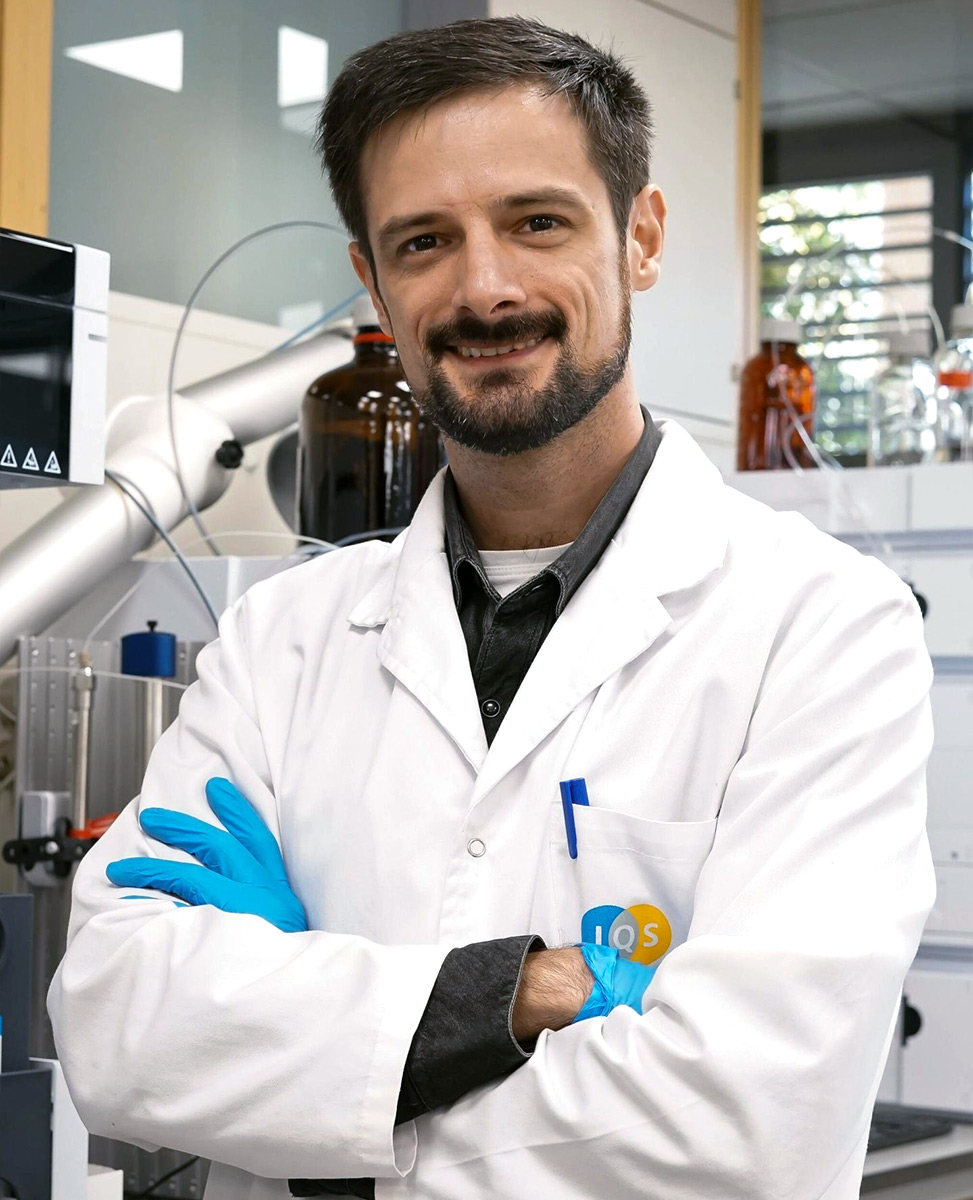
Professor Benjamí Oller-Salvia