Global Peptide Groups - The Burslem Group
At the University of Pennsylvania, George Burslem and his team are building a chemical toolkit for one of biology's most crowded and consequential pieces of real estate: the lysine side chain. The Burslem Lab works at the meeting point of synthetic chemistry, peptide chemistry, protein engineering, and cell biology, designing molecules and methods that let researchers write, read, and erase the modifications that decorate lysine residues inside living cells. A single lysine can be acetylated, methylated, ubiquitinated, SUMOylated, or tagged with any of a growing list of acyl groups, and the cell reads that combinatorial vocabulary to make decisions about gene expression, protein stability, and DNA repair. The group's ambition is to turn that vocabulary into something chemists can control on demand, with a particular eye toward the hematological cancers where epigenetic dysregulation so often drives disease. Peptides run through nearly all of it, because a designed peptide is the most direct way to present a defined modification to an enzyme or reader domain and ask what happens.
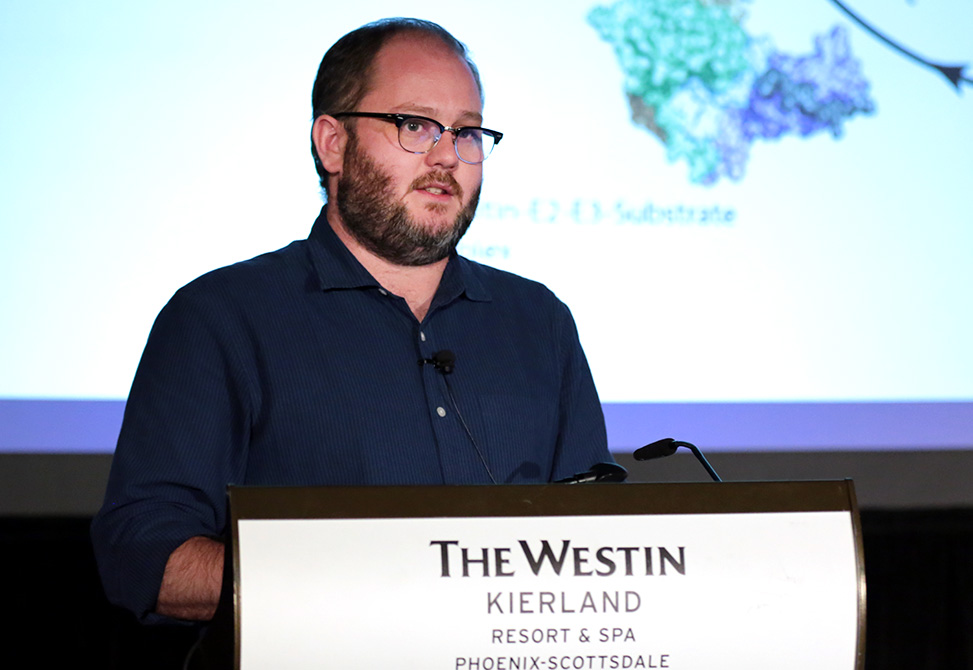
George Burslem presenting at APS 2023, Phoenix, AZ
George came into the field through organic chemistry, but what held him there was the question of how molecules actually do their work inside cells. He earned his Ph.D. at the University of Leeds with Andrew Wilson, working on the HIF-1α and p300 interaction, a textbook case of why protein-protein interactions are so difficult to drug, and along the way took up peptide stapling, proteomimetic scaffolds, and phage-displayed aptamers. A postdoctoral fellowship at Yale with Craig Crews placed him inside the PROTAC story at a formative moment, where his own contribution extended targeted protein degradation to receptor tyrosine kinases, targets that are not natural substrates of the proteasome. That lesson, to believe the biology even when the orthodoxy says an approach should not work, carried directly into the lab he opened at Penn in 2020.
The lab's unusual breadth is built into its address. The Burslem Group holds appointments across the Department of Biochemistry and Biophysics, the Department of Cancer Biology, and the Penn Epigenetics Institute, and that span shapes both the science and the training. George serves on committees within Biochemistry and Biophysics, and acts as rotations director and admissions chair for the Biochemistry, Biophysics, and Chemical Biology graduate group. The lab's reach extends well beyond Penn's walls through close collaboration, with Ophir Shalem on intracellular protein editing and with Nikolaos Sgourakis at the Children's Hospital of Philadelphia on the long-standing problem of MHC-I peptide loading, a partnership that has produced a ligand exchange system the immunology community can now use as a routine reagent.
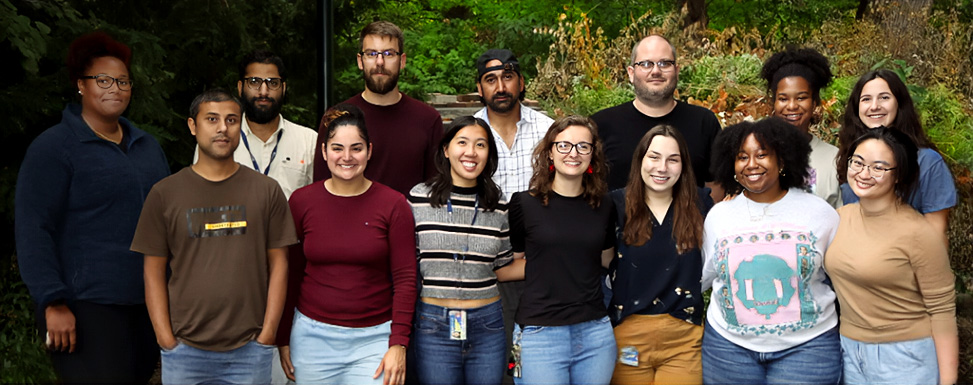
The group itself is a deliberately collaborative mix of Ph.D. students, post-baccalaureate scholars, and postdoctoral fellows, supported by undergraduate researchers who arrive through Penn's First Exposure to Research in the Biological Sciences program. The lab is explicit about its values: it recognizes the obstacles that scientists from marginalized communities face and works to dismantle the structures that hold them back, with members active in STEM and community outreach across Penn. Home base is Stellar-Chance Laboratories, in the heart of the Perelman School of Medicine in University City, West Philadelphia, within walking distance of the Children's Hospital of Philadelphia and a short stroll from Penn Park.
Meet all the Burslem Lab members and learn everything about their likes and dislikes 😊
The simplest statement of the Burslem Lab's goal is also the most ambitious: to write a defined modification onto a chosen protein in a living cell, watch the biology that follows, and erase it on command. Getting there means inventing chemistry on several fronts at once, and the group's recent work spans new reagents, new platforms, and a few genuine surprises about how metabolism and the epigenome are wired together.
Burslem Group
Reading and Writing the Lysine Code:
Much of the group's peptide work is aimed at giving researchers precise handles on lysine modifications. The lab has developed internally quenched fluorescent peptides that bring underexplored and reversible modifications into view, and has built a system for assembling ubiquitin chains of defined length and linkage, a prerequisite for reading the ubiquitin code rather than guessing at it. A complementary sortase-based method installs ubiquitin with controlled chain length and topology, turning a messy biological signal into a designed, reproducible reagent.
Intracellular Protein Editing:
One of the lab's signature advances is a platform for editing the primary sequence of an endogenous protein from inside the cell, without overexpression artifacts and without delivering synthetic peptides from outside. By pairing tandem split inteins, Gp41-1 with AvaN:NpuC, with bacterial genetic code expansion and endogenous tagging, the group lets the cell do the splicing, inserting a cassette that can carry an epitope, a peptide, a chemical handle, or a non-canonical residue. The team is now using the approach to ask how specific modifications control DNA damage response pathways.
Induced Proximity and Targeted Degradation:
The PROTAC heritage from George's Yale years remains a live thread. The lab applies heterobifunctional molecules to interrogate protein modifications in cells, has examined acetylation-mediated degradation as a regulatory mechanism, and is probing the druggability of metabolic enzymes whose roles in cancer are tangled and incompletely understood.
Burslem Group
Metabolism Meets the Epigenome:
More recently the group has pushed beyond the classical modifications into newly discovered acylations such as β-hydroxybutyrylation and lactylation, which physically link a cell's metabolic state to its epigenetic marks. In a result that overturned a tidy assumption, the lab established that these acylations form through a noncanonical pathway, showing that Class I histone deacetylases, long cast purely as erasers, can themselves catalyze lysine lactylation.
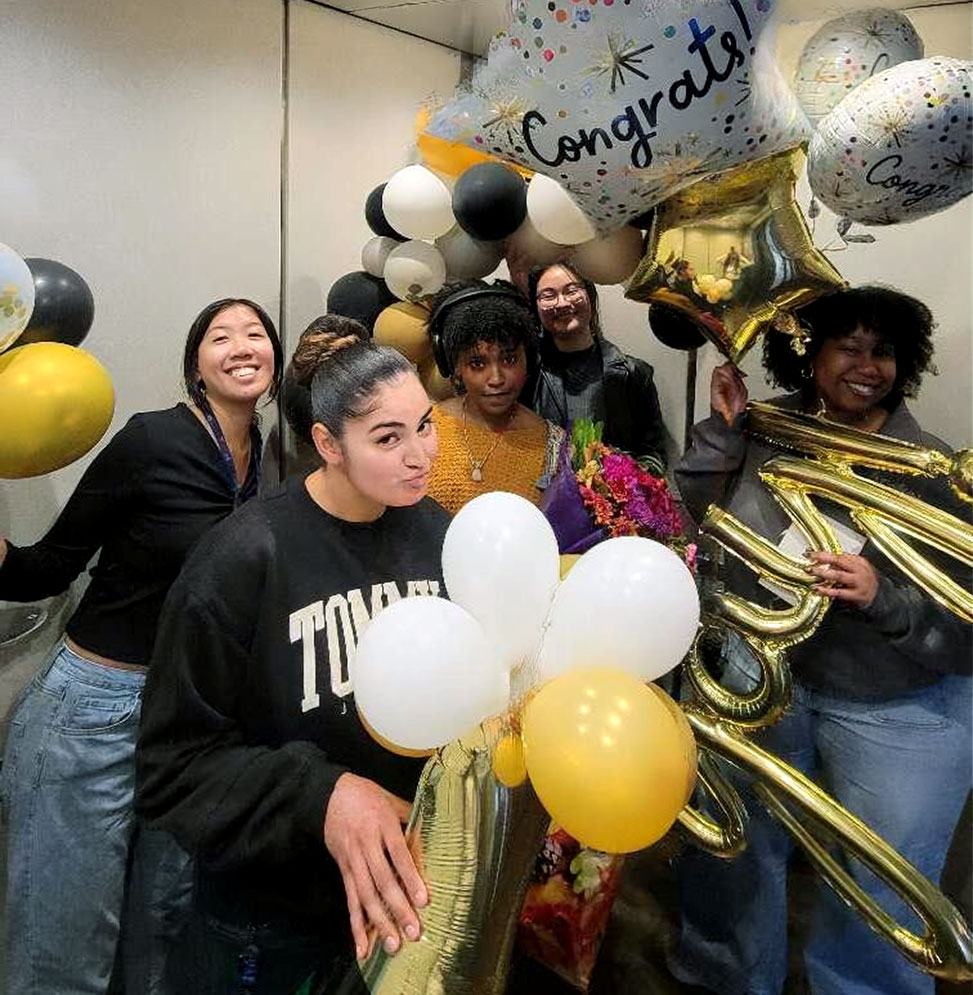
Graduation Celebration in the Burslem Group
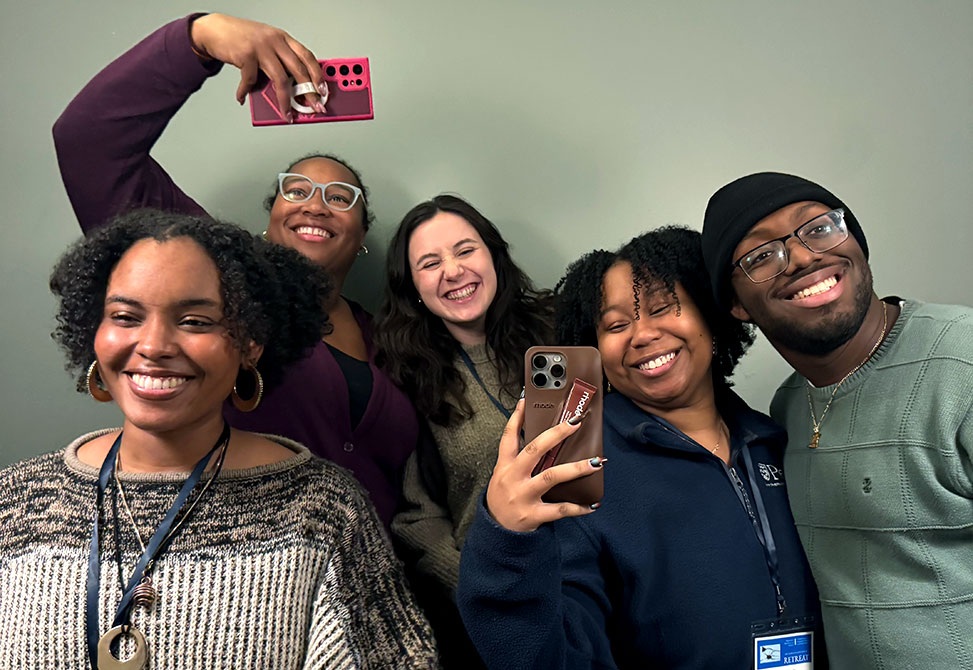
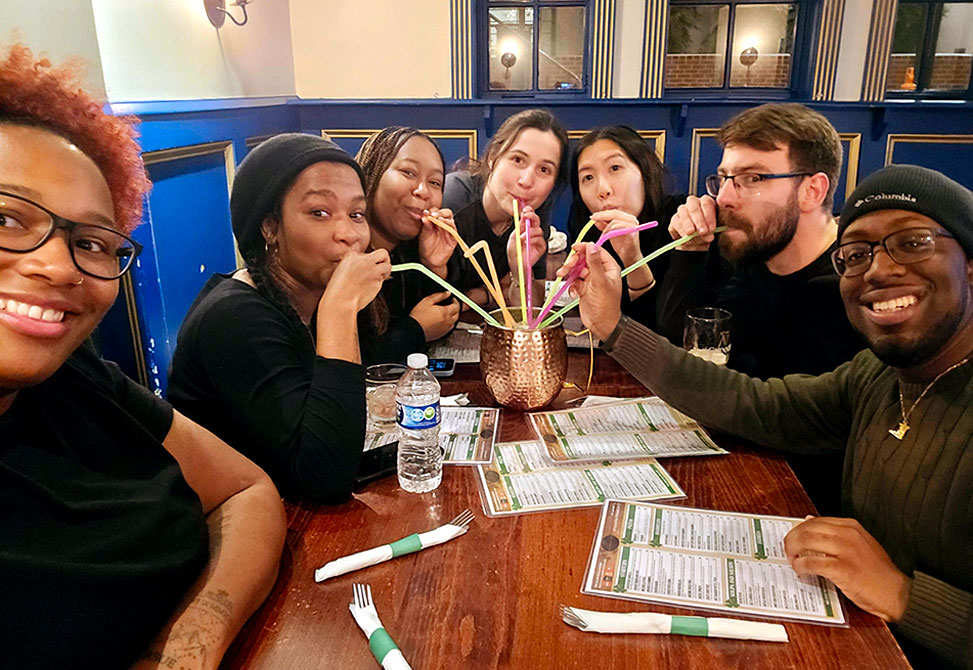
Girls of the Burslem Group
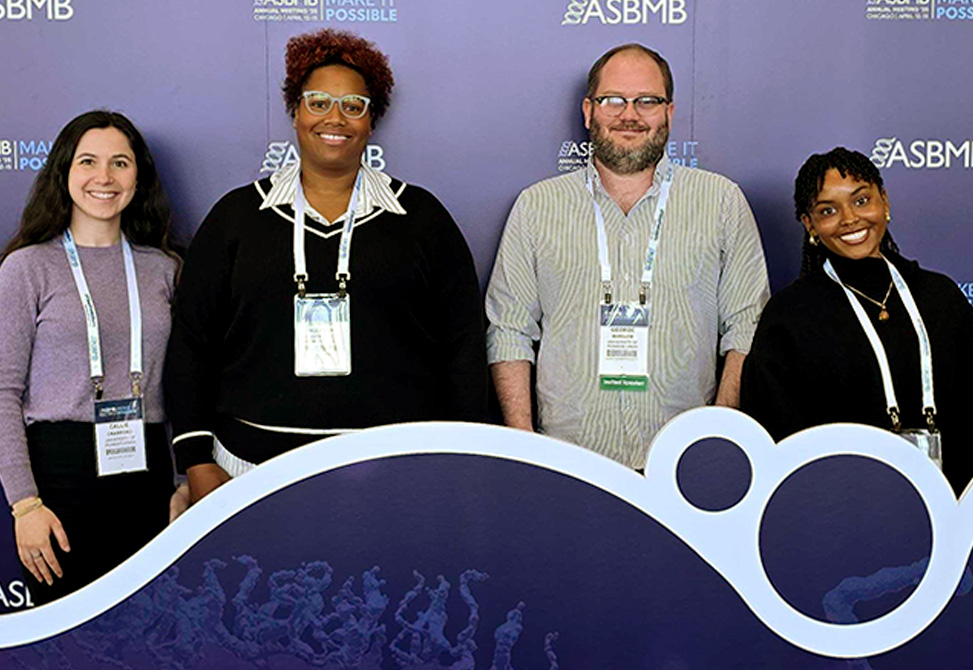
Burslem Group members at ASBMB, 2025
Selected Publications
Beyer, J. N.; Serebrenik, Y. V.; Toy, K.; Najar, M. A.; Feierman, E.; Raniszewski, N. R.; Korb, E.; Shalem, O.; Burslem, G. M. Intracellular protein editing to enable incorporation of non-canonical residues into endogenous proteins. Science 2025. DOI: 10.1126/science.adr5499.
Gonzatti, M. B.; Hintzen, J. C. J.; Sharma, I.; Najar, M. A.; Tsusaka, T.; Marcinkiewicz, M. M.; Da Silva Crispim, C. V.; Snyder, N. W.; Burslem, G. M.; Goldberg, E. L. Class I histone deacetylases catalyze lysine lactylation. J. Biol. Chem. 2025. DOI: 10.1016/j.jbc.2025.110602.
Hintzen, J.; Beckley, K.; Goldberg, E.; Burslem, G. M. Internally quenched fluorescent peptides provide insights into underexplored and reversible post-translational modifications. Chem. Sci.
Raniszewski, N. R.; Beyer, J. N.; Noel, M. I.; Burslem, G. M. Sortase mediated ubiquitination with defined chain length and topology. RSC Chem. Biol. 2024. DOI: 10.1039/D3CB00229B.
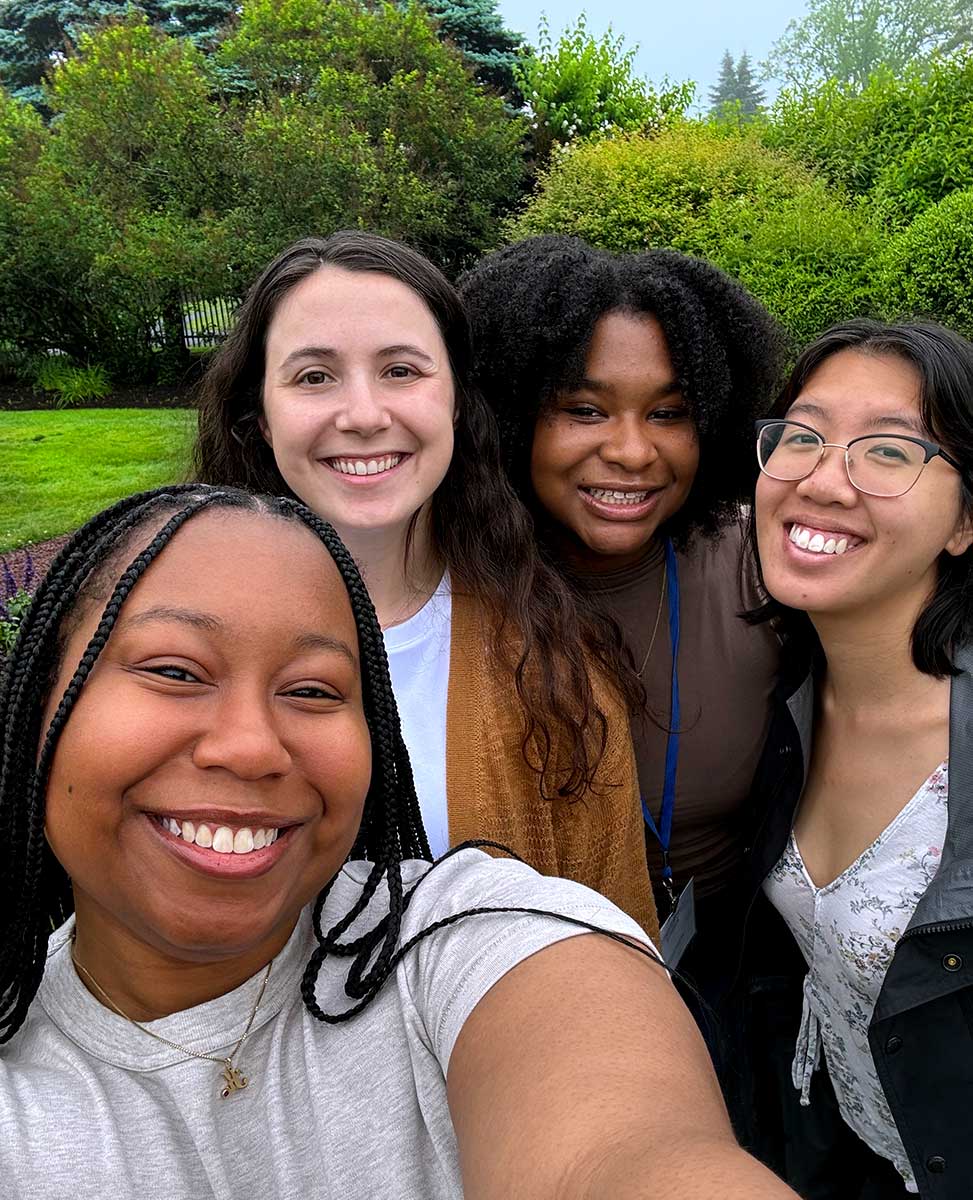
Girls of the Burslem Group Redux
A Conversation with Professor George Burslem
APS: Your path runs from Leeds to Yale to Penn. What drew you into chemical biology in the first place, and how did peptides become part of the toolkit?
Burslem: I came in through organic chemistry, but what kept me there was the question of how molecules actually do their work inside cells. At Leeds with Andrew Wilson, I worked on the HIF-1α and p300 interaction, which is a textbook example of why protein-protein interactions are so hard to drug. You need to recapitulate a binding surface, not a pocket. That problem pushed me toward peptides and peptidomimetics almost immediately, because peptides give you the surface, and the question becomes how to constrain and stabilize it. By the time I finished my Ph.D. I had worked on stapling, on proteomimetic scaffolds, and on phage-displayed peptide aptamers. The throughline was always the same: use peptides to learn what nature is doing, then engineer around the limitations.
APS: At Yale with Craig Crews you were part of the PROTAC story at a formative moment. How did that experience shape the lab you eventually built at Penn?
Burslem: It taught me that induced proximity is one of the most powerful ideas in modern chemical biology, and that you do not need to invent a new mode of inhibition to get a new biological outcome. My specific contribution was extending PROTACs to receptor tyrosine kinases, which are not natural substrates of the proteasome. That work was a lesson in believing the biology even when the orthodoxy says it should not work. When I started at Penn in 2020 I wanted a lab that took that same posture toward post-translational modifications, particularly on lysine. Acetylation and ubiquitination are doing enormous regulatory work, and we still lack precise tools to write, read, and erase them on demand in living cells.
APS: Lysine PTMs are the central organizing theme of the Burslem Lab. Why lysine, and why now?
Burslem: Lysine sits at the intersection of gene expression and protein stability. The same residue can be acetylated, methylated, ubiquitinated, SUMOylated, or modified by any number of acyl groups, and the cell uses that combinatorial vocabulary to make consequential decisions. Phosphorylation has had a forty-year head start in terms of tools, antibodies, and inhibitors. Lysine is where the next generation of mechanistic and therapeutic chemistry needs to live, especially for hematological malignancies, where epigenetic dysregulation is so often the driver. Peptides are central to that program because they are the most direct way to present a defined modification to an enzyme or reader domain and ask what happens.
APS: Your 2025 Science paper with Ophir Shalem introduced intracellular protein editing. What was the central problem you were trying to solve?
Burslem: The genetic code expansion field has given us beautiful chemistry for installing non-canonical amino acids, but applying it to endogenous proteins at native expression levels has remained difficult. We wanted a platform that could site-specifically edit the primary sequence of an endogenous protein inside a mammalian cell, without overexpression artifacts and without relying on synthetic peptides delivered from outside. We combined tandem split inteins, Gp41-1 paired with AvaN:NpuC, with bacterial genetic code expansion and endogenous tagging. The result is a system where the cell does the splicing for you, and the cassette between the two intein pairs can carry an epitope, a peptide insert, or a non-canonical residue.
APS: How do peptides fit inside that platform?
Burslem: They are the cargo. The middle segment that gets spliced into the target protein is, in effect, a peptide that we have designed for a purpose. It might be a recognition tag, a degron, a chemical handle for click chemistry, or a sequence carrying a defined PTM. The platform turns the cell into a peptide ligation reactor with sequence-specific addressing. For a peptide chemist that is an unusual and rather satisfying inversion of the usual workflow.
APS: Your group collaborates closely with Nikolaos Sgourakis at CHOP on the MHC-I peptide loading problem. How did that partnership take shape?
Burslem: Niko had been working on the long-standing problem of MHC-I peptide exchange and complex instability, which has been a real bottleneck for immunological reagent production. His team needed peptide chemistry that could deliver custom ligands with the right kinetics for exchange, and we needed an application that would test what our chemistry could really do. The collaboration produced a robust ligand exchange system that the immunology community can now use as a routine reagent. It is a good example of what happens when peptide chemistry meets a defined structural-biology problem with a clear translational endpoint.
APS: What does training look like in the Burslem Lab? You sit between Biochemistry and Biophysics, Cancer Biology, and the Penn Epigenetics Institute, which is unusual breadth.
Burslem: That breadth is deliberate. Most of our trainees arrive strong in one of those areas and need exposure to the others. A synthetic chemist needs to learn how to run a pulldown and how to think about cellular context. A cell biologist needs to learn what a peptide synthesis cycle actually involves and why a particular modification is or is not tractable. We try to build people who can run their own gels, write their own scripts, and brief a clinician in the same week. The peptide community has always been multidisciplinary, and I think the future is more so, not less.
APS: Where do you see the boundary between peptide therapeutics and chemical biology heading over the next five to ten years?
Burslem: The boundary is dissolving. PROTACs started as a chemical biology curiosity and are now an FDA-approved therapeutic modality. Peptide macrocycles, stapled peptides, and bicyclics are following a similar arc. Induced proximity, covalent chemistry, and intracellular delivery are the three vectors that I think will define the next phase. Peptides are uniquely positioned at the intersection of all three, because they carry enough information density to encode specificity and enough chemical addressability to be engineered for stability and delivery. The discipline that used to be called peptide chemistry is quietly becoming the discipline that delivers the hardest targets.
APS: What is the question you most want your lab to have answered five years from now?
Burslem: I would like us to be able to write a defined PTM pattern onto an endogenous protein in a living cell, watch the downstream biology unfold, and erase it on command. If we can do that for even a handful of disease-relevant proteins in a hematological cancer model, we will have given the field a tool it has wanted for a long time. The chemistry is now within reach. The challenge is making it routine.
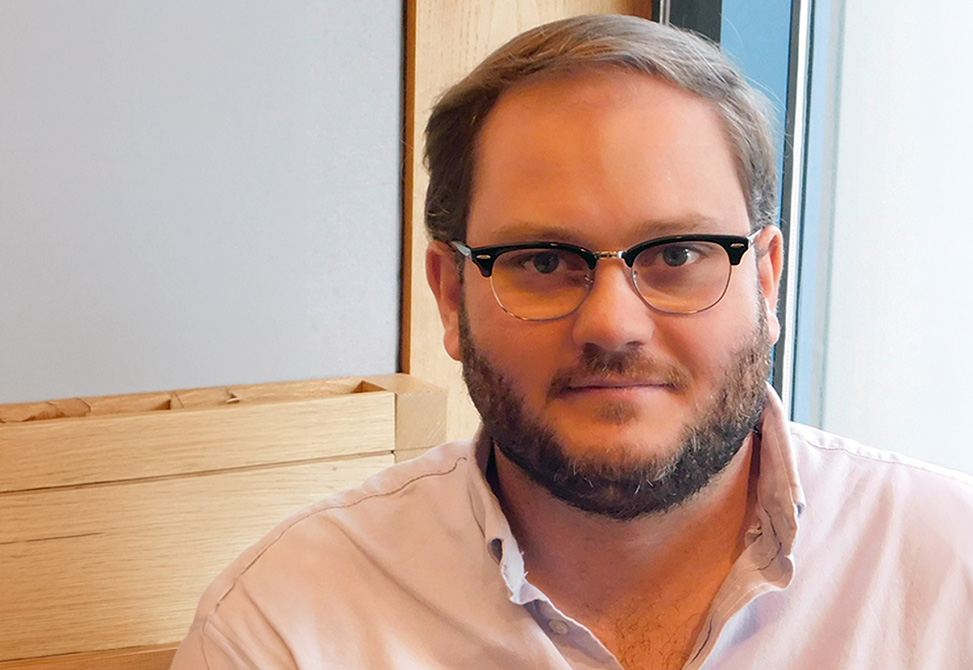
Professor George Burslem, University of Pennsylvania.